Most medial meniscal tears in people over 35 are wear-and-tear tears. For these, a strength and balance program works as well as keyhole surgery.
Quick answer: For a degenerative (wear-and-tear) medial meniscal tear, do 12 weeks of thigh, hip and balance exercise, 2–3 times a week. In trials, this improved pain and function as much as arthroscopic surgery, with stronger thighs as a bonus. Keep pain mild and settled by the next day. See your GP if your knee truly locks, keeps giving way, or swelled up quickly after an injury.
How to use this
Who it’s for: adults, usually over 35, with a medial meniscal tear on MRI from wear and tear, without true locking. A tear from a big twisting injury in a young person may need a surgeon’s opinion first.
Pain rules: mild pain (up to about 3–4 out of 10) during exercise is OK if it settles within 24 hours. If it doesn’t, do less next time rather than stopping.
How often: 2–3 times a week for at least 12 weeks.
How many: 3 sets of 10–15. Progress when the last few reps feel easy: more weight, a higher step, deeper squats or one leg.
Keep moving: walking, cycling and swimming are all fine. Catching or clicking without pain is common and not harmful.
Based on: randomised trials comparing exercise with surgery (Kise et al, BMJ 2016; ESCAPE, JAMA 2018) and the BMJ Rapid Recommendation against keyhole surgery for degenerative knee disease (2017).
Your exercises
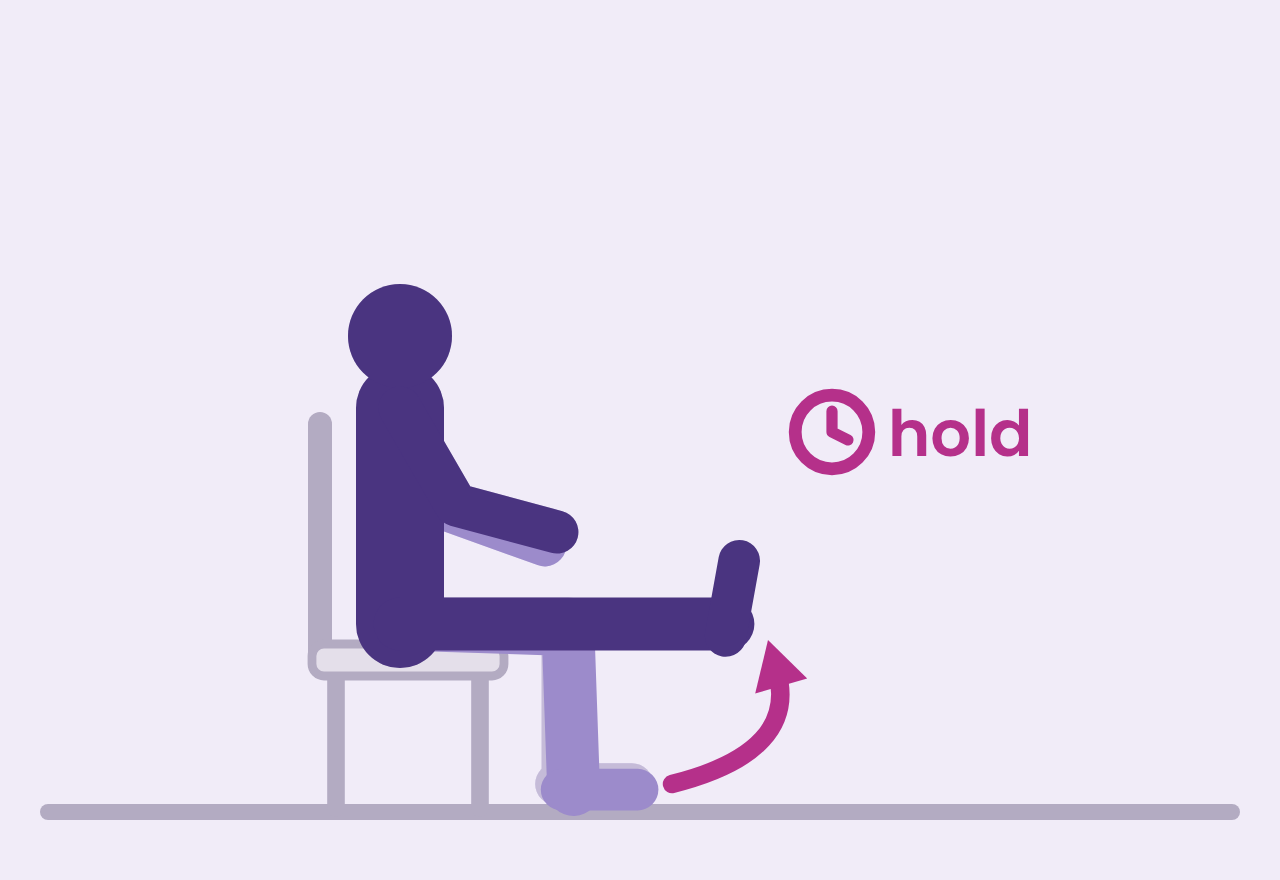
Seated knee straighteningSit tall and straighten the sore knee fully, hold 5 seconds, then lower slowly. Good from day one and on flare-up days. Progress with an ankle weight or band.3 × 10–15, 2–3 times a week
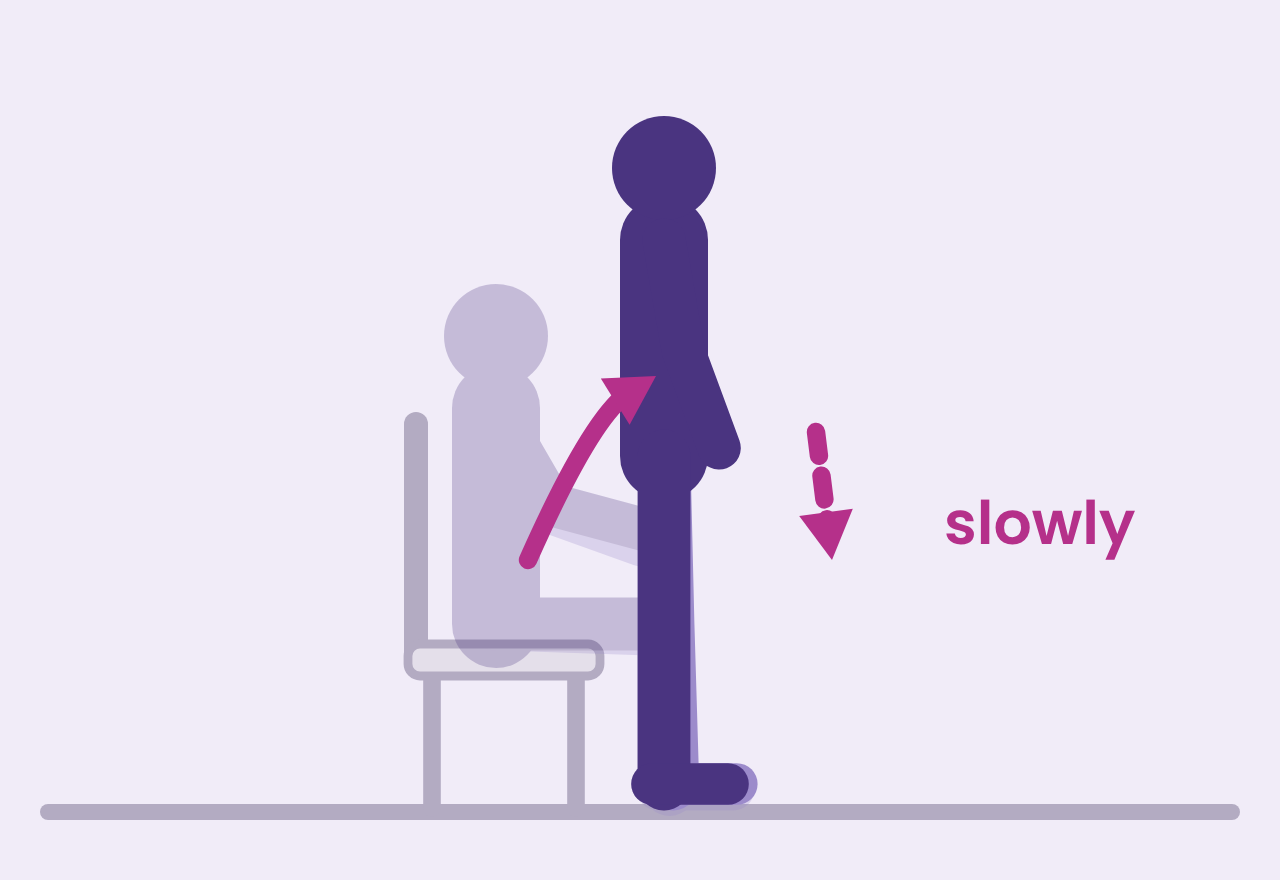
Sit to standStand up from a chair without using your hands, then sit back down slowly. Keep your knees in line with your toes. Progress to a lower chair or holding a weight.3 × 10–15, 2–3 times a week
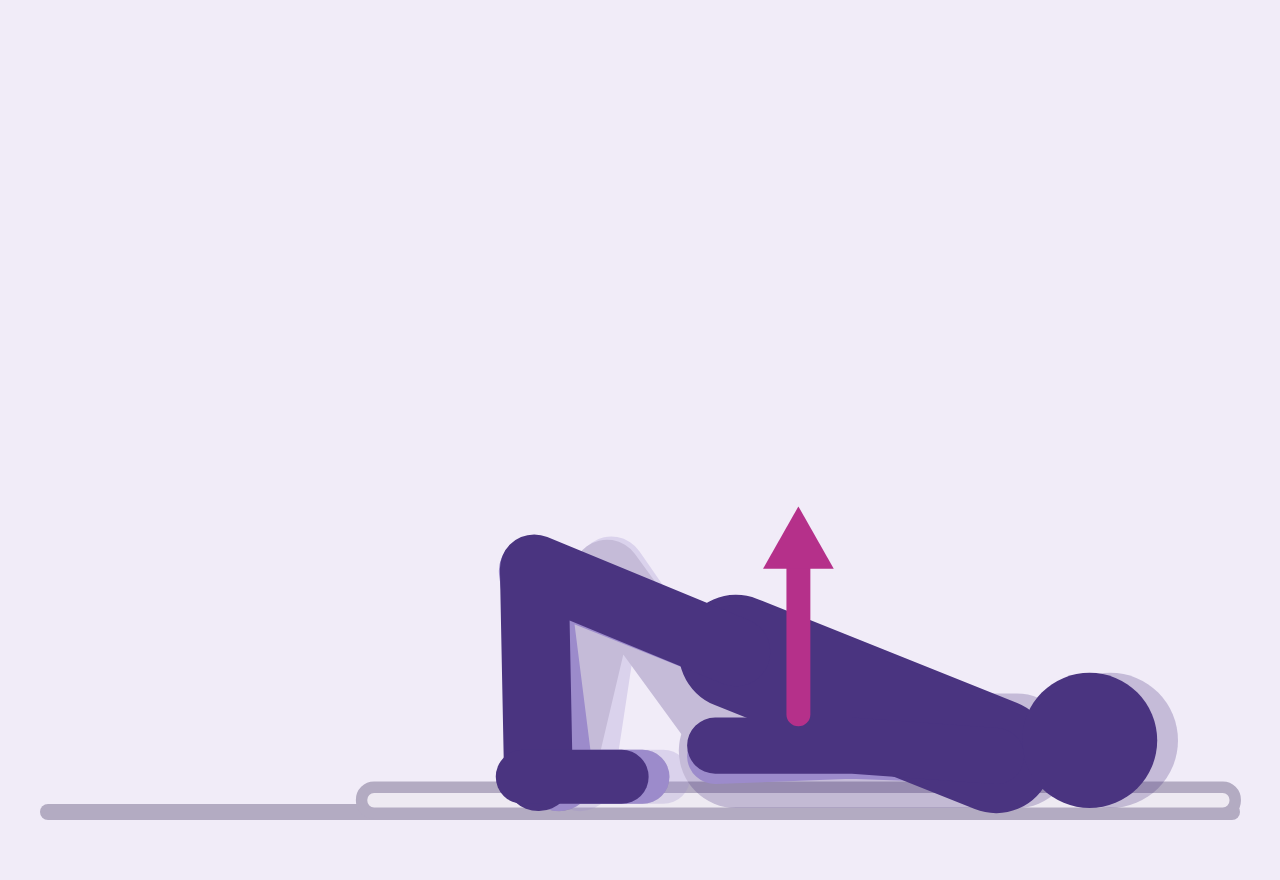
BridgesLie on your back, knees bent. Squeeze your buttocks and lift your hips, then lower slowly. Progress to a band above the knees, or one leg.3 × 10–15, 2–3 times a week
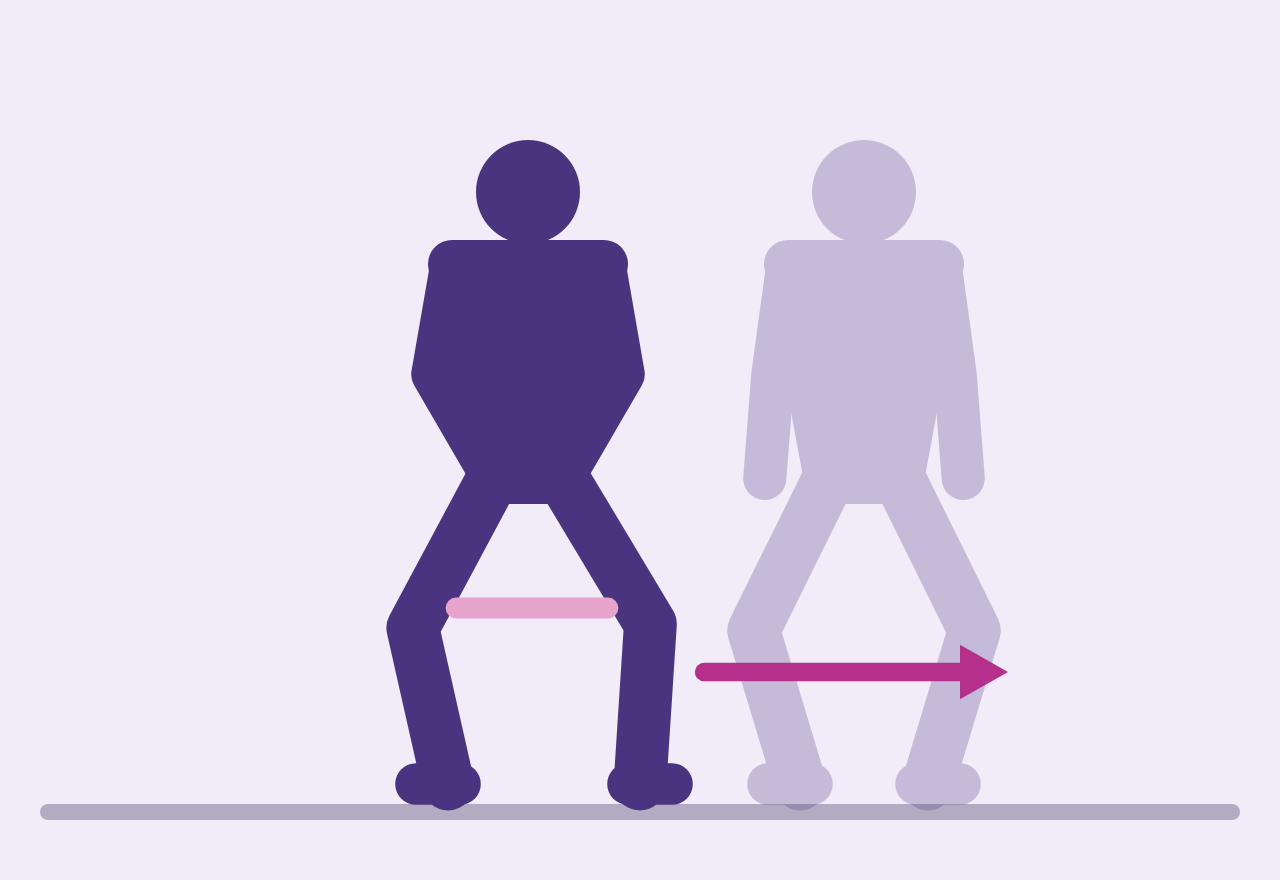
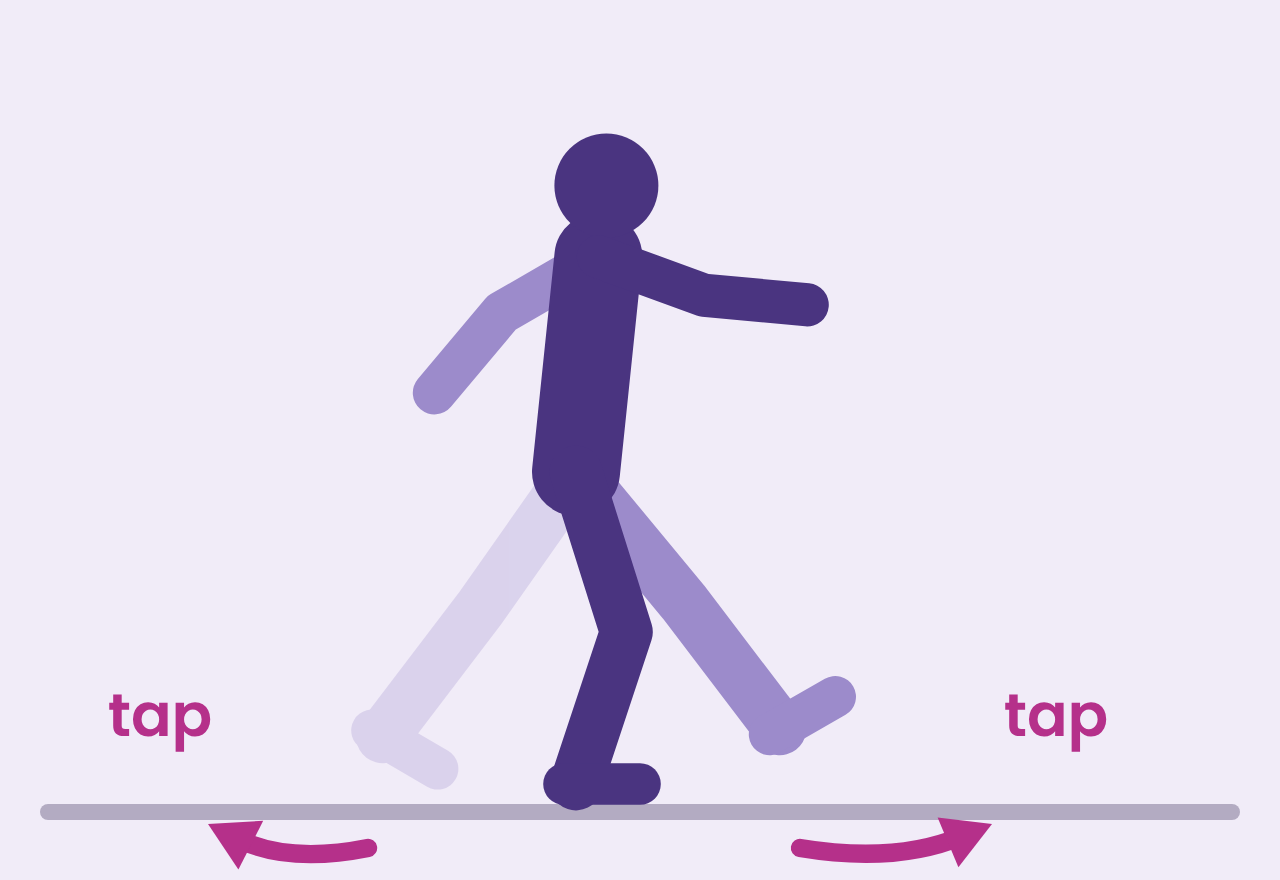
Side-steps with bandBand around your knees or ankles, knees slightly bent. Step sideways keeping your hips level and toes forward. Strong hips help control the knee.3 × 15 steps each way, 2–3 times a week
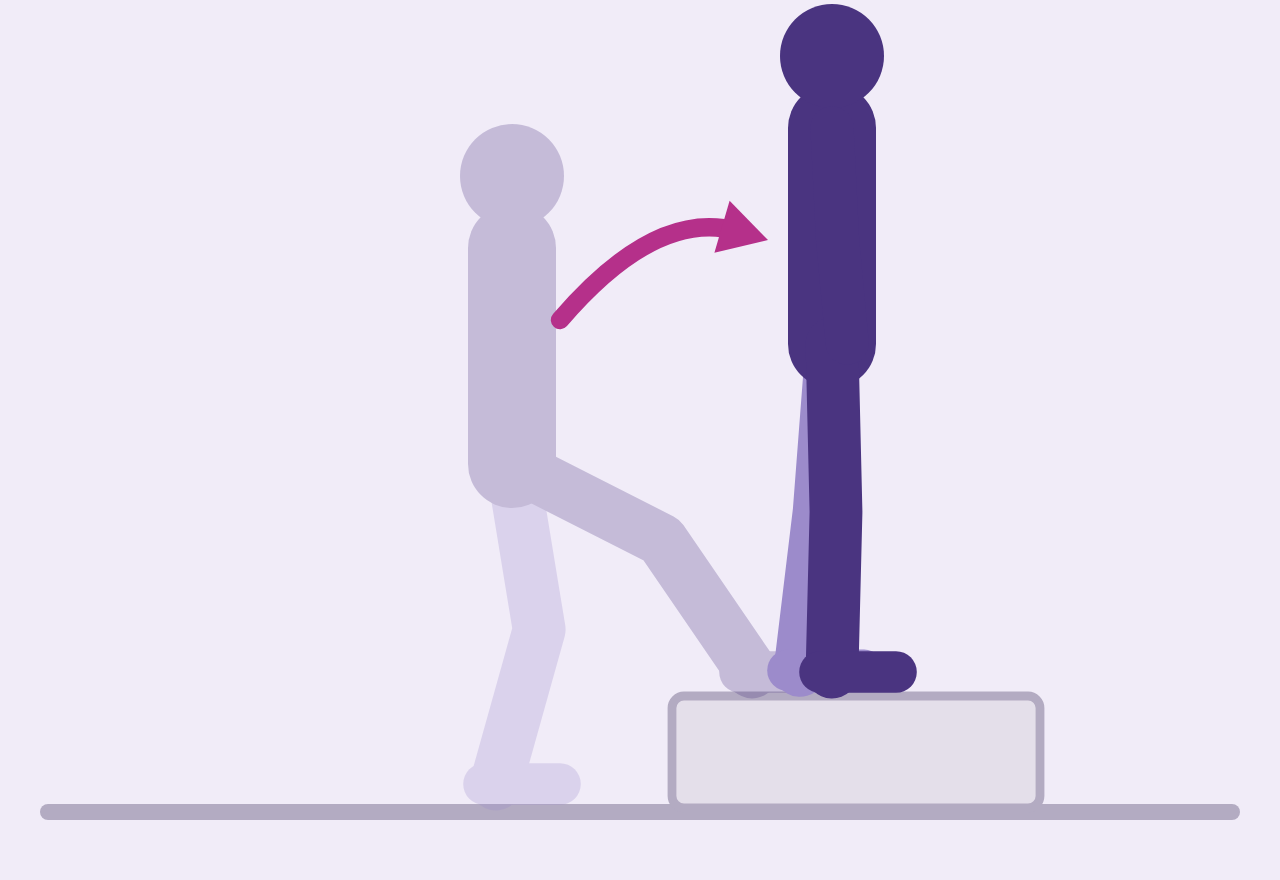
Step-upsStep up onto a low step with the sore leg, straighten up, then step down slowly. Keep your knee over your second toe. Progress to a higher step or holding weights.3 × 10–15 each leg, 2–3 times a week
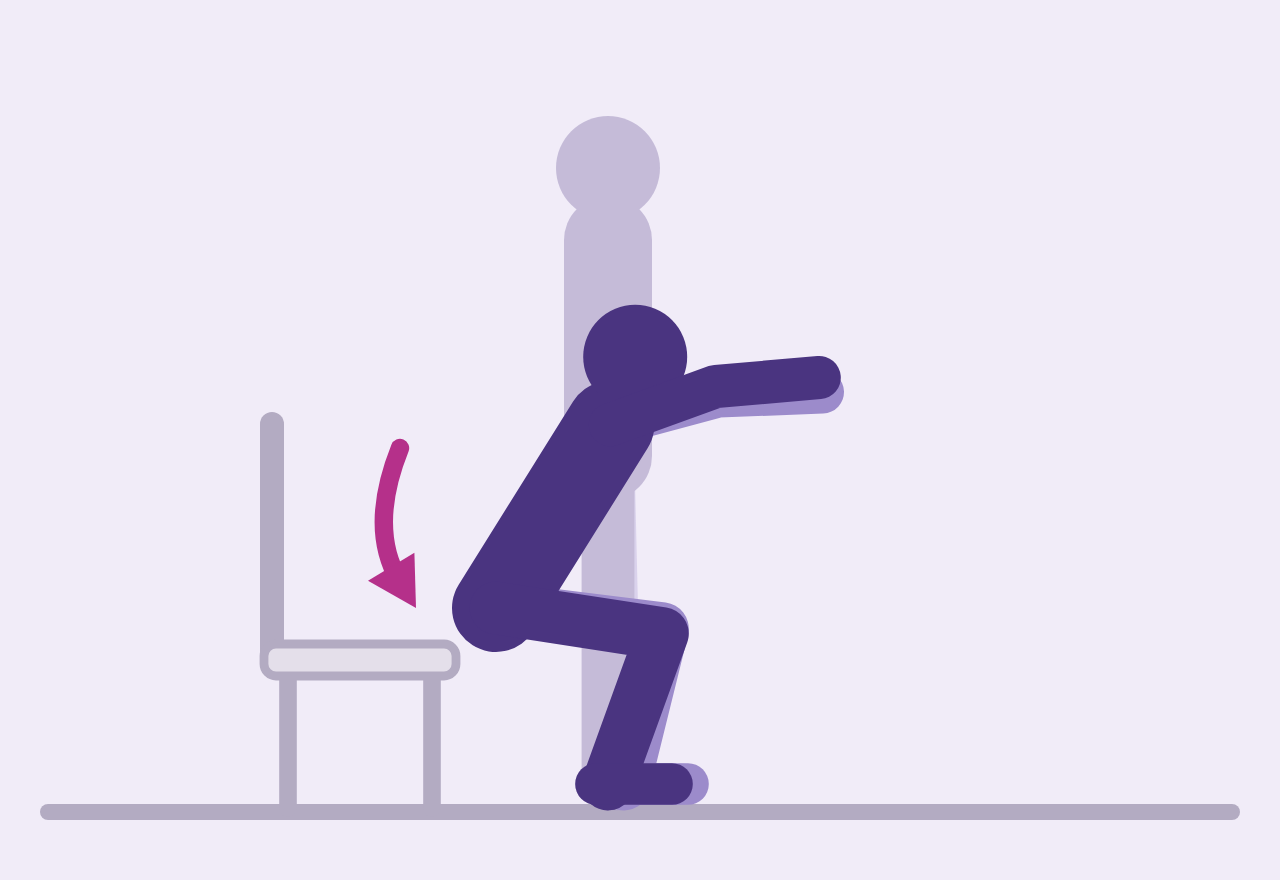
SquatsFeet hip-width apart, chair behind you. Sit back as if into the chair, then stand. Start shallow and go deeper as it settles. Deep squatting under load can stay sore for longer: build up slowly.3 × 10–15, 2–3 times a week
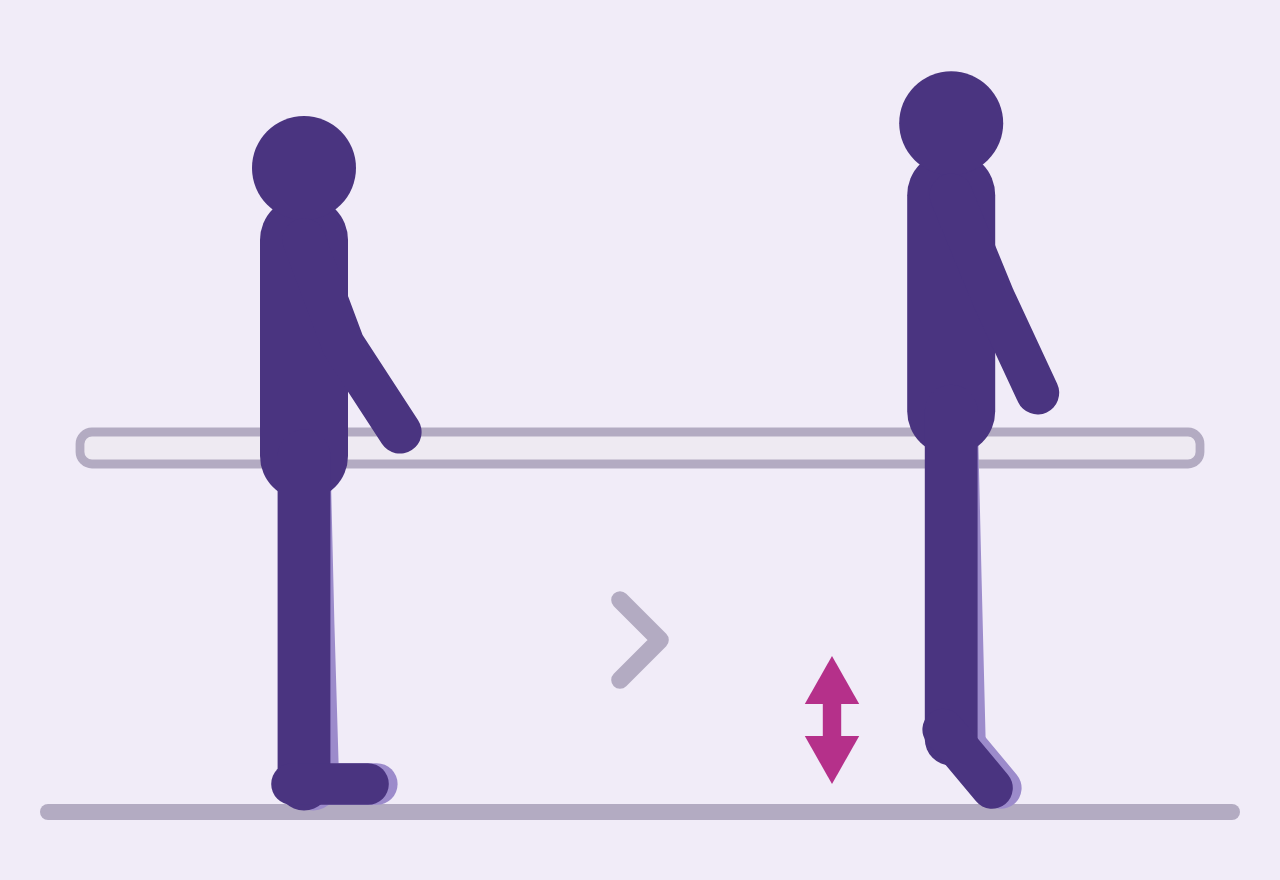
Heel raisesHold a bench and rise up onto your toes, then lower slowly. Progress to one leg.3 × 15, 2–3 times a week
Single-leg balance and reachStand on the sore leg with a slight bend in the knee, near a bench for safety. Hold 30 seconds, then progress to reaching the other foot forwards, sideways and back. Balance training was part of the programs that matched surgery.3 × 30 seconds (or 3 × 8 reaches), 2–3 times a week
Extras that can help: losing a little weight if you need to eases the load on the inner knee. Paracetamol or an anti-inflammatory gel can help you keep exercising. A physio-led program, or a GLA:D course if you also have knee arthritis, adds supervision and keeps you going.
Stop and see your GP or physio if
Your knee truly locks: it gets stuck bent and won’t straighten until you wiggle it free
It keeps giving way
It swelled up within hours of a twisting injury, especially if you’re young or active in sport
A hot, red, swollen knee, or fever (same day)
Pain at night or at rest that keeps getting worse
No improvement after 3 months of regular exercise
Want a supervised program?
A physio can tailor the exercises and progress them safely. An exercise physiologist can help with gym loading. If you have a chronic condition, ask your GP about a GP Chronic Condition Management Plan (GPCCMP): it gives a Medicare rebate for up to 5 allied health visits a year (physio, exercise physiologist or podiatrist).
Common questions
Do I need surgery for a meniscal tear?
Usually not, if it’s a wear-and-tear tear and your knee doesn’t truly lock. Trials found keyhole surgery to trim the meniscus was no better than exercise, and one found it no better than fake (sham) surgery. Some people who don’t improve after 3 months of exercise do go on to surgery.
Will the tear heal with exercise?
The tear itself often stays on MRI, but pain and function usually improve anyway. Many people with meniscal tears on MRI have no knee pain at all.
Is the clicking or catching harmful?
Usually not. Clicking or catching without pain or true locking is common and doesn’t mean you’re doing damage.
How long does it take to get better?
Most people notice a difference within 6–12 weeks. Keep a few favourite exercises going afterwards to keep your thighs strong.
Updated 23 November 2026. General education, not personal medical advice. Everyone is different, so check with your GP or physio before starting a new exercise program.