ADHD in Adults
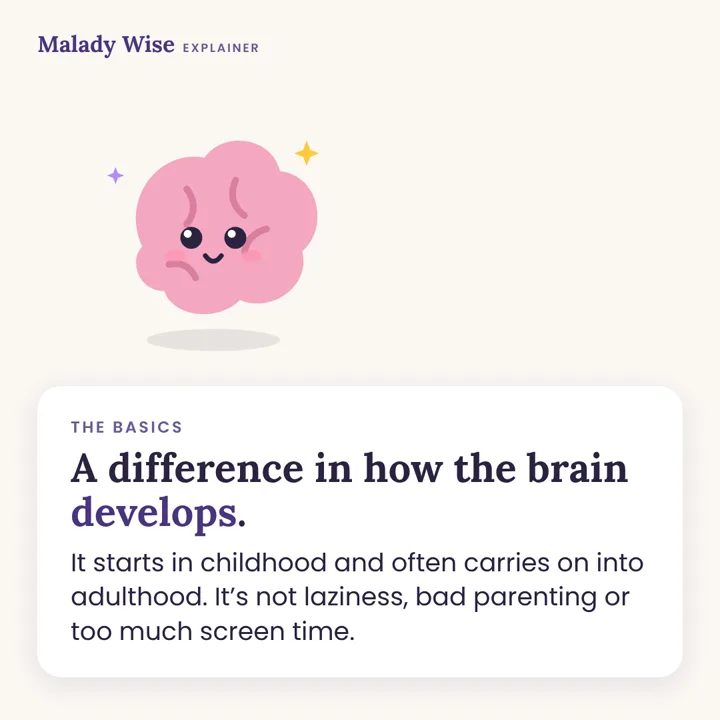
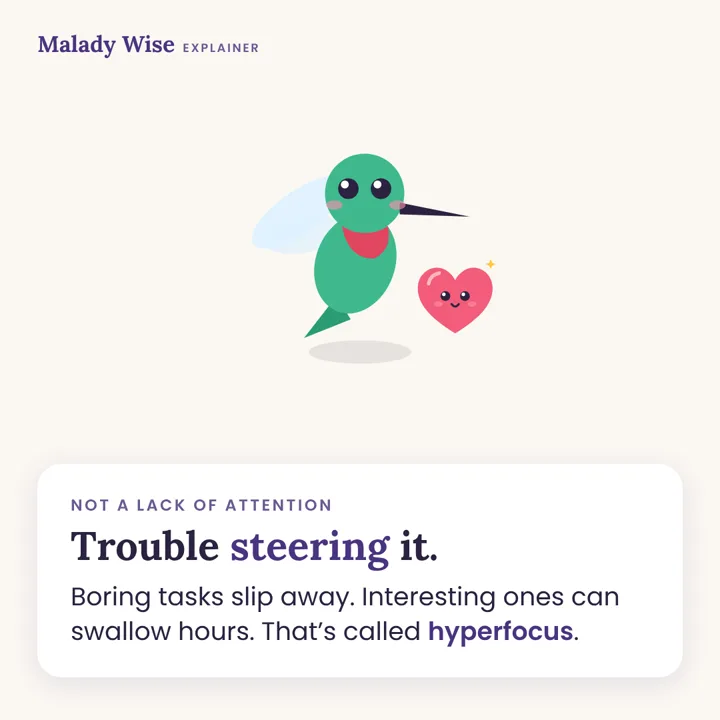
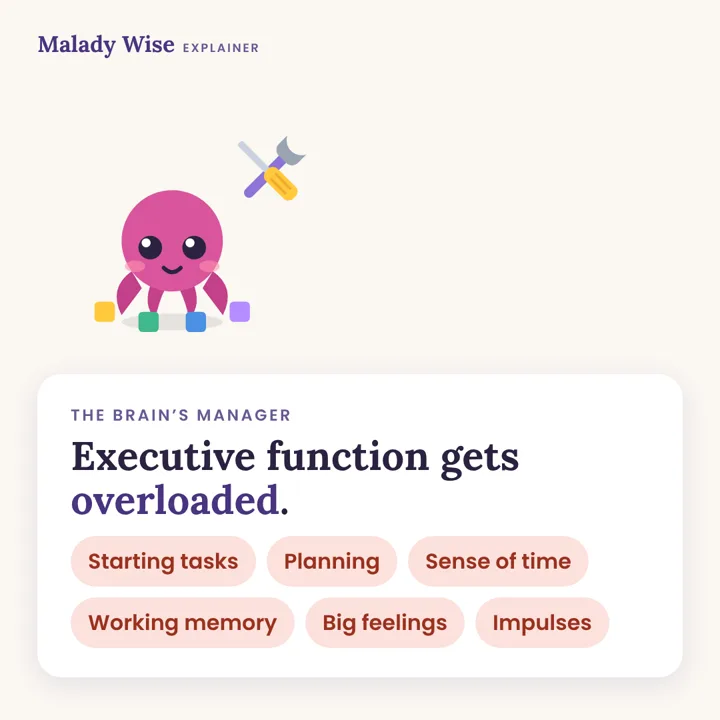
ADHD doesn’t stop at 18, and many adults, especially women, are only diagnosed in their 20s, 40s or later. It can look like chronic lateness, half-finished projects and a brain with 40 tabs open, alongside creativity, energy and the power to hyperfocus. Diagnosis and treatment can be life-changing.
What is ADHD?
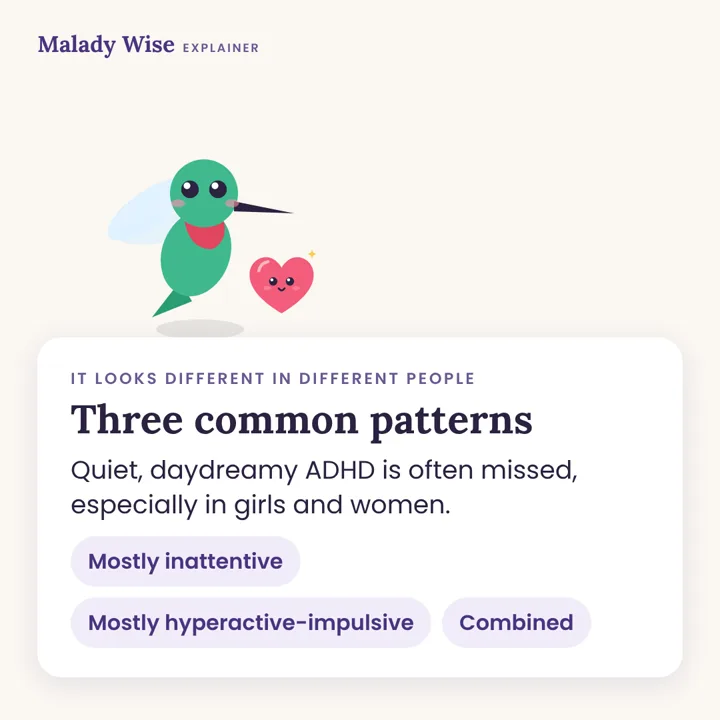
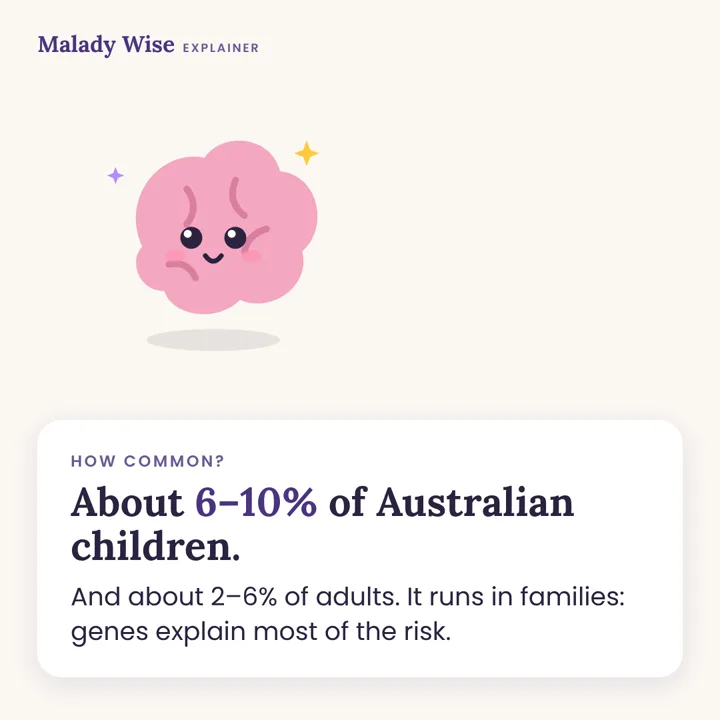
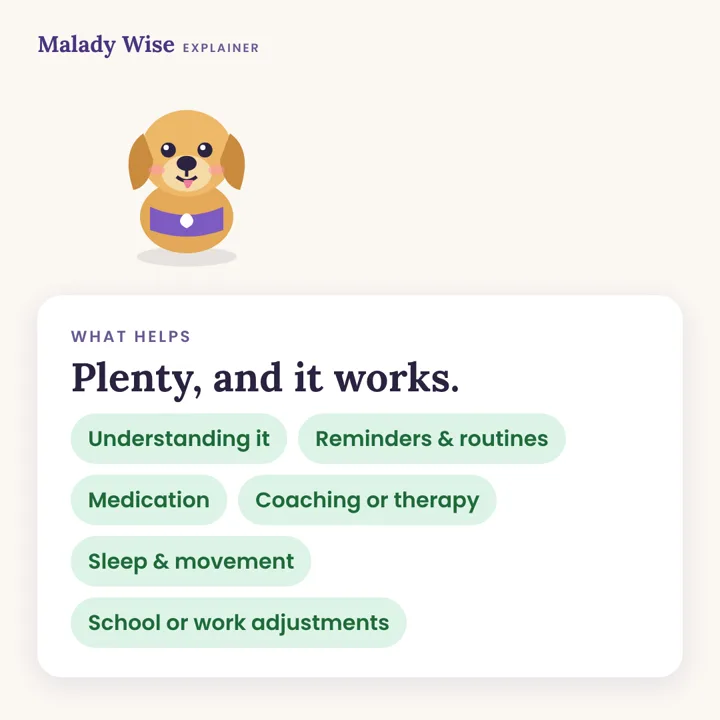
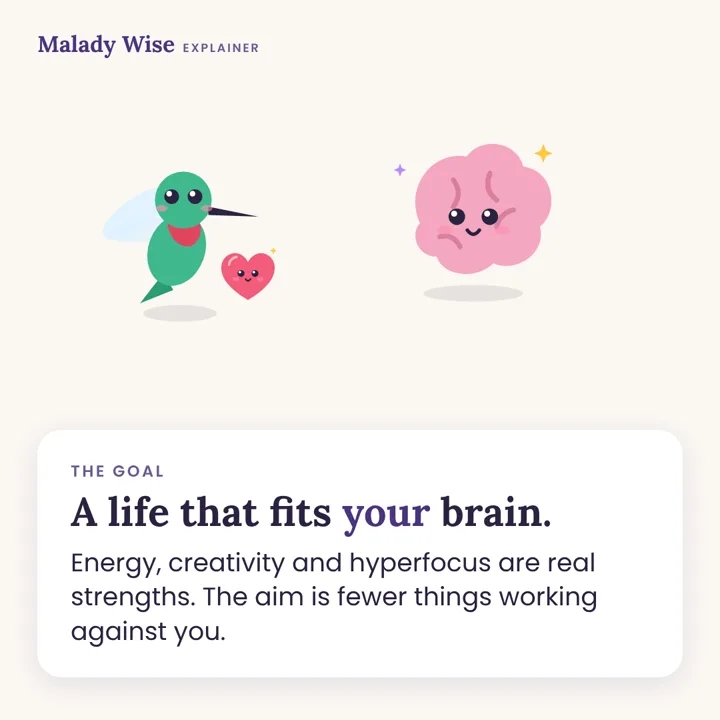
A short picture guide. Tap through the slides, or watch the video.
The adult ADHD ladder
Most adults do best with a mix: systems that suit an ADHD brain, adjustments at work or study, and medicine for many. For the overview and costs, see our ADHD fact sheet.
- Step 1 · Self-careBuild an external brainOne calendar, alarms for everything, visible to-do lists, body doubling (working alongside someone), plus regular exercise and sleep.
- Works
- Little trial evidence for the systems themselves; exercise and sleep help mood and focus, and many adults rely on these tools
- Cost
- Free to cheap
- How long
- Ongoing. Expect to rebuild the system when life changes
- Watch for
- Buying a new planner instead of using the old one
Memory is optional when your phone has 14 alarms.
- Step 2 · Allied healthCBT for adult ADHDPractical therapy for planning, procrastination, time-blindness and the self-criticism that years of “you’re so capable, if only…” leave behind.
- Works
- Moderate benefit in trials, especially alongside medicine
- Cost
- Psychologist about $200–300 a session, with Medicare rebates on a GP mental health plan
- How long
- Usually 8–12 sessions
- Watch for
- Choose someone experienced with adult ADHD. Coaching is unregulated, so check training
Medicine helps you start. Skills help you finish.
- Step 3 · Work and studyReasonable adjustmentsWritten as well as spoken instructions, a quieter workspace or headphones, flexible hours, regular check-ins and help breaking big projects into steps.
- Works
- Little formal research, but recommended in guidelines and often the difference between coping and thriving
- Cost
- Free to you. In Australia, JobAccess gives free advice and may fund equipment; uni disability services arrange study adjustments
- How long
- Reviewed as roles change
- Watch for
- You don’t have to tell your employer, but you usually need to share something to get adjustments
Open-plan offices: designed by someone who has never lost a thought mid-sentence.
- Step 4 · PrescriptionStimulant medicine (lisdexamfetamine, dexamfetamine or methylphenidate)First-choice medicine for adults when ADHD causes real problems. See dexamfetamine and methylphenidate.
- Works
- Amphetamine-type medicines were the best first choice for adults in a large 2018 comparison. In a big US study, crash risk was about 40% lower in months people took their ADHD medicine
- Cost
- PBS rules for adults depend on the medicine and when ADHD was diagnosed; some people pay privately. See our ADHD sheet for prices
- How long
- Works within about an hour; the dose is adjusted over weeks
- Watch for
- Poor appetite, trouble sleeping, faster pulse, higher blood pressure, anxiety. Never share it: it’s a tightly controlled medicine
It doesn’t make you a different person. Most people say they finally feel like themselves.
- Step 5 · PrescriptionNon-stimulant medicine (atomoxetine, or guanfacine off-label)When stimulants don’t suit you, aren’t safe for you, or don’t help enough. See guanfacine.
- Works
- About half respond well; on average about two-thirds as effective as stimulants
- Cost
- Often private for adults, about $60–150 a month
- How long
- Daily; 4–12 weeks to work fully
- Watch for
- Atomoxetine: nausea, tiredness, rarely mood changes. Guanfacine: sleepiness, low blood pressure; don’t stop it suddenly
Slow and steady. No peaks, no crashes, no clock-watching.
- Step 6 · SpecialistPsychiatristFor diagnosis, and when anxiety, depression, bipolar disorder, substance use or autism are part of the picture.
- Works
- Not a treatment as such: confirms the diagnosis and treats everything that comes with it
- Cost
- Assessments often cost several hundred to over a thousand dollars, with partial Medicare rebates
- How long
- Waits can be months. In NSW, trained GPs can continue treatment and some can now diagnose and start it
- Watch for
- Bring school reports, and if you can, someone who knew you as a child
Old report cards: finally useful.
Save your money
Popular, heavily marketed or often asked about, but the evidence is weak or says no.
- Online quizzes as a diagnosisScreening questionnaires are a good start for a GP conversation, nothing more. Plenty of things mimic ADHD, from poor sleep to thyroid problems.
- “Nootropics” and focus supplementsNo good trials showing they treat ADHD, and some contain stimulants that aren’t on the label.
- Brain scans, qEEG or genetic “ADHD profiles”Australian guidelines found they don’t improve diagnosis. Pricey pictures, same old history needed.
- NeurofeedbackEvidence in adults is inconclusive, and courses cost thousands.
What you can do
- Try a free adult ADHD screening questionnaire, then book a long GP appointment to talk it through.
- Gather evidence from childhood: school reports, and a chat with a parent or sibling about what you were like before 12.
- Be honest with your doctor about alcohol, cannabis or other drugs. Many adults use them to cope, and it changes the treatment plan.
- Use your strengths. Hyperfocus, quick thinking and calm in a crisis suit many jobs; build your role around them where you can.
- If you drive, tell your doctor if attention or medicine affects it. Licensing rules vary by country (in the UK, you must tell the DVLA if it affects your driving).
- Store medicine safely and never share it.
See your GP if
- You’ve struggled with focus, organisation, restlessness or impulses since childhood, and it affects work, study, money or relationships
- You have low mood, anxiety, sleep problems or are using alcohol or drugs to cope
- Your child has been diagnosed with ADHD and you recognise yourself
- You’re pregnant or planning pregnancy while on ADHD medicine (don’t stop suddenly; talk it through)
- You have side effects such as a racing heart, high blood pressure, weight loss or mood changes
Call 000 (or your local emergency number) for chest pain, fainting, or a racing heart that won’t settle. See a doctor the same day for hallucinations, paranoia or severe agitation on ADHD medicine. Adults with ADHD have a higher risk of suicide: if you have thoughts of ending your life, call Lifeline on 13 11 14 (24/7, Australia), or 000 if you are in danger.
Support lines
If you or someone else is in danger right now, call your emergency number. To talk to someone, any time:
- Australia: Lifeline 13 11 14 (24/7, or text 0477 13 11 14), Suicide Call Back Service 1300 659 467, Beyond Blue 1300 22 4636, 13YARN 13 92 76 for Aboriginal and Torres Strait Islander people. Emergency: 000.
- Young people in Australia: Kids Helpline 1800 55 1800 (24/7, ages 5 to 25) or headspace (ages 12 to 25).
- New Zealand: call or text 1737. Emergency: 111.
- UK and Ireland: Samaritans 116 123. Emergency: 999 (or 112).
- US and Canada: call or text 988. Emergency: 911.
- Anywhere else: findahelpline.com lists free helplines in more than 100 countries.
Common questions
What does ADHD look like in adults?
Often less running around and more inner restlessness. Common signs: losing track of time, missing deadlines, forgetting appointments, starting many things and finishing few, losing keys and phones, interrupting, impulse spending and a short fuse. Many adults also describe intense focus on things that interest them.
How is ADHD diagnosed in adults?
A psychiatrist or trained doctor takes a detailed history. Signs need to have started before age 12, though they may not have been noticed then, and to cause problems in more than one area of life, such as work and home. Adults need at least 5 signs from a list (children need 6). Other causes such as sleep problems, thyroid disease, anaemia, anxiety or substance use are ruled out. There’s no scan or blood test for it.
Why are women often diagnosed later?
Women more often have the inattentive type, which is quieter and easier to miss. Many work hard to cover their struggles, and anxiety or depression is often diagnosed first. Guidelines now stress that ADHD should be considered at any age.
Can I drive on ADHD medicine?
Yes, for most people, and treatment often helps. A large US study found crash risk was about 40% lower in months people took their medicine. Don’t drive if you feel drowsy or unwell, and follow your local licensing rules.
Do I have to tell my employer?
No. It’s your choice. But to ask for adjustments you usually need to share some information about what you need. In Australia, employers must make reasonable adjustments for disability, and JobAccess can advise both of you for free.
Should I say “has ADHD” or “is an ADHDer”?
Either is fine. Some people prefer person-first language (“a child with ADHD”); many in the ADHD community prefer identity-first (“an ADHDer”, “an ADHD kid”), because ADHD is part of how they think, not something they carry around. We use both. If you’re not sure, ask the person what they prefer.
Can ADHD develop in adulthood?
ADHD starts in childhood, but it’s often only noticed in adulthood when work, study or parenting demands outgrow old coping strategies. If attention problems are truly new in adult life, other causes such as poor sleep, depression, anxiety, thyroid problems or perimenopause should be checked first.
Does ADHD get worse with menopause?
Many women report that ADHD symptoms such as forgetfulness and brain fog get worse in perimenopause, possibly because falling oestrogen affects attention. Research is still limited, so tell your doctor if things change, as treatment of menopause symptoms or ADHD may need review.
Is adult ADHD medicine addictive?
Taken as prescribed, stimulant medicine has a low risk of addiction, and treating ADHD is linked to lower rates of substance misuse, accidents and injuries. Stimulants are still controlled medicines, so they should never be shared.
Helpful resources
- ADHD AustraliaEvidence-based information for adults and workplaces, plus an online community. Free.
- JobAccessFree Australian government advice on workplace adjustments, for employees and employers, and funding for some equipment.
- ADHD UKUK charity with information, a self-screening tool and support groups. Free.
Evidence and more information
- NHS: ADHD in adults
- AADPA: Australian evidence-based clinical practice guideline for ADHD (2022)
- Summary of the Australian ADHD guideline (prevalence, diagnosis, adult treatment)
- NICE: ADHD diagnosis and management (NG87)
- JAMA Psychiatry (2017) summary: ADHD medicine and car crashes
- Lancet Psychiatry (2018): Comparing ADHD medicines in children and adults
maladywise.com/adhd-adults/