Glimpsis archive: past spot-the-diagnosis photos
Every past spot-the-sign image, with the answer, why it fits and a pearl. Newest first.
Play today’s puzzle All medical games
32 past puzzles, up to Wednesday 25 November 2026. Today’s and future puzzles are never shown here.
November 2026
#32 · Wednesday 25 November 2026 Medium
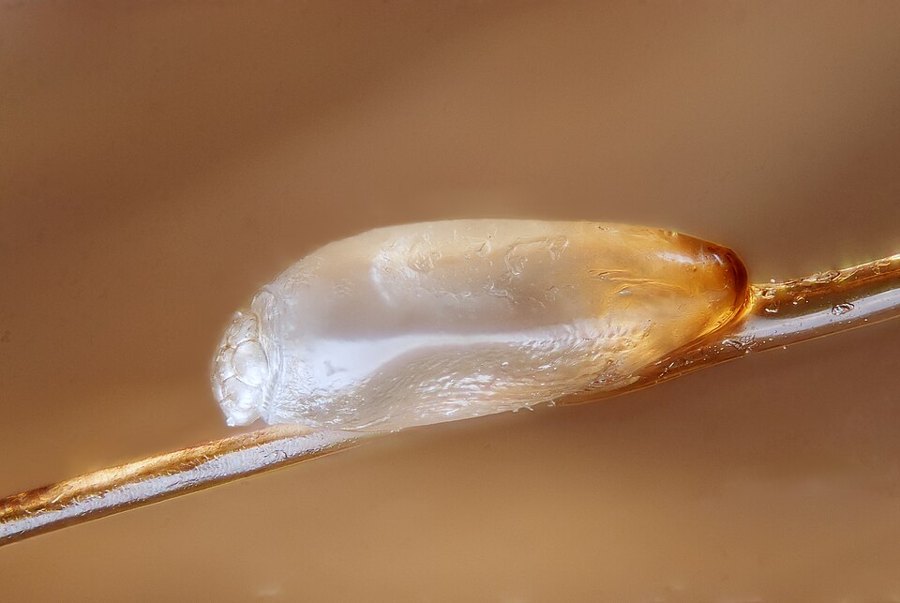
Source page by Gilles San Martin · CC BY-SA 2.0 · via Wikimedia Commons Up close
A school note went home about an itchy scalp outbreak. This is what the microscope showed on a few hairs.
Answer: Head lice eggs (nits)
Why: Oval eggs cemented to hair shafts near the scalp, at different stages of development.
Pearl: Nits are glued on; dandruff and hair casts slide off. Nits more than about 1 cm from the scalp are usually empty shells, so they don't prove active infestation.
Play this puzzle#31 · Tuesday 24 November 2026 Easy
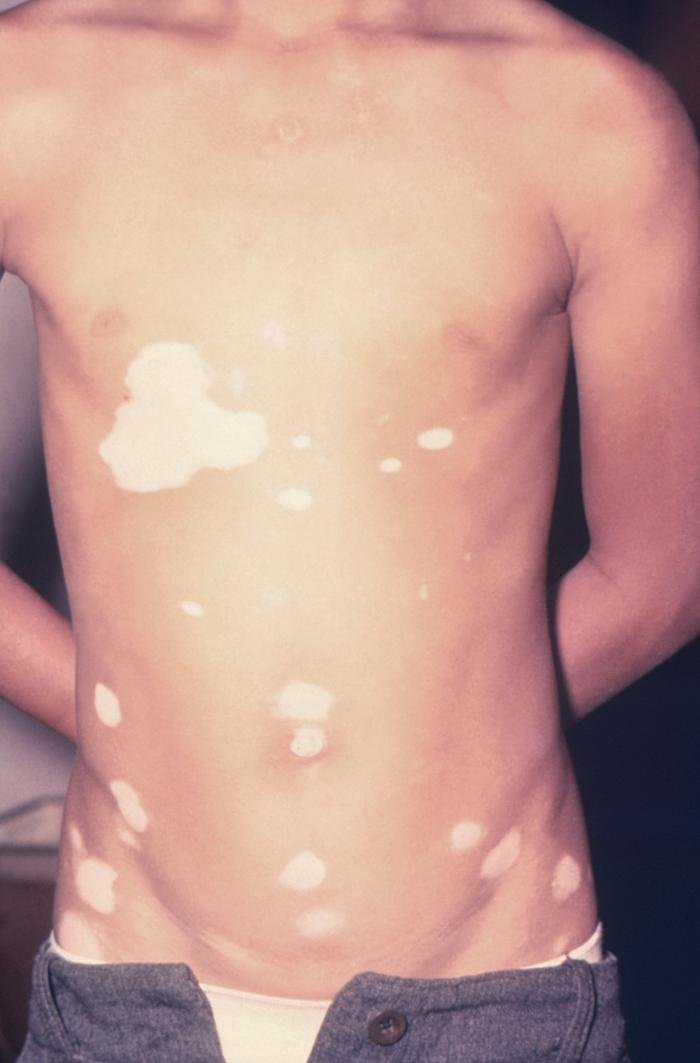
Source page by CDC/ Brian Hill, New Zealand · Public domain · via CDC Public Health Image Library Look at the trunk
A 19-year-old with painless, flat pale patches on the trunk that burn easily in the sun. No itch, no scale.
Answer: Vitiligo
Why: Sharply defined, completely depigmented patches with normal skin texture.
Pearl: Vitiligo is autoimmune loss of melanocytes. Pityriasis versicolor is scaly and partly pale; leprosy patches are numb. Check thyroid function.
Play this puzzle#30 · Monday 23 November 2026 Easy
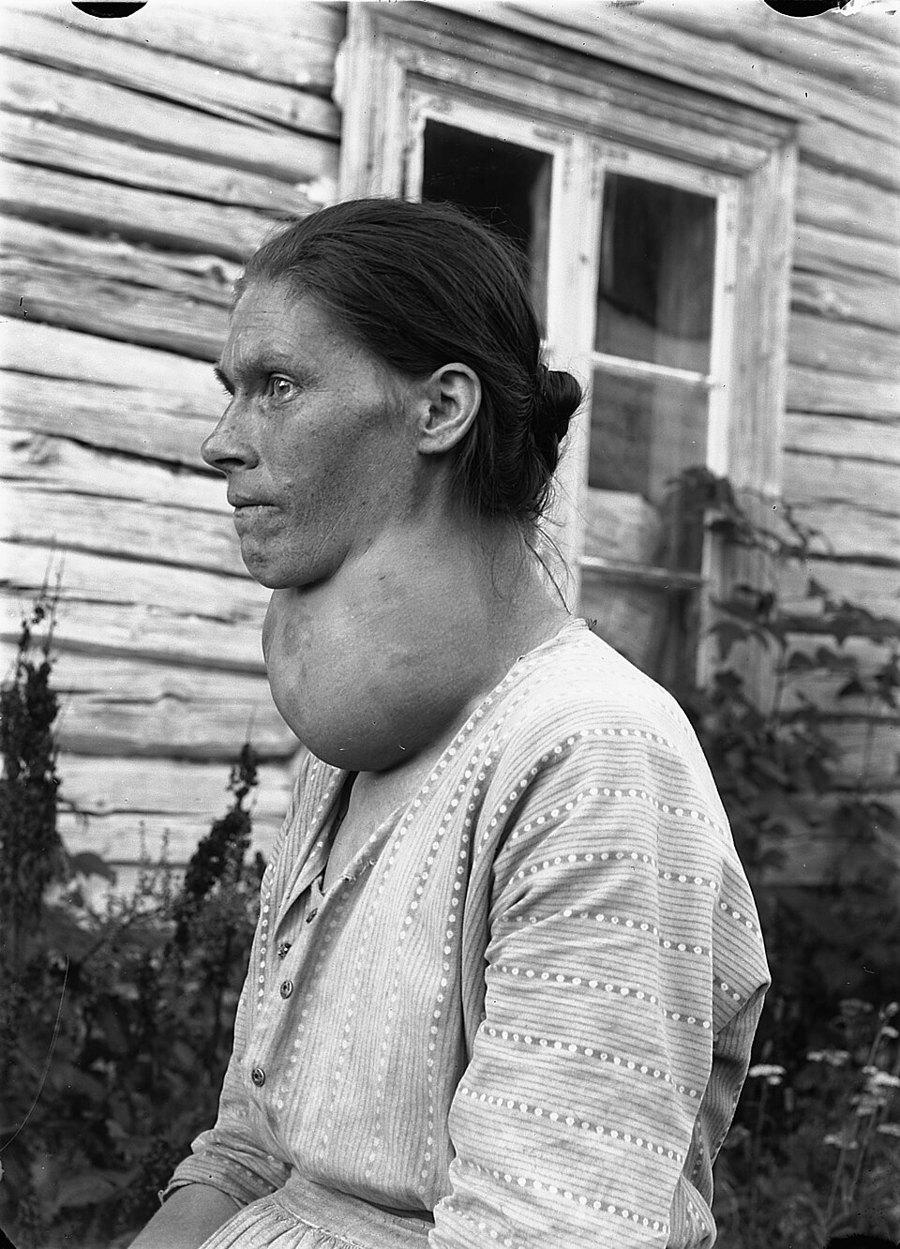
Source page by Martin Finborud · Public domain · via Wikimedia Commons Look at the neck
A woman from a mountain valley far inland, far from the sea, with a lump in her neck that has grown slowly for years.
Answer: Goitre
Why: A large, diffuse swelling of the lower front of the neck: an enlarged thyroid gland.
Pearl: Iodine deficiency is still the commonest cause of goitre worldwide. A thyroid lump moves on swallowing; a thyroglossal cyst also moves when the tongue sticks out.
Play this puzzle#29 · Sunday 22 November 2026 Genius
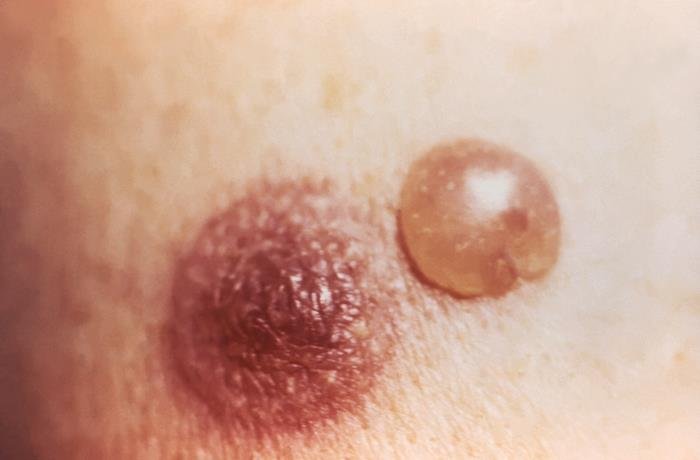
Source page by CDC/Dr James H. Nakano · Public domain · via CDC Public Health Image Library A sore on the hand
A farmer bottle-feeding lambs this spring has a firm nodule on the hand. Otherwise well.
Answer: Orf
Why: A firm, red, target-like nodule beside a fluid-filled lesion that is crusting.
Pearl: Orf usually heals without treatment. Milker's nodule looks almost identical but comes from cattle. Ask everyone with a hand lump what animals they handle.
Play this puzzle#28 · Saturday 21 November 2026 Hard
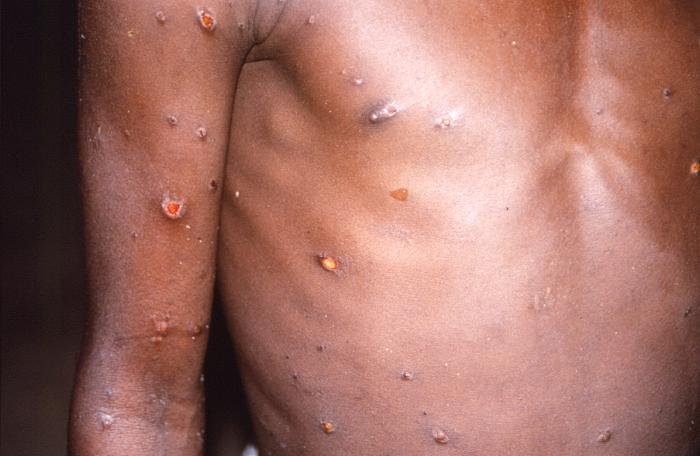
Source page by CDC/Brian W.J. Mahy, BSc, MA, PhD, ScD, DSc · Public domain · via CDC Public Health Image Library Spots everywhere
A patient with fever and swollen lymph nodes, followed by a rash. All the spots look much the same.
Answer: Mpox
Why: Firm, deep-seated pustules and crusts across the arm and trunk, mostly at the same stage.
Pearl: Prominent lymphadenopathy helps tell mpox from smallpox. Since 2022 most cases have spread through close or sexual contact, sometimes with only a few genital or anal lesions. A vaccine is available.
Play this puzzle#27 · Friday 20 November 2026 Hard
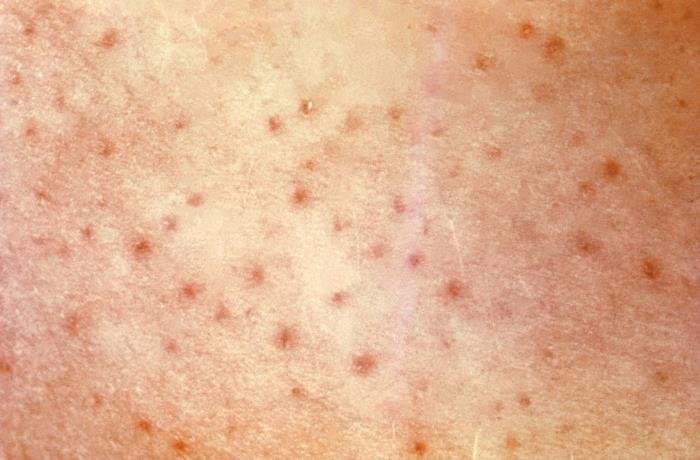
Source page by CDC · Public domain · via CDC Public Health Image Library Tiny dots
A 60-year-old living alone on toast and tea, with bleeding gums, easy bruising and poor wound healing.
Answer: Perifollicular haemorrhages (scurvy)
Why: Small red-brown haemorrhages centred on hair follicles.
Pearl: Scurvy hasn't gone away: think of it in older people living alone, heavy drinkers and people on very restricted diets. It responds quickly to vitamin C.
Play this puzzle#26 · Thursday 19 November 2026 Medium
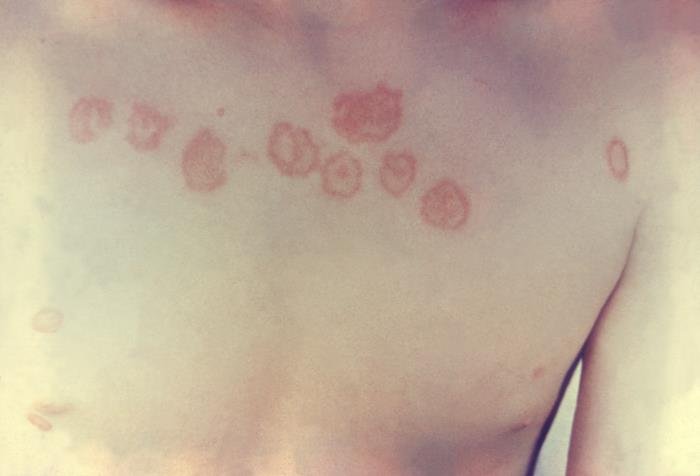
Source page by CDC/Dr Lucille K. Georg · Public domain · via CDC Public Health Image Library Rings on the chest
A man who works with cattle, with a few slowly spreading itchy rings on his chest.
Answer: Tinea corporis (ringworm)
Why: Ring-shaped red lesions with a raised scaly edge and clearer centres.
Pearl: Topical steroids make ringworm spread and look odd ('tinea incognito'). Treat with a topical antifungal for a week or two after it clears.
Play this puzzle#25 · Wednesday 18 November 2026 Medium
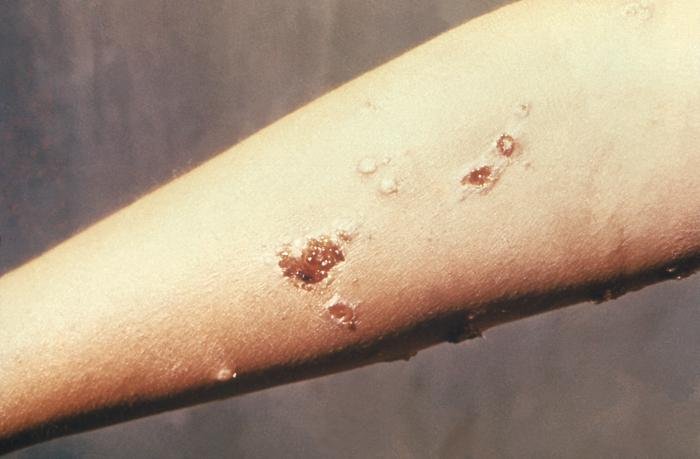
Source page by CDC/Dr Herman Miranda, Univ. of Trujillo, Peru; A. Chambers · Public domain · via CDC Public Health Image Library Crusty sores
A 9-year-old with spreading sores on the arm after scratching insect bites. Classmates have it too.
Answer: Impetigo
Why: Superficial erosions with golden-brown crusts on the forearm.
Pearl: In remote Aboriginal and Torres Strait Islander communities, school sores (strep impetigo) are linked to rheumatic fever and kidney disease, so they matter more than they look.
Play this puzzle#24 · Tuesday 17 November 2026 Easy
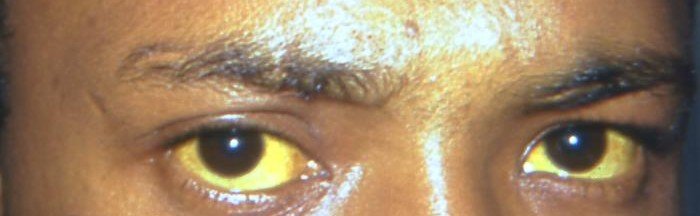
Source page by CDC/ Dr. Thomas F. Sellers/Emory University (cropped) · Public domain · via CDC Public Health Image Library Look at the eyes
A 29-year-old back from a holiday, with a week of nausea, dark urine and pale stools.
Answer: Jaundice (scleral icterus)
Why: Yellow sclerae: bilirubin deposits in the elastin-rich white of the eye.
Pearl: Carotenaemia (too many carrots) yellows the skin but spares the sclerae. Dark urine with pale stools points to a conjugated, obstructive or hepatic cause.
Play this puzzle#23 · Monday 16 November 2026 Easy

Source page by CDC · Public domain · via CDC Public Health Image Library Look at the nails
A 34-year-old woman with heavy periods, tiredness and breathlessness on stairs.
Answer: Koilonychia
Why: Thin, flattened, spoon-shaped nails, most obvious on the thumbs.
Pearl: Koilonychia classically means iron deficiency. Find the cause: in women think heavy periods; in men and post-menopausal women, the gut until proven otherwise.
Play this puzzle#22 · Sunday 15 November 2026 Genius
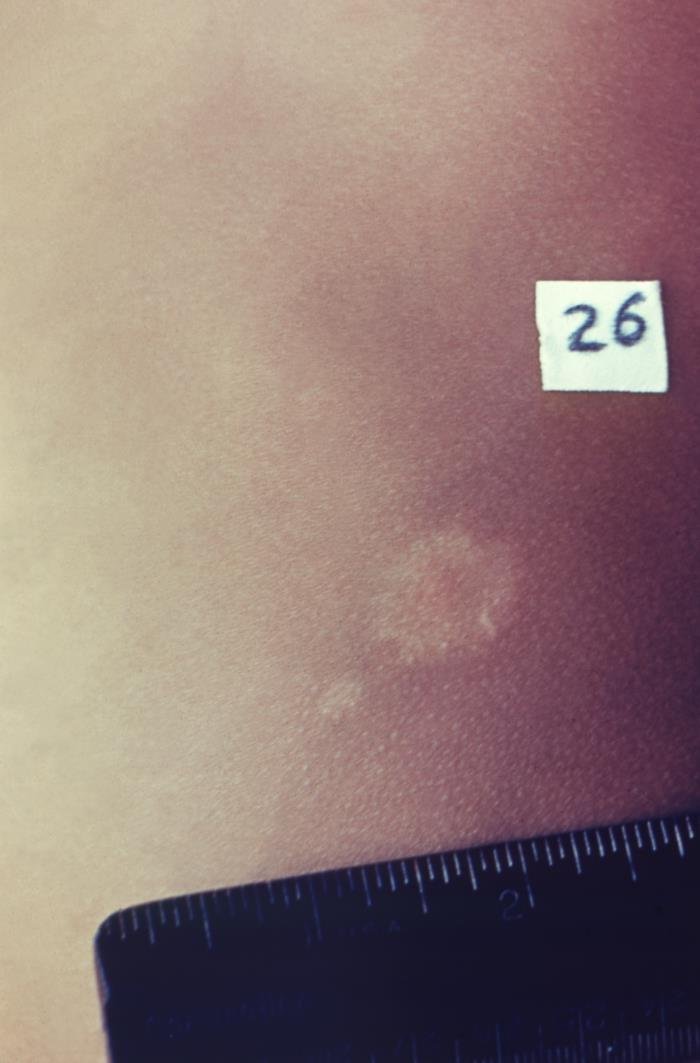
Source page by CDC · Public domain · via CDC Public Health Image Library On the forearm
A 35-year-old who grew up in a rural farming village, with a pale patch on the forearm that has been there for months. No itch.
Answer: Leprosy (Hansen's disease)
Why: A pale, slightly raised patch of skin, which in this story has lost sensation.
Pearl: A pale patch that has lost sensation is leprosy until proven otherwise. It's curable with multidrug therapy and is not highly contagious. It still exists, including in parts of northern Australia.
Play this puzzle#21 · Saturday 14 November 2026 Einstein
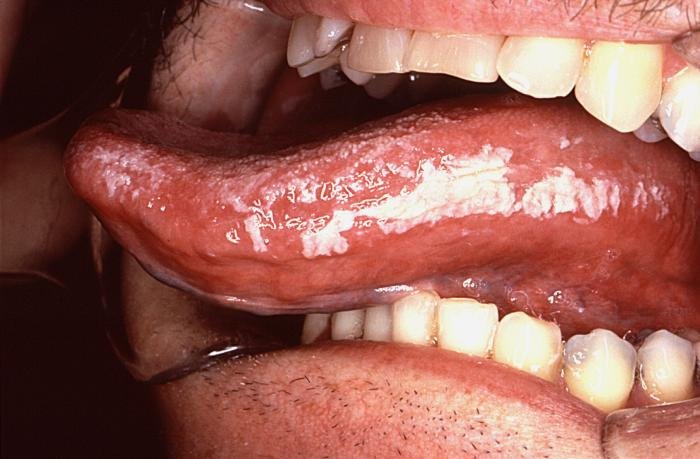
Source page by CDC/Sol Silverman, Jr., DDS · Public domain · via CDC Public Health Image Library Side of the tongue
A 38-year-old's dentist noticed these painless patches at a routine check-up.
Answer: Oral hairy leukoplakia
Why: White, corrugated patches along the side of the tongue that won't wipe away.
Pearl: Unlike thrush, oral hairy leukoplakia won't scrape off. In someone not known to be immunosuppressed, it's an indication for an HIV test.
Play this puzzle#20 · Friday 13 November 2026 Hard
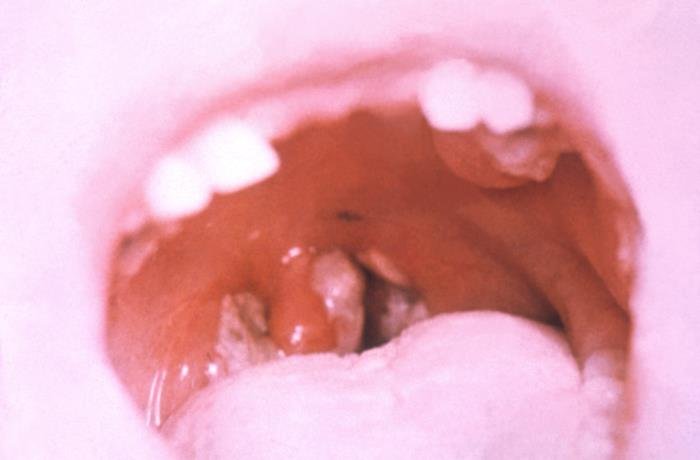
Source page by CDC/Carl Flint · Public domain · via CDC Public Health Image Library Look at the throat
An unvaccinated traveller with a sore throat, low fever and a very swollen neck.
Answer: Diphtheria
Why: A thick grey membrane stuck over the tonsil and spreading onto the throat.
Pearl: The pseudomembrane bleeds when scraped, unlike tonsillar exudate. Give antitoxin early, as well as antibiotics, and notify public health. Vaccination has made it rare, but outbreaks happen.
Play this puzzle#19 · Thursday 12 November 2026 Medium
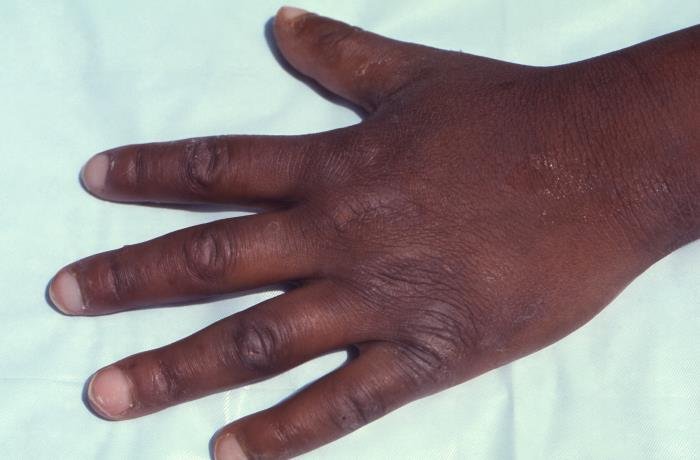
Source page by CDC/ Dr. Behrens · Public domain · via CDC Public Health Image Library Look at the hand
A person with a long-standing lung problem and chronic cough.
Answer: Finger clubbing
Why: Bulbous fingertips with loss of the normal angle between the nail and nail fold.
Pearl: Clubbing is not a feature of uncomplicated COPD, so new clubbing in a smoker needs a chest X-ray to look for lung cancer.
Play this puzzle#18 · Wednesday 11 November 2026 Medium
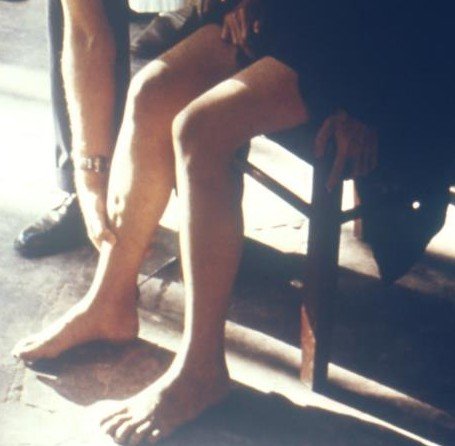
Source page by CDC (cropped) · Public domain · via CDC Public Health Image Library Look at the shin
A woman in a community where the staple food is polished white rice, with weakness and swollen legs.
Answer: Pitting oedema
Why: A thumb pressed into the swollen shin leaves a dent: fluid in the tissues that can be pushed aside.
Pearl: Pitting oedema means excess tissue fluid. Lymphoedema and myxoedema are usually non-pitting. Diets based on polished rice can cause thiamine deficiency.
Play this puzzle#17 · Tuesday 10 November 2026 Easy
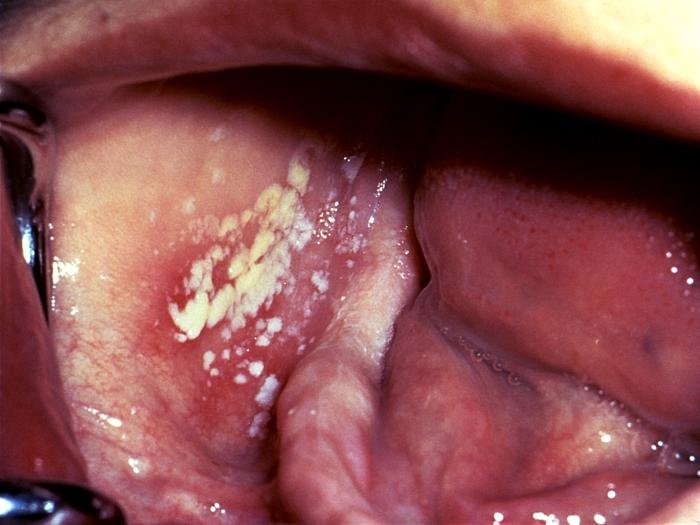
Source page by CDC/Sol Silverman, Jr., DDS · Public domain · via CDC Public Health Image Library Something white
A 72-year-old using an inhaled steroid for COPD, with a sore mouth and an odd taste.
Answer: Oral candidiasis (thrush)
Why: Creamy white plaques on red oral mucosa that can be scraped away.
Pearl: Thrush wipes off; leukoplakia and oral hairy leukoplakia don't. Unexplained thrush in a young adult deserves an HIV test.
Play this puzzle#16 · Monday 9 November 2026 Easy
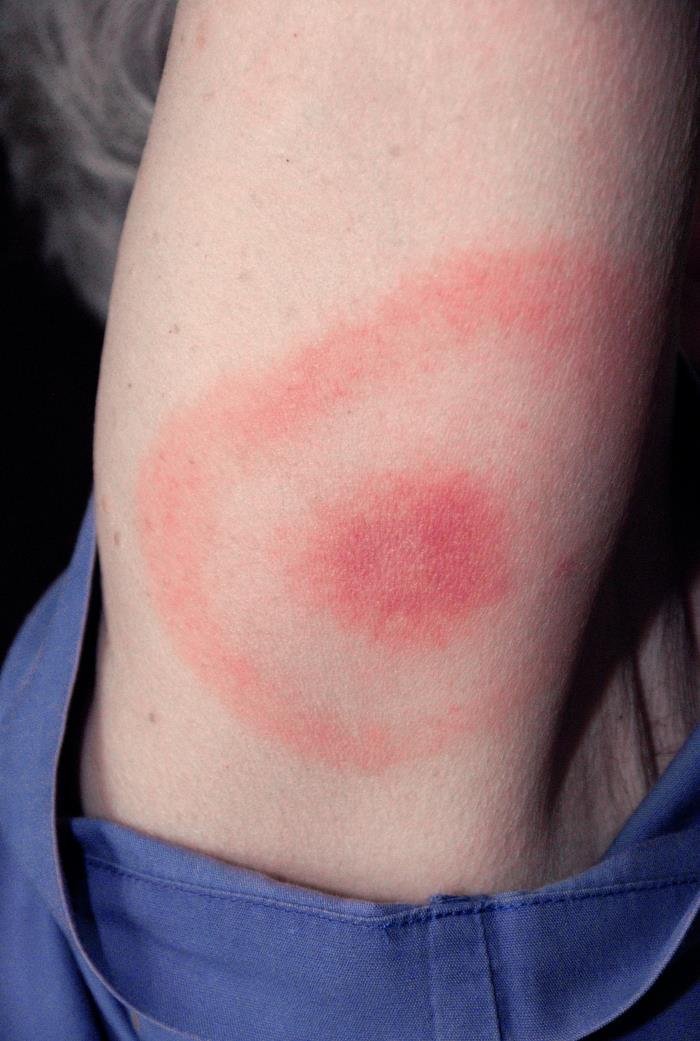
Source page by CDC/James Gathany · Public domain · via CDC Public Health Image Library A spreading ring
A hiker in the northeastern US with fatigue and a slowly expanding, painless red patch on the arm, a week after a weekend camping.
Answer: Erythema migrans
Why: A large bull's-eye red patch that expanded outward from a tick-bite site.
Pearl: Erythema migrans is diagnostic of early Lyme disease in an endemic area, so treat without waiting for serology, which is often negative this early. Lyme disease acquired locally in Australia has not been proven.
Play this puzzle#15 · Sunday 8 November 2026 Genius
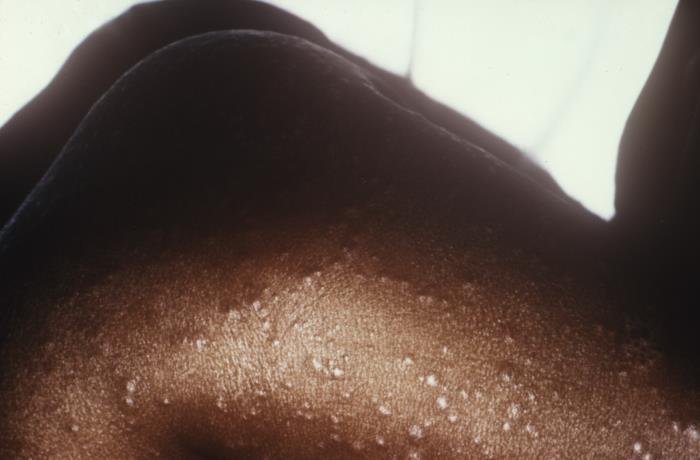
Source page by CDC · Public domain · via CDC Public Health Image Library A historical image
This photo was taken before 1980. The patient had high fever and back pain, then a rash that began on the face and arms.
Answer: Smallpox
Why: Dense, firm, deep-seated lesions over the knee and thigh, all at the same stage.
Pearl: Smallpox lesions are all at the same stage and concentrated on the face and limbs; chickenpox is mixed-stage and mostly on the trunk. Smallpox is the only human disease eradicated so far.
Play this puzzle#14 · Saturday 7 November 2026 Hard
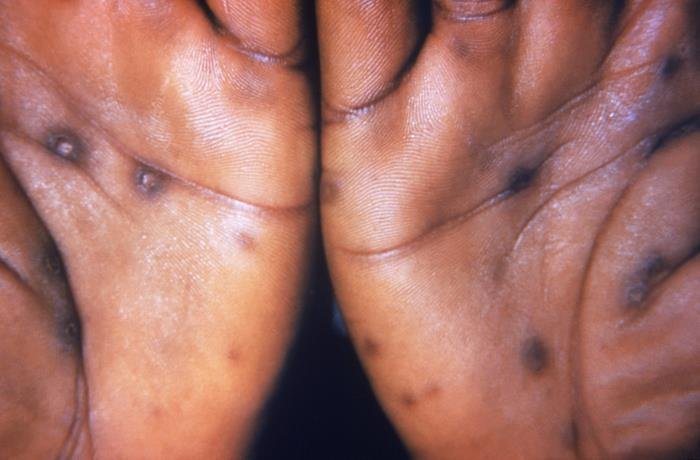
Source page by CDC · Public domain · via CDC Public Health Image Library Look at the palms
A 31-year-old with a sore throat, patchy hair loss and a non-itchy rash, a couple of months after a painless sore that healed.
Answer: Secondary syphilis
Why: Scaly, coppery-brown papules on both palms.
Pearl: Rashes on the palms and soles have a short list: secondary syphilis, hand, foot and mouth disease, erythema multiforme and some rickettsial infections. Syphilis rates are rising, including congenital syphilis.
Play this puzzle#13 · Friday 6 November 2026 Hard
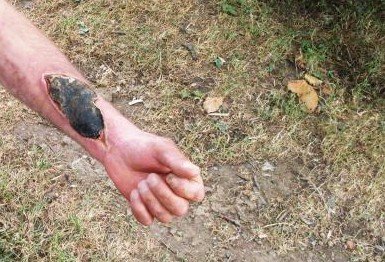
Source page by CDC/Archil Navdarashvili, Georgia (Republic) (cropped) · Public domain · via CDC Public Health Image Library A black scab
A farm worker who skinned a sick cow last week. The sore isn't painful, but the arm is swollen.
Answer: Cutaneous anthrax
Why: A large black eschar on the forearm with surrounding swelling.
Pearl: A painless black eschar with a lot of swelling around it should prompt you to ask about animals and hides. Cutaneous anthrax is very treatable with antibiotics, but notify public health.
Play this puzzle#12 · Thursday 5 November 2026 Medium
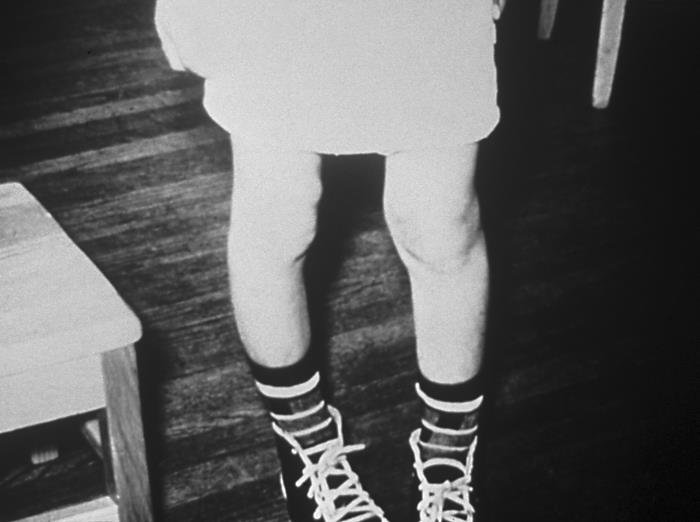
Source page by CDC · Public domain · via CDC Public Health Image Library Look at the legs
A child with poor growth and little sunlight, who was slow to walk.
Answer: Rickets
Why: Bowed legs (genu varum) from soft, poorly mineralised growing bones.
Pearl: Some bowing is normal in toddlers, but progressive or one-sided bowing needs a look. Rickets is making a comeback in children with dark skin, covering clothing or little sun.
Play this puzzle#11 · Wednesday 4 November 2026 Medium
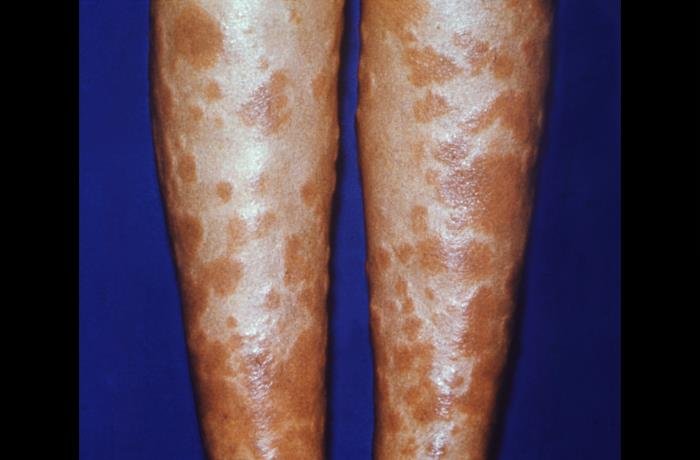
Source page by Dr. R. Huntington · Public domain · via CDC Public Health Image Library Tender shins
A 27-year-old woman with painful red lumps on both shins, achy joints and a recent sore throat.
Answer: Erythema nodosum
Why: Tender, raised red nodules over both shins: inflammation of the fat beneath the skin (panniculitis).
Pearl: Erythema nodosum with hilar lymphadenopathy is Löfgren's syndrome (sarcoidosis), which usually settles by itself. Check for strep, TB, IBD and medicines.
Play this puzzle#10 · Tuesday 3 November 2026 Easy
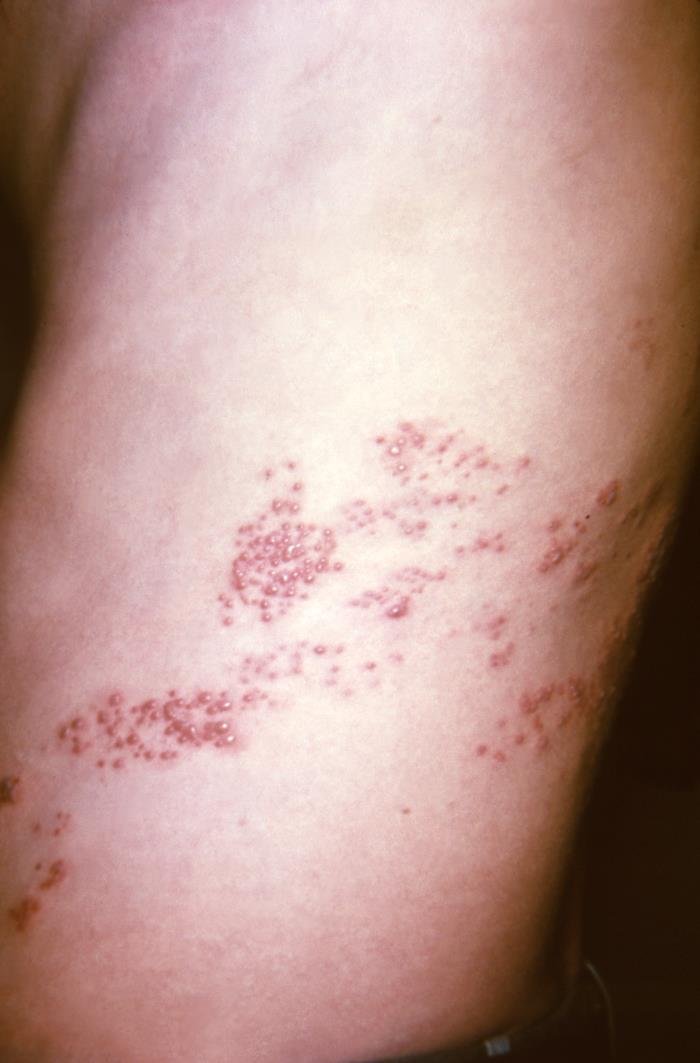
Source page by CDC/K.L. Herrmann · Public domain · via CDC Public Health Image Library A painful stripe
A 68-year-old with three days of burning pain on one side of the trunk, now with a rash in the same spot.
Answer: Shingles (herpes zoster)
Why: Clustered vesicles on red skin in a band following a single dermatome, on one side only.
Pearl: Start antivirals within 72 hours of rash onset. Vesicles on the tip of the nose (Hutchinson's sign) mean the eye may be involved. A vaccine is available for older adults.
Play this puzzle#9 · Monday 2 November 2026 Easy
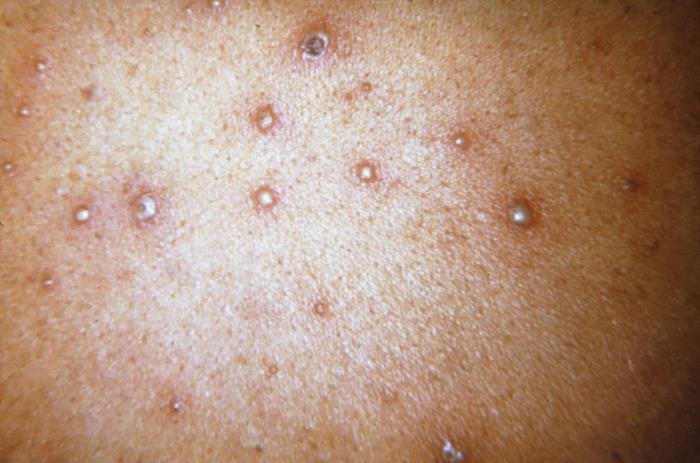
Source page by CDC/K.L. Herrmann · Public domain · via CDC Public Health Image Library Itchy spots, all over
A 24-year-old childcare worker with a mild fever and an itchy rash that started on her trunk two days ago.
Answer: Chickenpox (varicella)
Why: Clear vesicles on red bases alongside crusted lesions: crops at different stages at the same time, the hallmark of varicella.
Pearl: Lesions at different stages side by side means chickenpox; all at the same stage should make you think of smallpox or mpox. Adults and pregnant women get sicker, so antivirals matter more.
Play this puzzle#8 · Sunday 1 November 2026 Genius
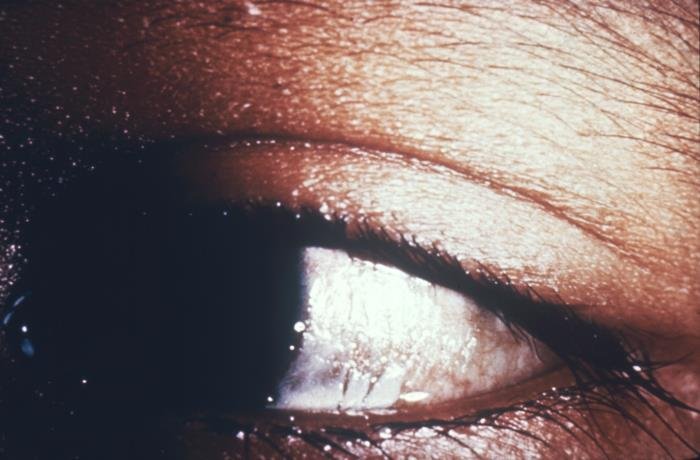
Source page by CDC · Public domain · via CDC Public Health Image Library Look at the eye
A person in a famine-affected area with night blindness and dry eyes.
Answer: Bitot's spots
Why: A foamy, keratinised plaque on a dry conjunctiva.
Pearl: Vitamin A deficiency is a leading cause of preventable blindness in children worldwide. Severe measles can tip a child into it, which is why vitamin A is part of measles treatment.
Play this puzzle
October 2026
#7 · Saturday 31 October 2026 Hard
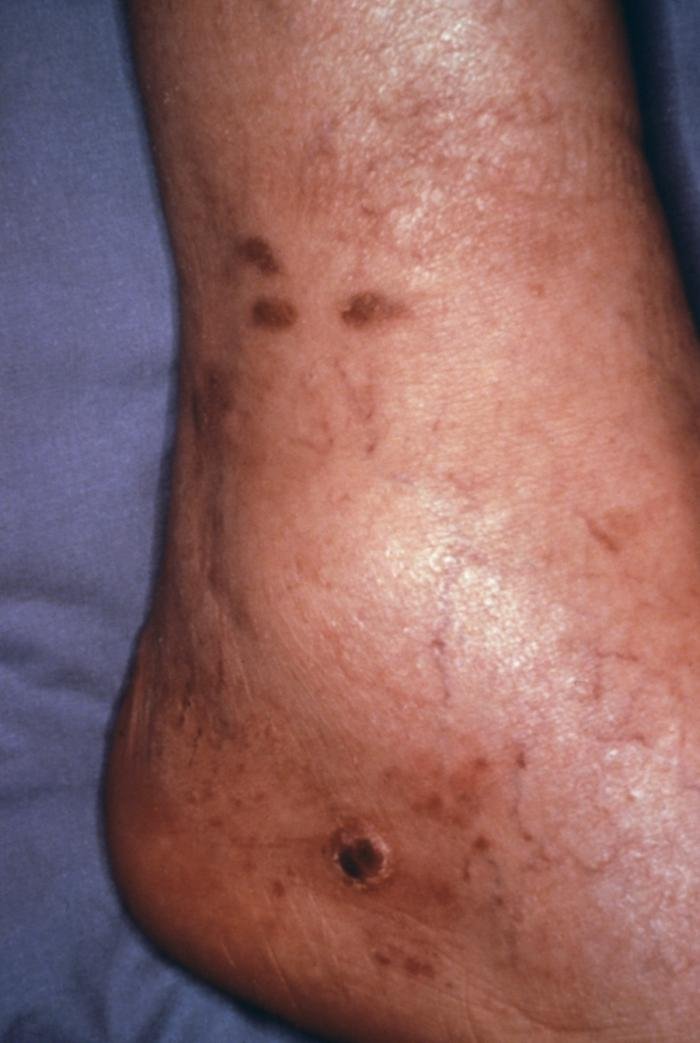
Source page by CDC/Dr Steve Kraus · Public domain · via CDC Public Health Image Library Purple marks
A 41-year-old with weight loss, not previously tested for HIV, and painless purple patches on the leg.
Answer: Kaposi sarcoma
Why: Purple-brown patches and papules around the ankle and foot.
Pearl: Kaposi sarcoma is an AIDS-defining illness and often improves with HIV treatment alone. It can also affect the mouth, gut and lungs.
Play this puzzle#6 · Friday 30 October 2026 Hard
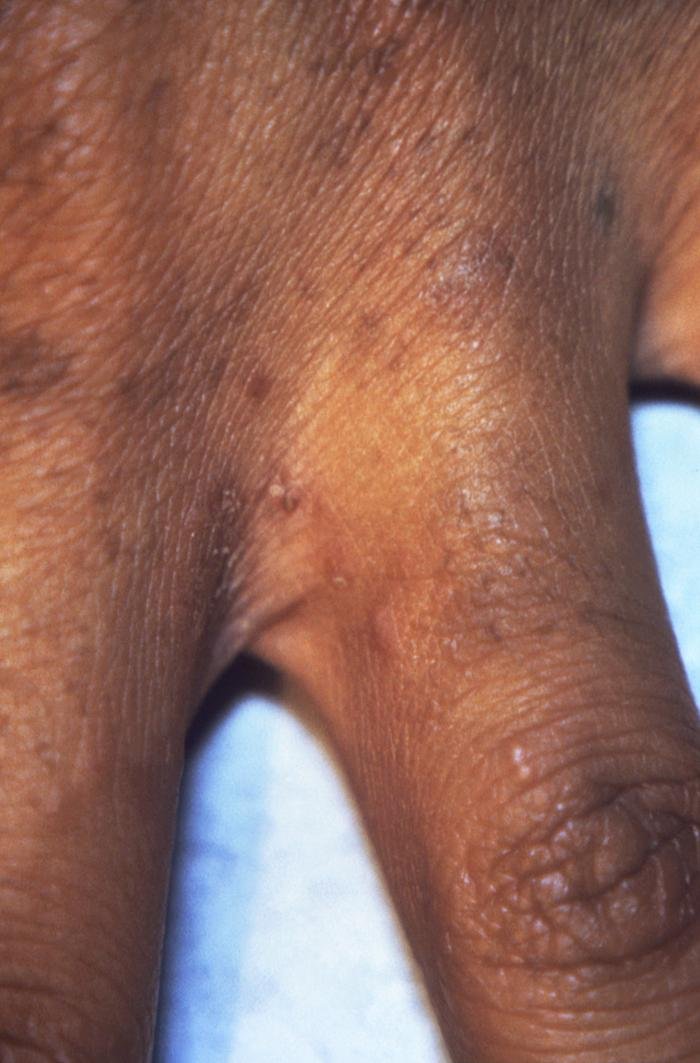
Source page by CDC/J. Pledger · Public domain · via CDC Public Health Image Library Itchy at night
Everyone in the household has had an intense itch for weeks, worst at night.
Answer: Scabies
Why: Small itchy papules in the finger web space, a favourite site for the burrowing mite.
Pearl: Treat all close contacts at once and wash bedding. Itch can last a few weeks after successful treatment, so it's not necessarily failure.
Play this puzzle#5 · Thursday 29 October 2026 Medium
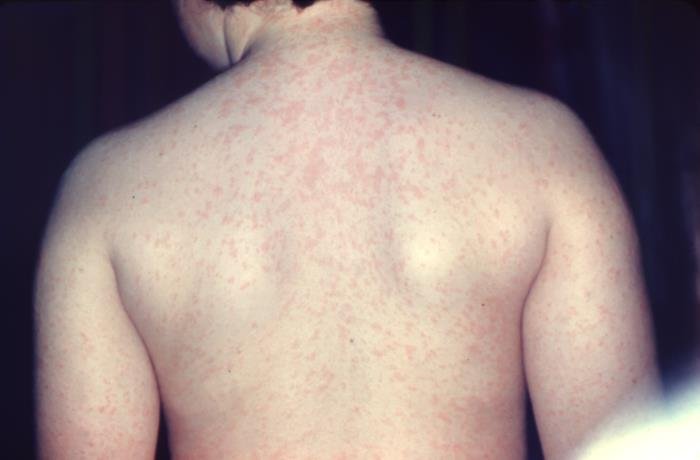
Source page by CDC/Dr Heinz F. Eichenwald · Public domain · via CDC Public Health Image Library Look at the back
An unvaccinated young person, five days into a fever with cough, runny nose and red eyes. The rash began on the face.
Answer: Measles
Why: A blotchy red maculopapular rash, merging into patches over the back.
Pearl: Measles is one of the most contagious infections known. The rash starts behind the ears and on the face and moves down. Two doses of MMR protect about 97%.
Play this puzzle#4 · Wednesday 28 October 2026 Medium
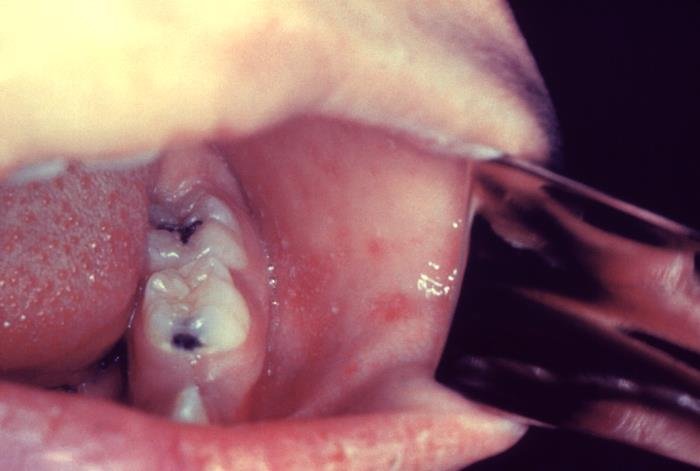
Source page by CDC/Dr Heinz F. Eichenwald · Public domain · via CDC Public Health Image Library Look inside the cheek
An unvaccinated 22-year-old with three days of high fever, cough, runny nose and red eyes. No rash yet.
Answer: Koplik spots
Why: Tiny white-grey spots on red buccal mucosa, opposite the molars.
Pearl: Koplik spots are pathognomonic of measles and appear before the rash, fading as it arrives. Measles is highly infectious, so notify public health and isolate.
Play this puzzle#3 · Tuesday 27 October 2026 Easy
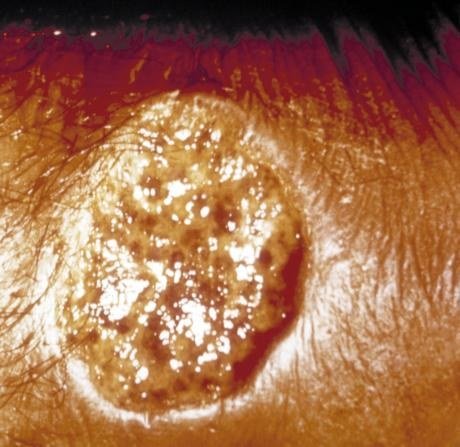
Source page by CDC (cropped) · Public domain · via CDC Public Health Image Library The sore that won't heal
A 34-year-old aid worker back from rural Afghanistan has a painless ulcer on her forearm. It started as a small bump where she was bitten by insects at dusk three months ago.
Answer: Cutaneous leishmaniasis
Why: A round, crusted ulcer with a raised, rolled border: the classic 'volcano' sore of cutaneous leishmaniasis.
Pearl: Cutaneous leishmaniasis is one of the WHO's neglected tropical diseases, with hundreds of thousands of new cases a year. Many sores heal alone over months but leave scars; some species can later spread to the nose and mouth.
Play this puzzle#2 · Monday 26 October 2026 Easy
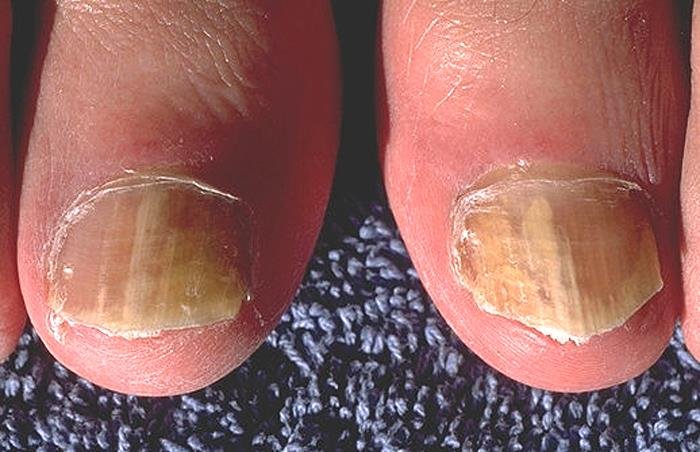
Source page by CDC/ Dr. Edwin P. Ewing, Jr. · Public domain · via CDC Public Health Image Library Thick yellow nails
A 67-year-old who swims at the local pool says his big toenails have slowly turned thick, yellow and crumbly.
Answer: Onychomycosis (fungal nail infection)
Why: Thick, yellow, streaky great toenails with crumbly debris lifting from the free edge.
Pearl: Confirm with nail clippings for microscopy and culture before months of treatment: only about half of abnormal-looking nails are fungal. Psoriasis is the great mimic.
Play this puzzle#1 · Sunday 25 October 2026 Genius
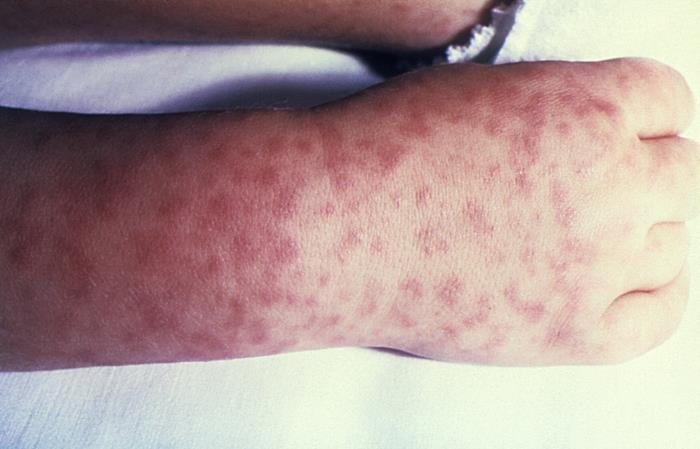
Source page by CDC · Public domain · via CDC Public Health Image Library A spotty wrist
A child in North Carolina is feverish with headache and muscle aches, five days after a family camping trip. The rash started at the wrists and ankles.
Answer: Rocky Mountain spotted fever
Why: Small blanching macules turning petechial over the wrist and back of the hand: a centripetal spotted-fever rash.
Pearl: Start doxycycline on suspicion, at any age: delays beyond day 5 sharply raise the death rate, and the classic triad of fever, rash and tick bite is present in only a minority at first. Related rickettsial spotted fevers occur worldwide.
Play this puzzle