Exercise is the main treatment for knee osteoarthritis, not a consolation prize. Your knee isn’t wearing out from use; it gets stronger with it.
Quick answer: The best exercises for knee arthritis are the ones you’ll keep doing: strength exercises, walking and tai chi are all strongly recommended. Try bridges, sit to stand, step-ups and band exercises. Some aching that settles by the next day isn’t damage. Benefits usually show within 6–12 weeks. See a doctor the same day for a hot, swollen knee.
How to use this
Pain rules: pain up to 5/10 during and after exercise is acceptable, as long as it’s back to your usual level by the next day. If it isn’t, drop back a level. Some discomfort is expected and isn’t a sign of harm.
How often: twice a week (GLA:D runs 2 sessions a week for 6 weeks), plus walking or other activity on most days.
How long: 6 weeks for the main program, then keep exercising to keep the benefit. Exercise makes everyday movement easier and can ease pain.
Progress when: you can do an exercise with good control and little effort. Each exercise has 3 levels; move up by adding a band or weight, using a higher step, or standing on something softer.
Based on: the GLA:D program and its exercises (Skou & Roos 2017; Ageberg 2010), the RACGP knee and hip osteoarthritis guideline, and the 2024 Cochrane review of exercise for knee osteoarthritis.
Your exercises
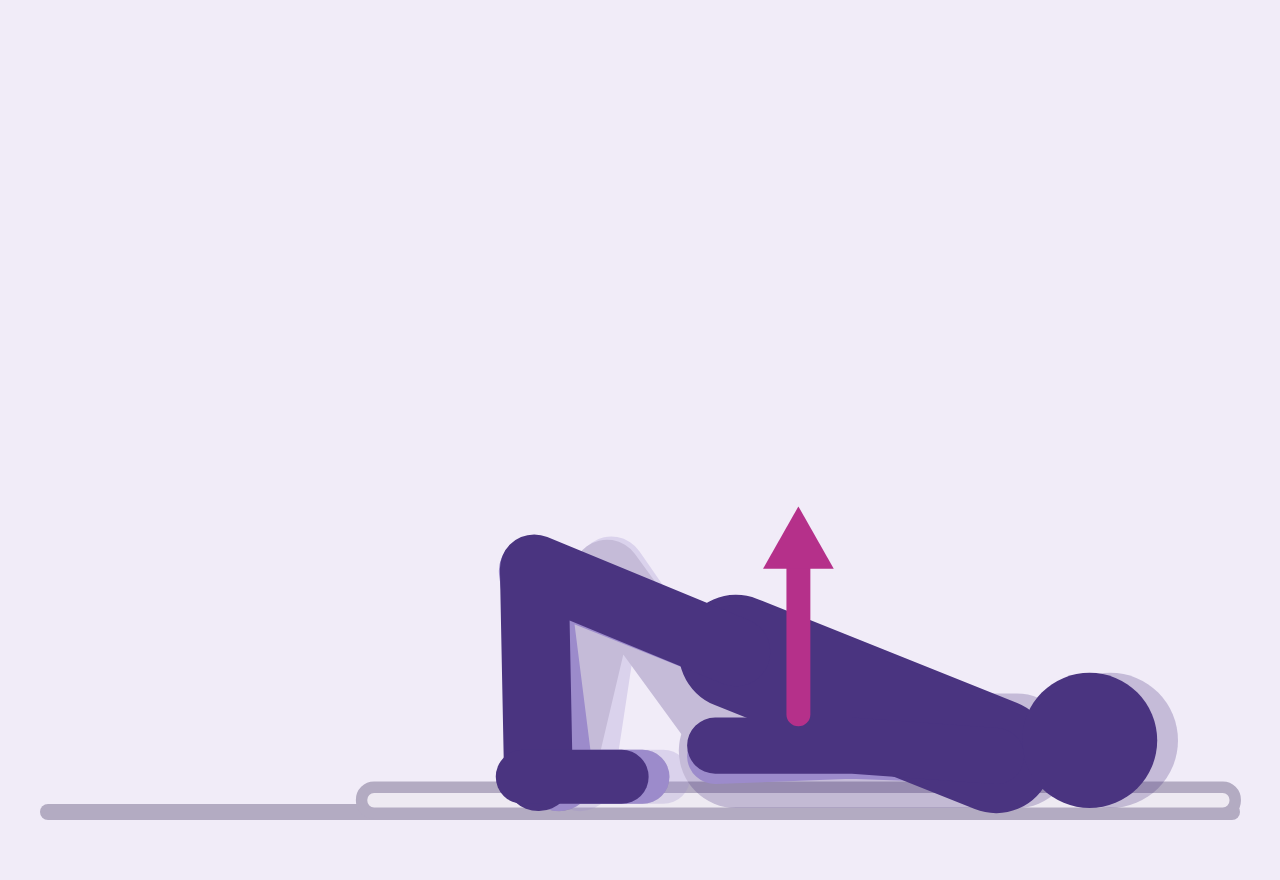
BridgeLie on your back, knees bent, feet flat. Lift your hips, then lower slowly. Level 2: walk your feet further away. Level 3: shift more of your weight onto one leg.2–3 sets of 10–15, twice a week
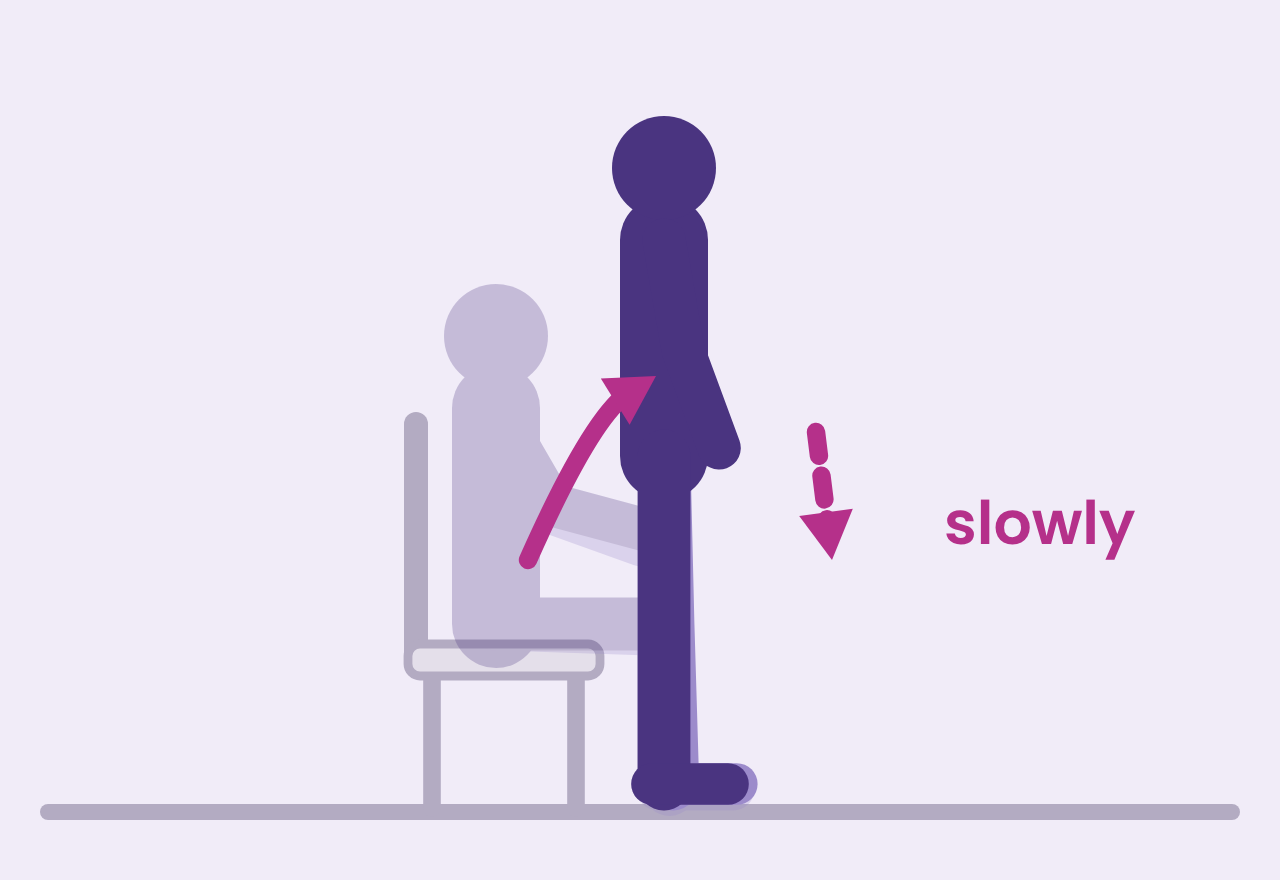
Sit to standStand up from a chair, then sit back down slowly. Level 1: feet side by side, light help from your hands. Level 2: no hands. Level 3: one foot slightly in front of the other.2–3 sets of 10–15, twice a week
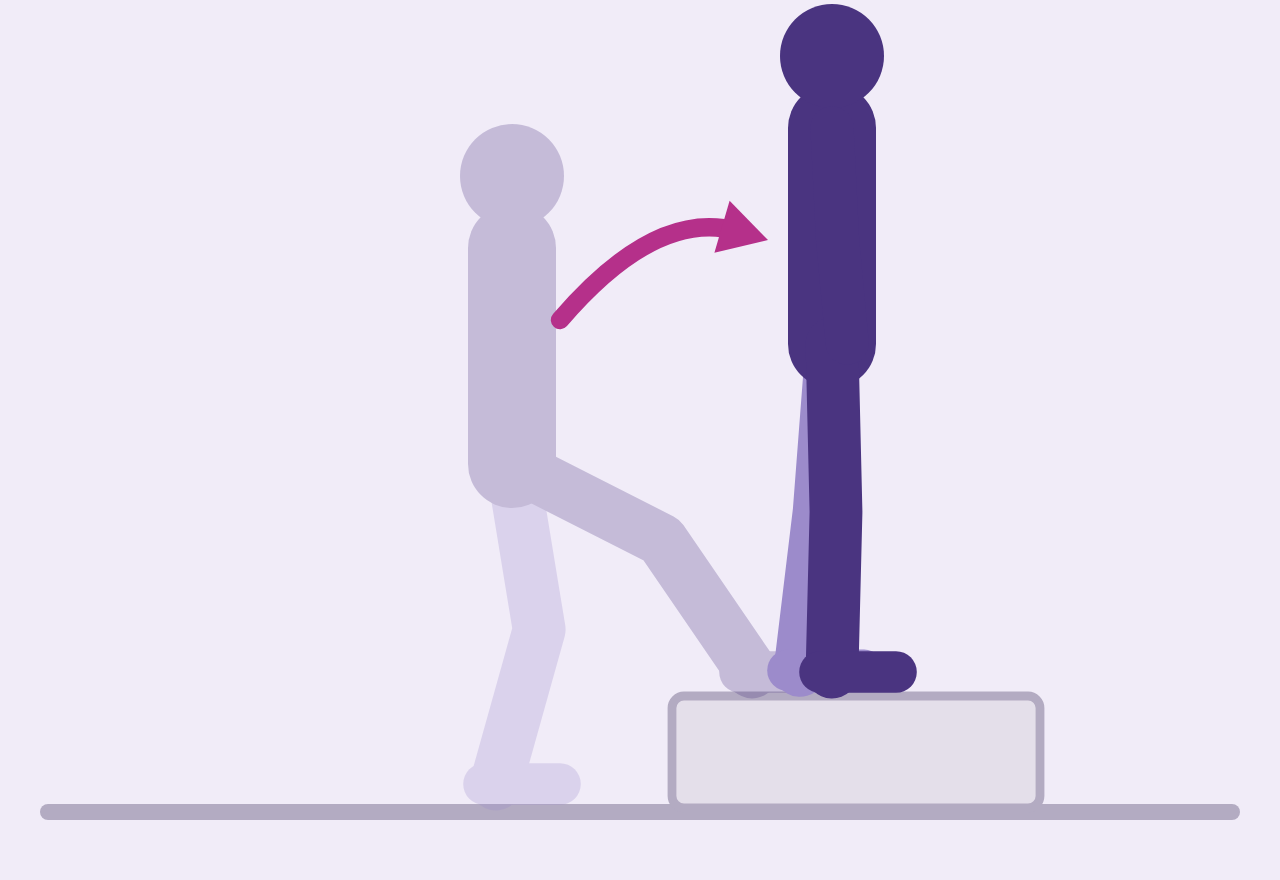
Step-ups and step-downsStep up onto a step and back down, keeping your knee in line with your second toe (not dropping inwards). Start with a low step and a rail; progress to a higher step, then holding weights.2–3 sets of 10–15 each leg, twice a week
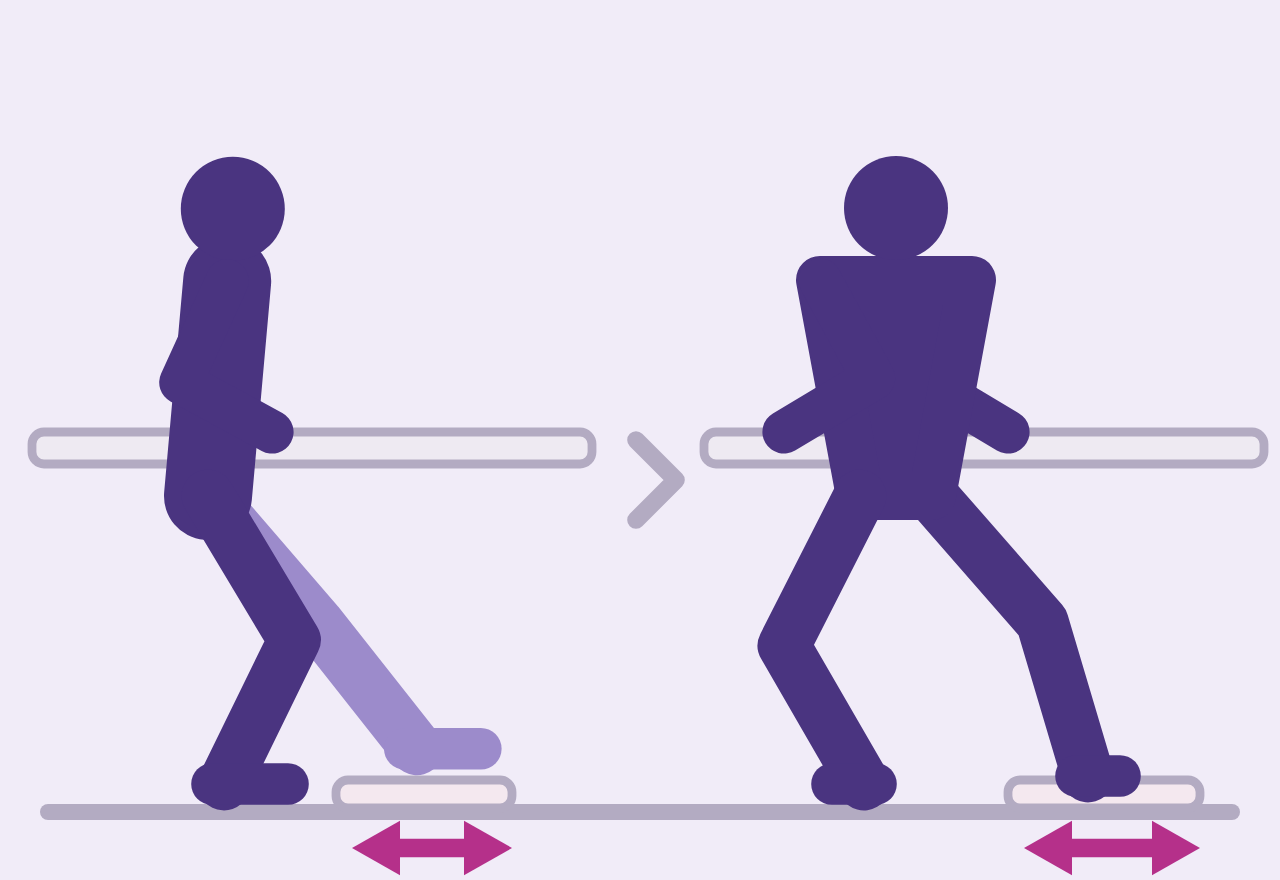
Forward and sideways slidesStand on the sore leg, holding a bench. Put your other foot on a towel on a smooth floor and slide it forward and back, then out to the side, bending the standing knee and keeping it over your toes. Progress to standing on a cushion, then to forward and side lunges.2–3 sets of 10–15 each way, twice a week
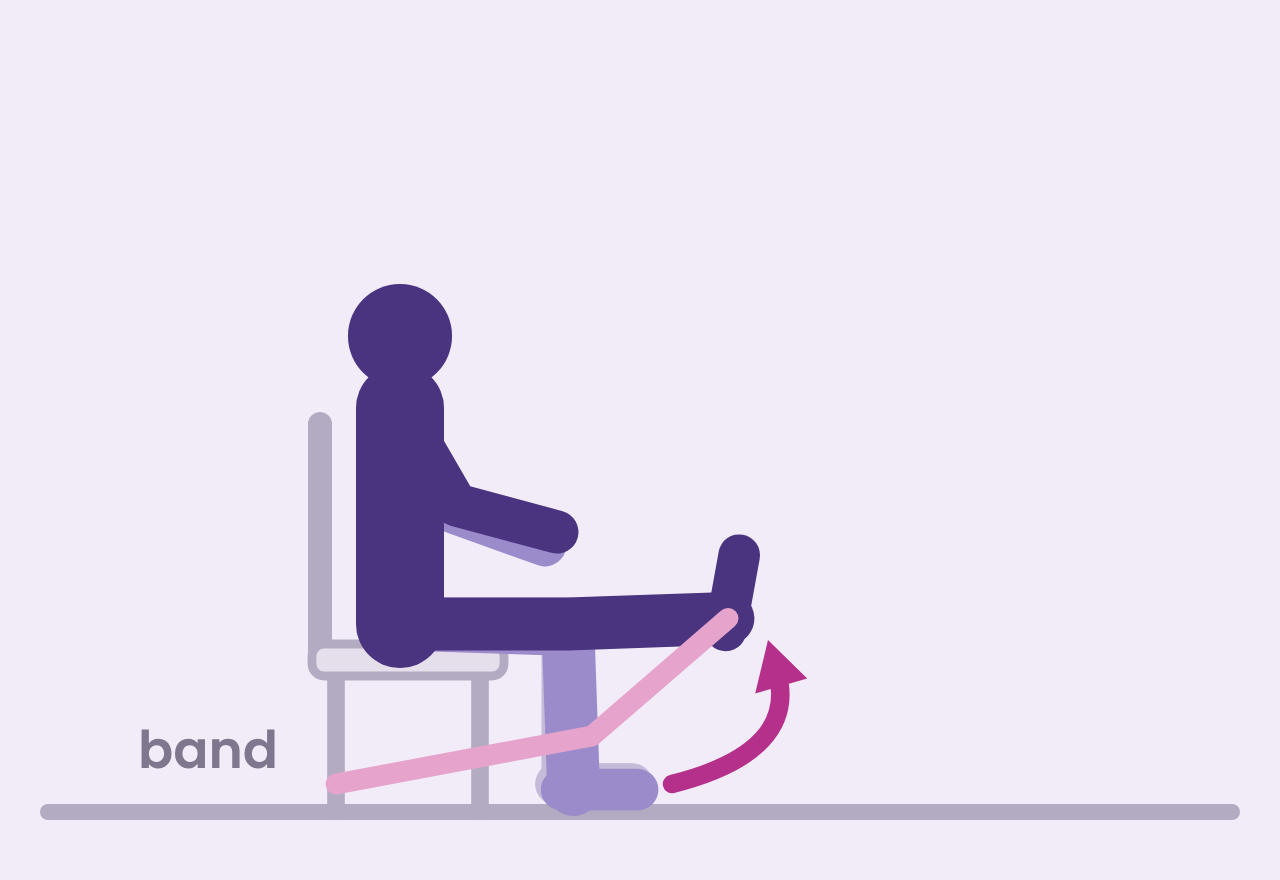
Knee straightening with a bandSit tall with a resistance band looped around your foot and tied to a chair leg behind you. Straighten your knee against the band, then bend it back slowly. Progress with a stronger band.2–3 sets of 10–15 each leg, twice a week
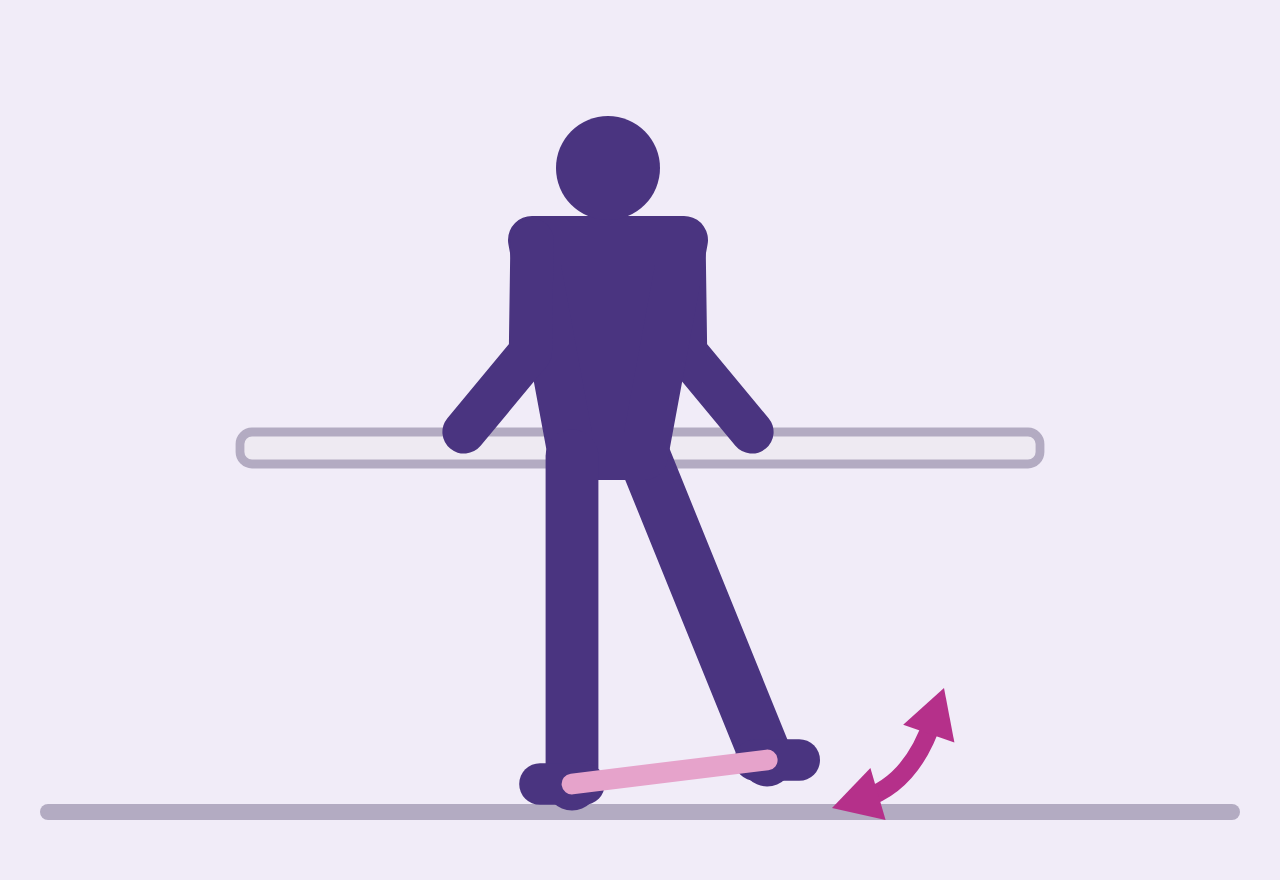
Standing leg out with a bandStand on the sore leg, holding a bench, band around both ankles. Move the other leg out to the side and back in. Progress with a stronger band, then standing on a cushion.2–3 sets of 10–15 each leg, twice a week
Also: walking, strength exercise and tai chi are all strongly recommended for knee osteoarthritis; cycling, water exercise and yoga suit some people too. Aim for at least 2½ hours of activity a week. If you’re above a healthy weight, losing at least 5–7.5% of your body weight, along with exercise, helps.
Stop and see your GP or physio if
Your knee is hot, red and swollen, especially with fever (same day)
Your knee locks, gives way often or you can’t take weight
Pain at night or at rest that keeps getting worse
No improvement after 3 months of regular exercise
Want a supervised program?
GLA:D is a supervised 6–8 week education and exercise program for hip and knee osteoarthritis, run by trained physios across Australia (search ‘GLA:D Australia’ to find a clinic). A physio or exercise physiologist can also build a program around you. If you have a chronic condition, ask your GP about a GP Chronic Condition Management Plan (GPCCMP): it gives a Medicare rebate for up to 5 allied health visits a year (physio, exercise physiologist or podiatrist).
Common questions
Is walking good for knee arthritis?
Yes. Walking is strongly recommended in the RACGP guideline. It won’t wear your knee out faster; build up gradually and use the pain rules.
Will exercise make my knee arthritis worse?
No. Some aching during or after exercise is normal and isn’t damage, as long as it settles by the next day.
How much does exercise help knee arthritis?
On average, a modest amount: in the 2024 Cochrane review, pain improved by about 9 to 13 points on a 100-point scale. Some people improve much more, and it helps your heart, weight and balance too.
What are the best exercises for arthritic knees?
No single type wins. Strength exercises, walking and tai chi are all strongly recommended, so pick the ones you’ll keep doing.
How long until exercise helps knee arthritis?
Usually within 6 to 12 weeks. Keep going after that, as the benefit fades if you stop.
Updated 29 October 2026. General education, not personal medical advice. Everyone is different, so check with your GP or physio if you’re unsure an exercise suits you.