That first-step-of-the-morning stab is miserable, but heel pain responds well to stretching, strength and smarter loading. Patience is part of the prescription.
Quick answer: The best plantar fasciitis exercises are arch and calf stretches plus heavy heel raises, which helped people feel better by 3 months. Most people improve over several months and are better within a year. Keep walking within comfort in supportive shoes, and see your GP for numbness or tingling in the foot, or no improvement after 3 months.
How to use this
Pain rules: some discomfort during the exercises is OK. If your first steps the next morning are clearly worse, drop back a level.
How often: stretches every day; heel raises every second day.
How long: 3 months of heel raises. In the trial, people doing them felt better by 3 months than people who only stretched; by a year, both groups had improved.
Progress when: following the trial’s schedule: add weight after 2 weeks, add more after 4 weeks, then keep adding as you get stronger.
Based on: Rathleff’s heavy heel-raise trial (2015) and the 2023 US physiotherapy heel pain guideline (JOSPT).
Your exercises
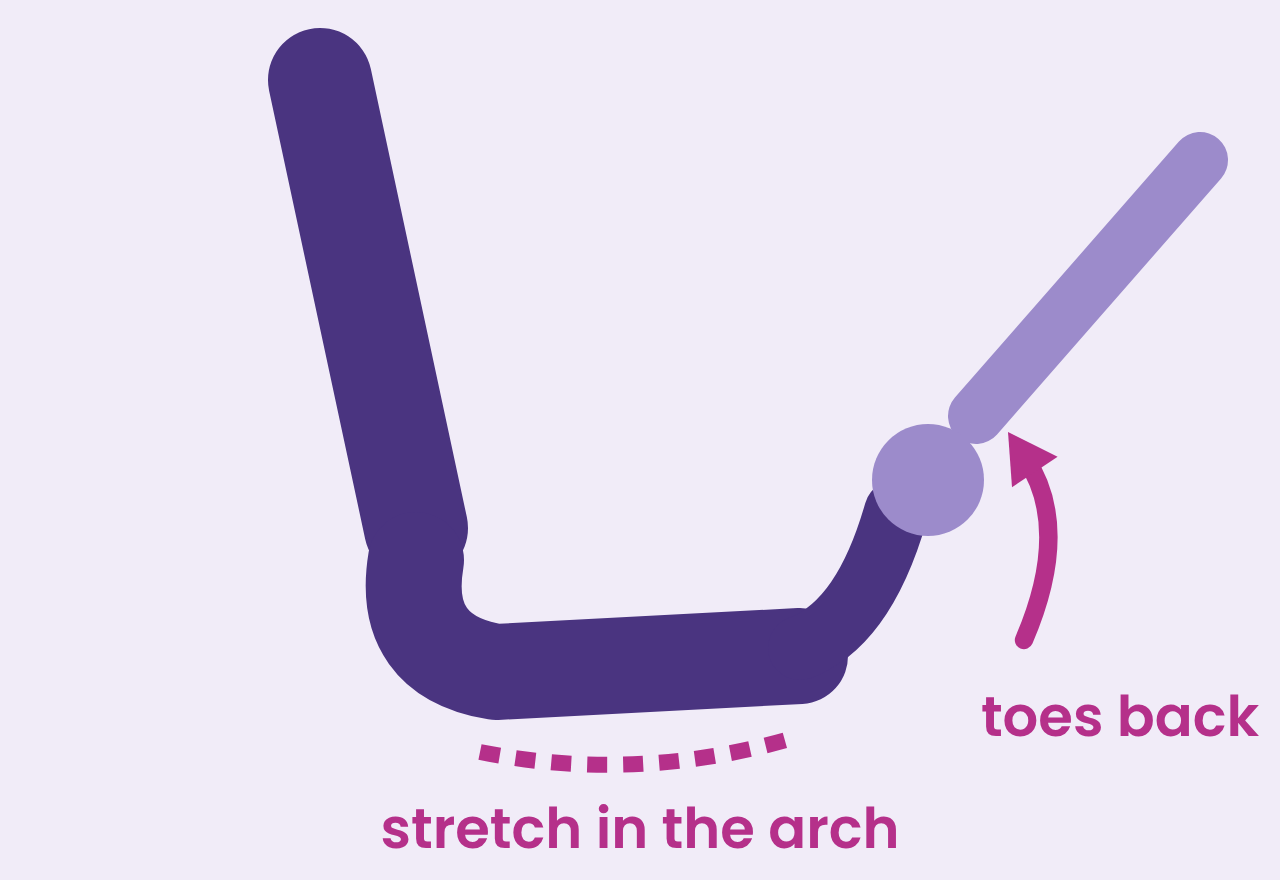
Arch stretchSit and cross the sore foot over your knee. Pull your toes back towards your shin until you feel a stretch in the arch. Do one round before your first steps in the morning.10 stretches of 10 seconds, 3 times a day
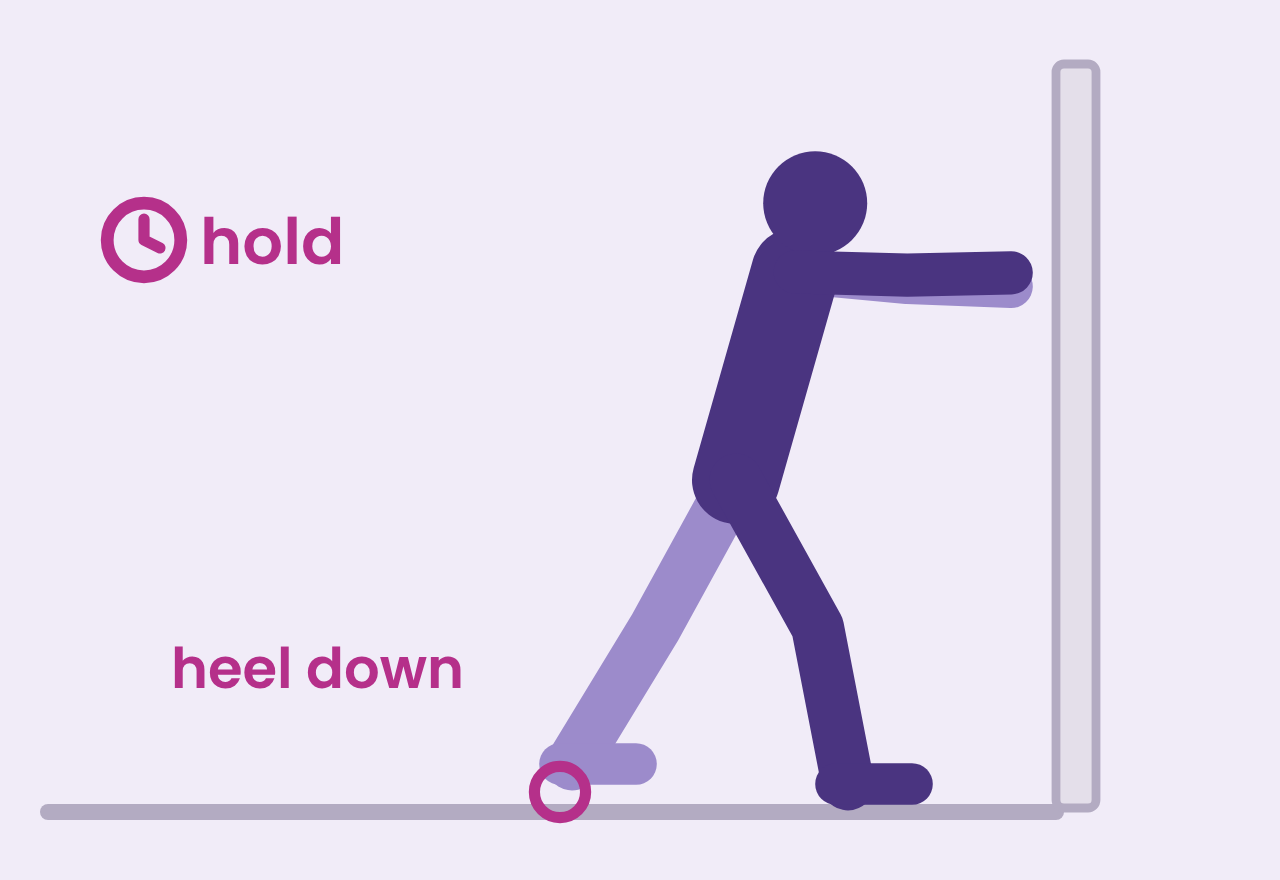
Calf stretch (straight knee)Hands on a wall, sore leg back, knee straight, heel down. Lean forward until you feel the calf stretch.3 × 30 seconds, twice a day
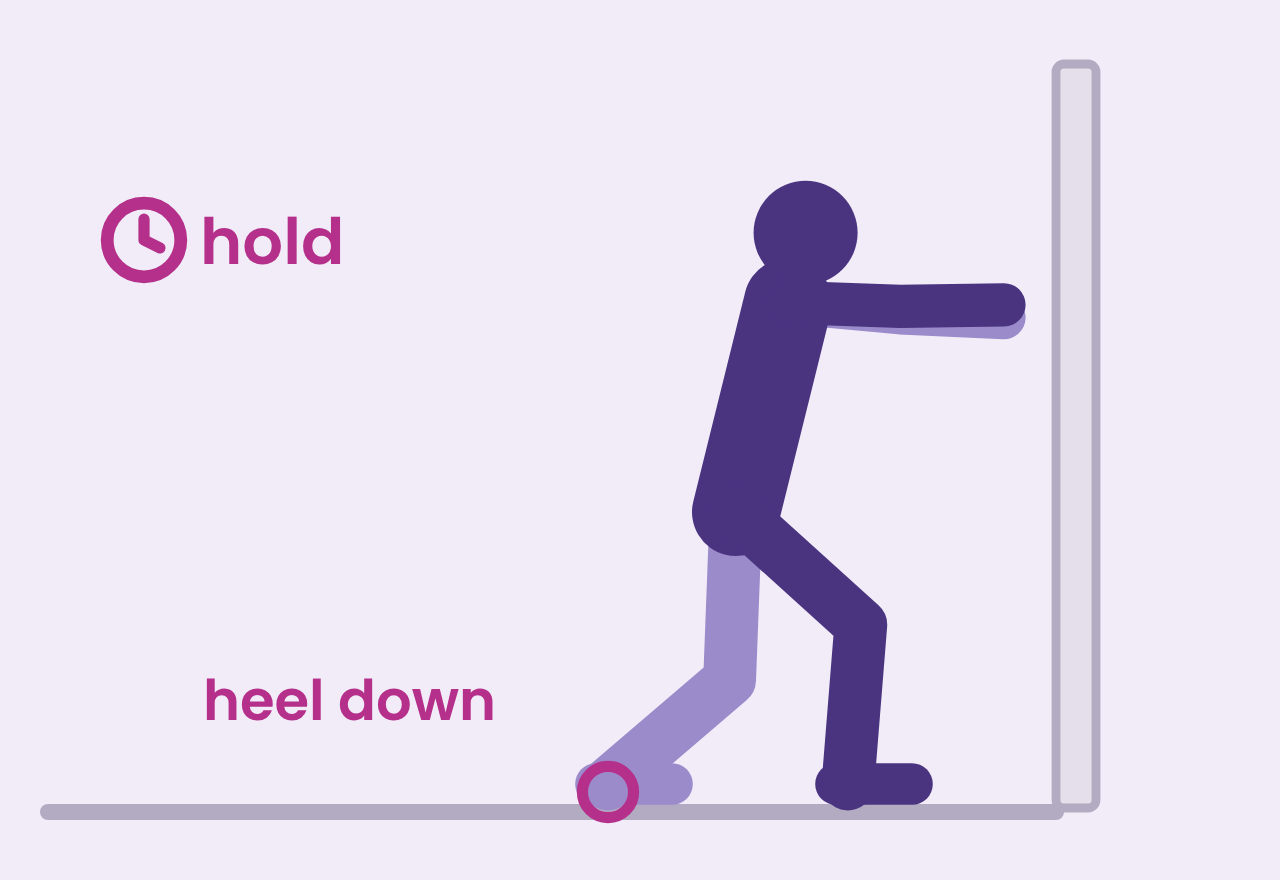
Calf stretch (bent knee)Same position, but bend the back knee to stretch the lower calf.3 × 30 seconds, twice a day
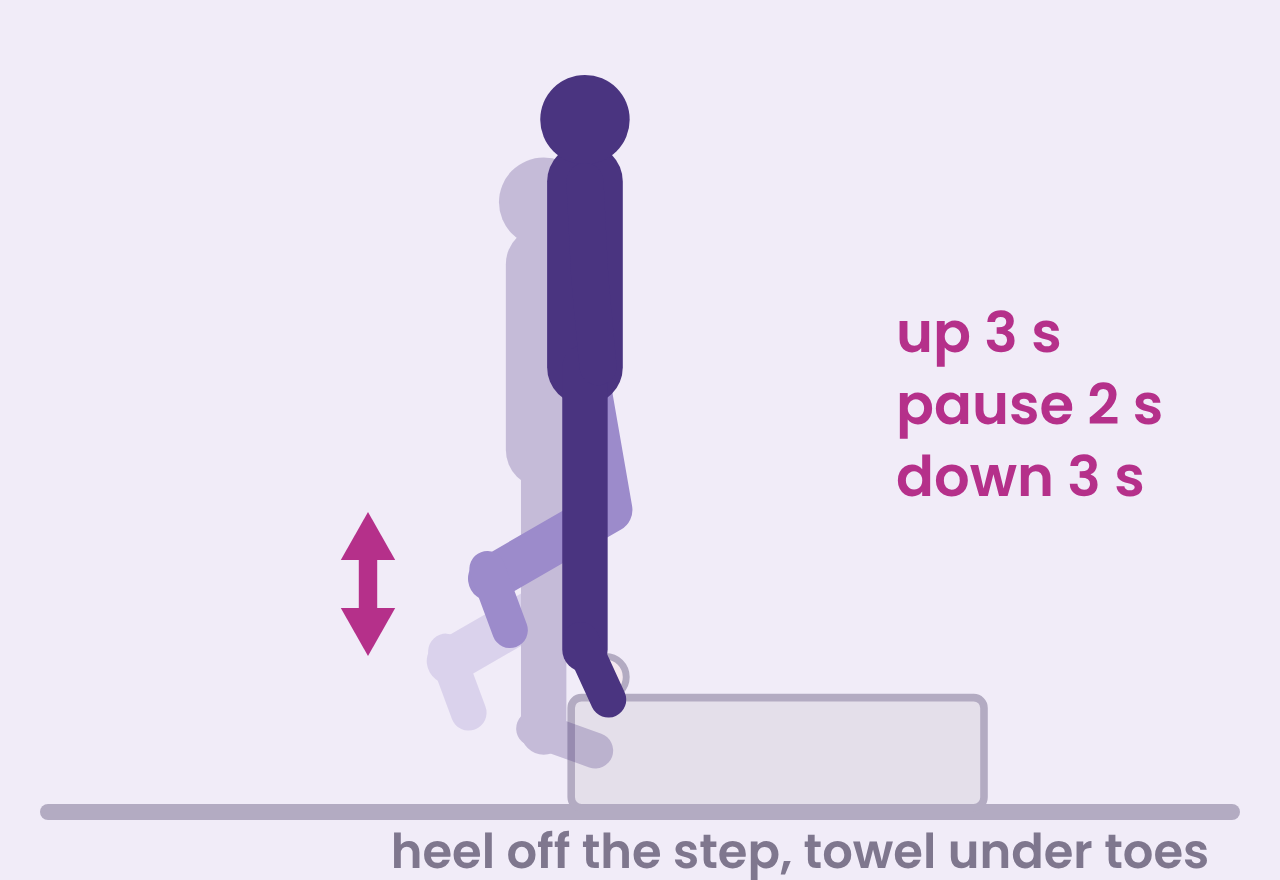
Heavy heel raise (Rathleff)Stand on the sore foot on a step, heel hanging off, with a rolled towel under your toes so they bend right back at the top. Rise up over 3 seconds, pause 2 seconds, lower over 3 seconds. Use a load you can only just lift the set number of times: your body weight at first, then a backpack with books.Weeks 1–2: 3 × 12. Weeks 3–4: 4 × 10 with a backpack. From week 5: 5 × 8, adding books as you get stronger. Every second day
Taping and inserts: taping the foot eases pain over the first few weeks. Soft gel heel inserts (used in the trial) or arch supports can help alongside exercise, but not on their own. If your first steps in the morning stay painful, ask a physio about a night splint (worn for 1–3 months).
Stop and see your GP or physio if
Heel pain after a fall or jump, or you can’t take weight
Numbness, tingling or burning in the foot
Swelling, redness or heat in the heel, or pain in other joints
No improvement after 3 months of regular exercise
Want a supervised program?
A physio or podiatrist can tailor the program, add taping or inserts and fit a night splint. MyHEEL, an online resource from La Trobe University, explains which heel pain treatments work. If you have a chronic condition, ask your GP about a GP Chronic Condition Management Plan (GPCCMP): it gives a Medicare rebate for up to 5 allied health visits a year (physio, exercise physiologist or podiatrist).
Common questions
Should I stretch or strengthen for plantar fasciitis?
Both. Calf and arch stretches are a guideline-backed first step. In a Danish trial, people doing heavy heel raises felt better by 3 months than people who only stretched, though by a year both groups had improved about the same.
How long does plantar fasciitis take to heal?
It’s slow: most people improve over several months, and most are better within a year. Exercise, taping and inserts can help you get there sooner.
Is walking OK with plantar fasciitis?
Usually, yes. Keep walking within comfort in supportive shoes, and cut back on long periods of standing or running on hard surfaces until it settles.
Do insoles help plantar fasciitis?
They can ease pain in the short term alongside exercise, but not on their own. Off-the-shelf arch supports or heel inserts work about as well as costly custom-made ones.
Updated 29 October 2026. General education, not personal medical advice. Everyone is different, so check with your GP or physio if you’re unsure an exercise suits you.