Tendons love load, just not all at once. Start gentle, build up slowly, and your elbow will thank you in a couple of months (it won’t say it out loud).
Quick answer: Tennis elbow exercises build forearm strength gradually: a wrist hold, slow wrist lifts, a grip squeeze and forearm turning. Ease off the gripping and lifting that set it off, but don’t rest completely. In an Australian trial, people doing physio and exercise were more likely to be better at 6 weeks. Most people recover within a year.
How to use this
Pain rules: exercise shouldn’t push your elbow pain above about 2/10, during or after. If lifting your wrist hurts more than that, start with exercise 1 (holding still) instead.
How often: weeks 1–2: 12–15 repeats, twice a day. Weeks 2–6: 3 sets of 8–12, once a day, with both arms. From week 6: 3 sets of 6–8 with a heavier weight, every second day.
How long: the trial programs ran for 8 weeks. People doing them were more likely to be better at 6 weeks than people who just waited. Most people recover within a year either way, but exercise gets you there sooner and, unlike a cortisone injection, doesn’t make it more likely to come back.
Progress when: from about week 6, once your sore arm is nearly as strong as the other one. Add weight in small steps. When it’s almost as strong as the other side, start practising the work or sport tasks that set it off.
Based on: the exercise program from the Australian tennis elbow trials (Bisset, BMJ 2006; Coombes, JAMA 2013), as set out in the RACGP HANDI handbook, and the 2022 US physiotherapy guideline for lateral elbow pain.
Your exercises
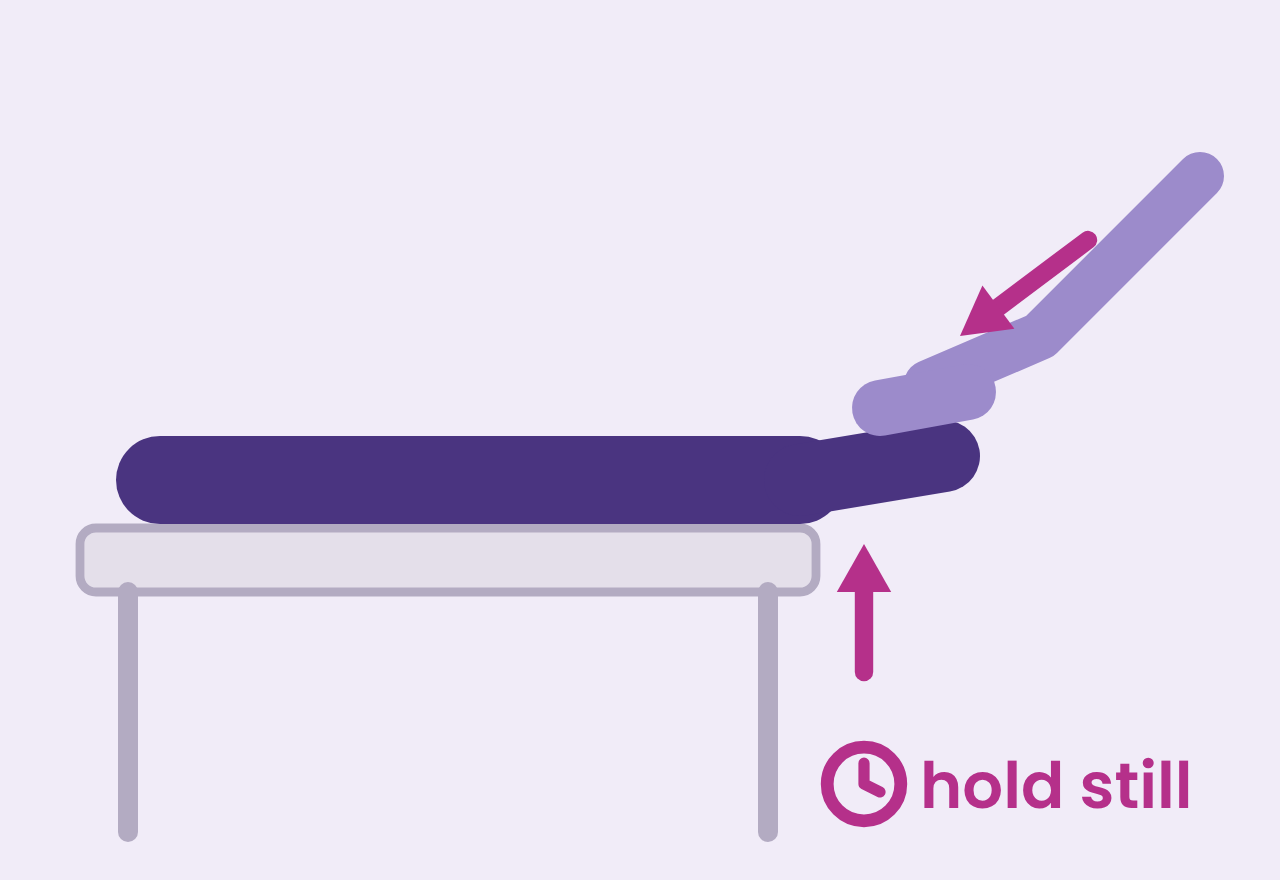
Wrist hold (holding still)Rest your forearm on a table, palm down, wrist just over the edge and lifted a little. Press down on the back of your hand with your other hand while you hold your wrist still, pushing back firmly but within the pain rules.Use instead of exercise 2 while lifting your wrist hurts
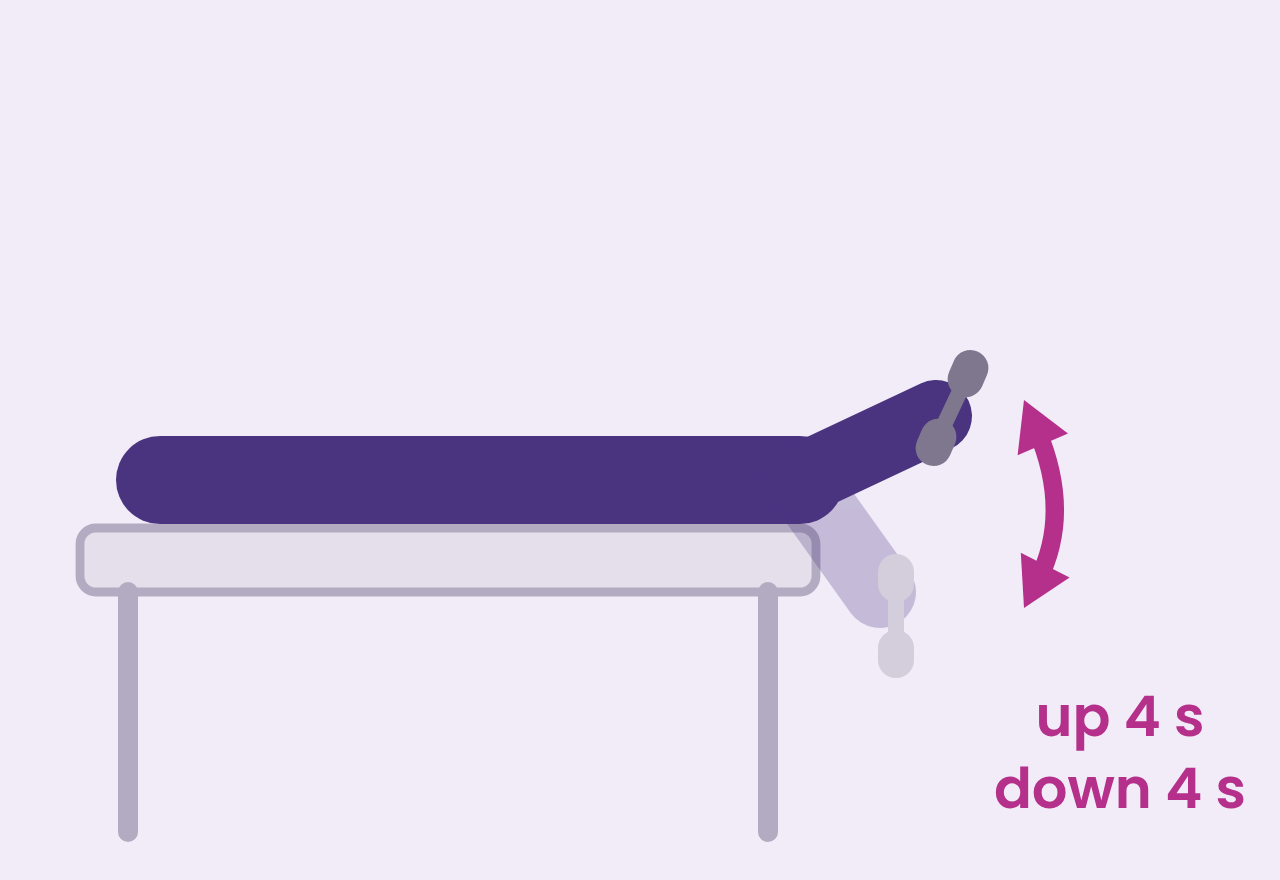
Slow wrist liftsSame position, holding a light dumbbell or water bottle, or a resistance band held under your foot. Let your wrist drop down, then lift it up over 4 seconds and lower it over 4 seconds. Progress by adding weight or a stronger band.Weeks 1–2: 12–15, twice a day. Weeks 2–6: 3 × 8–12 daily. From week 6: 3 × 6–8, heavier, every second day
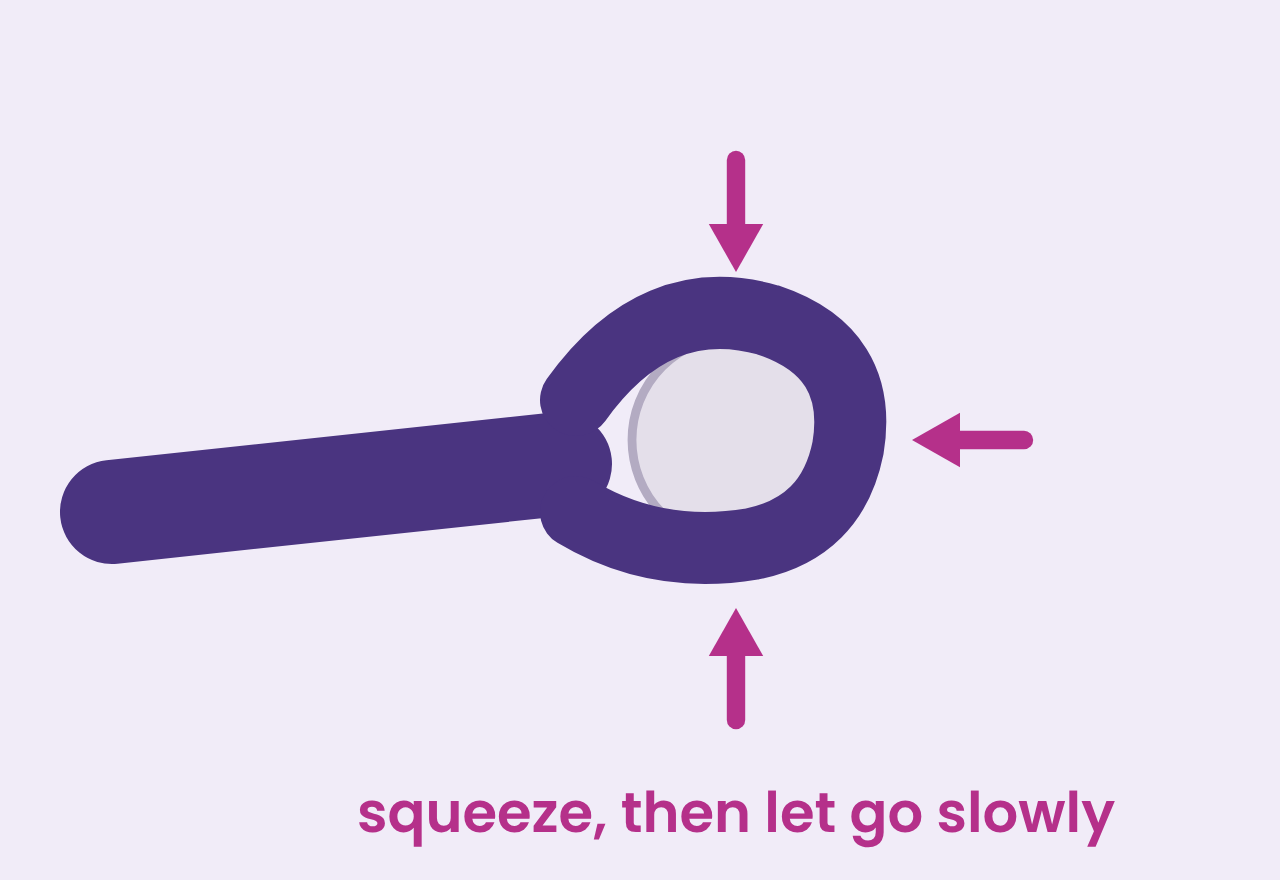
Grip squeezeSqueeze exercise putty or a soft ball, then let go slowly.If you have time, alongside exercise 2
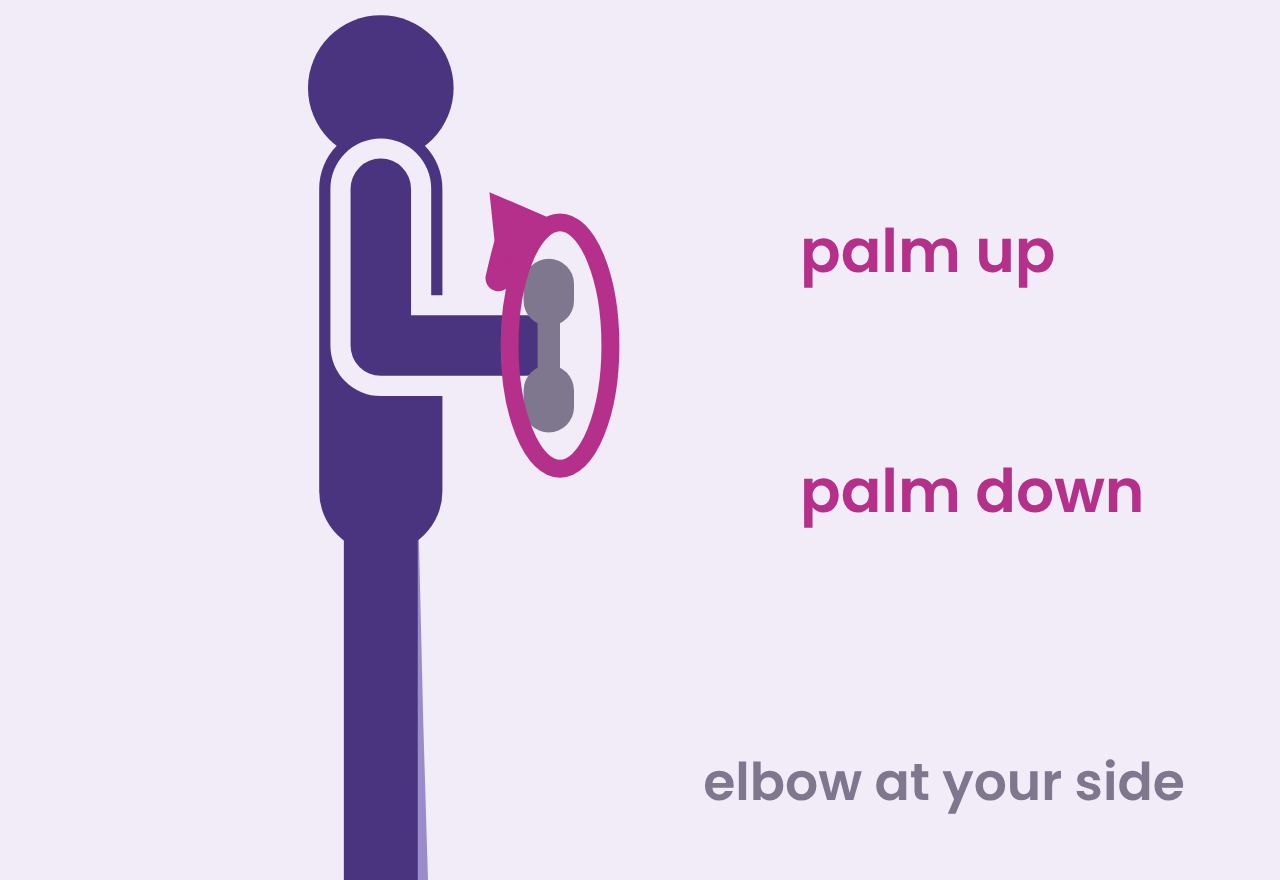
Forearm turningHold a light weight or a resistance band, elbow bent at your side. Slowly turn your palm up, then palm down. Progress by starting with your palm turned further down.If you have time, alongside exercise 2
Load tips: ease off the gripping and lifting that sets off your pain for now, then build back up as your arm gets stronger.
Stop and see your GP or physio if
Pain is getting worse over 2 weeks despite dropping back a level
Numbness, tingling or weakness in your hand
Neck pain spreading down your arm
A hot, red, swollen elbow, or fever (same day)
Pain that started after a fall or injury
Want a supervised program?
A physio can tailor the load, check your technique and add hands-on treatment; the trial programs combined both, over 8 sessions. They can also add shoulder strengthening if needed. An exercise physiologist can help with workplace and gym loading. If you have a chronic condition, ask your GP about a GP Chronic Condition Management Plan (GPCCMP): it gives a Medicare rebate for up to 5 allied health visits a year (physio, exercise physiologist or podiatrist).
Common questions
How long does tennis elbow take to heal with exercises?
Usually weeks to months. In an Australian trial, people doing physio and exercise were more likely to be better at 6 weeks than those who waited. Most people recover within a year either way.
Is a cortisone injection better than exercise for tennis elbow?
It works faster but often doesn’t last. In one Australian trial, 54% of people who had a cortisone injection relapsed within a year, versus 12% who had a placebo injection.
Should I rest tennis elbow?
Not completely. Ease off the gripping and lifting that set it off, but keep using your arm and do the exercises.
Do tennis elbow straps work?
The evidence is limited. A forearm strap may ease pain in the short term for some people while they do the exercises, but it isn’t a fix on its own.
Updated 29 October 2026. General education, not personal medical advice. Everyone is different, so check with your GP or physio if you’re unsure an exercise suits you.