Sore shoulders get better with load, not cotton wool. This plan builds up the small muscles that steady the joint, one sensible step at a time.
Quick answer: Shoulder impingement, now called rotator cuff-related shoulder pain, is best treated with exercise; decompression surgery did no better than a placebo operation. This 12-week plan uses slow-lowering rotation and arm raises, band rows, wall push-ups and a back-of-shoulder stretch. Pain up to 5/10 is OK if it settles afterwards.
How to use this
Who it’s for: rotator cuff-related shoulder pain, including what’s often called shoulder impingement. Not for frozen shoulder (a shoulder that’s stiff in every direction): see our frozen shoulder exercises. For a known tendon tear, or if lifting the arm hurts too much to start, try our rotator cuff exercises, which begin with gentle holds.
Pain rules: pain up to 5/10 during exercise is acceptable. After each session your pain should settle back to its usual level. If it doesn’t, use a lighter weight next time.
How often: strength exercises twice a day for the first 8 weeks, then once a day for weeks 8–12. The stretch is twice a day.
How long: give it at least 12 weeks, then keep doing the exercises daily for another 2 months.
Progress when: all 3 sets of 15 are manageable within the pain rules. Add weight or use a firmer band.
Based on: the exercise program from a Swedish shoulder trial (Holmgren, BMJ 2012) and a 2021 review of rotator cuff rehabilitation.
Your exercises
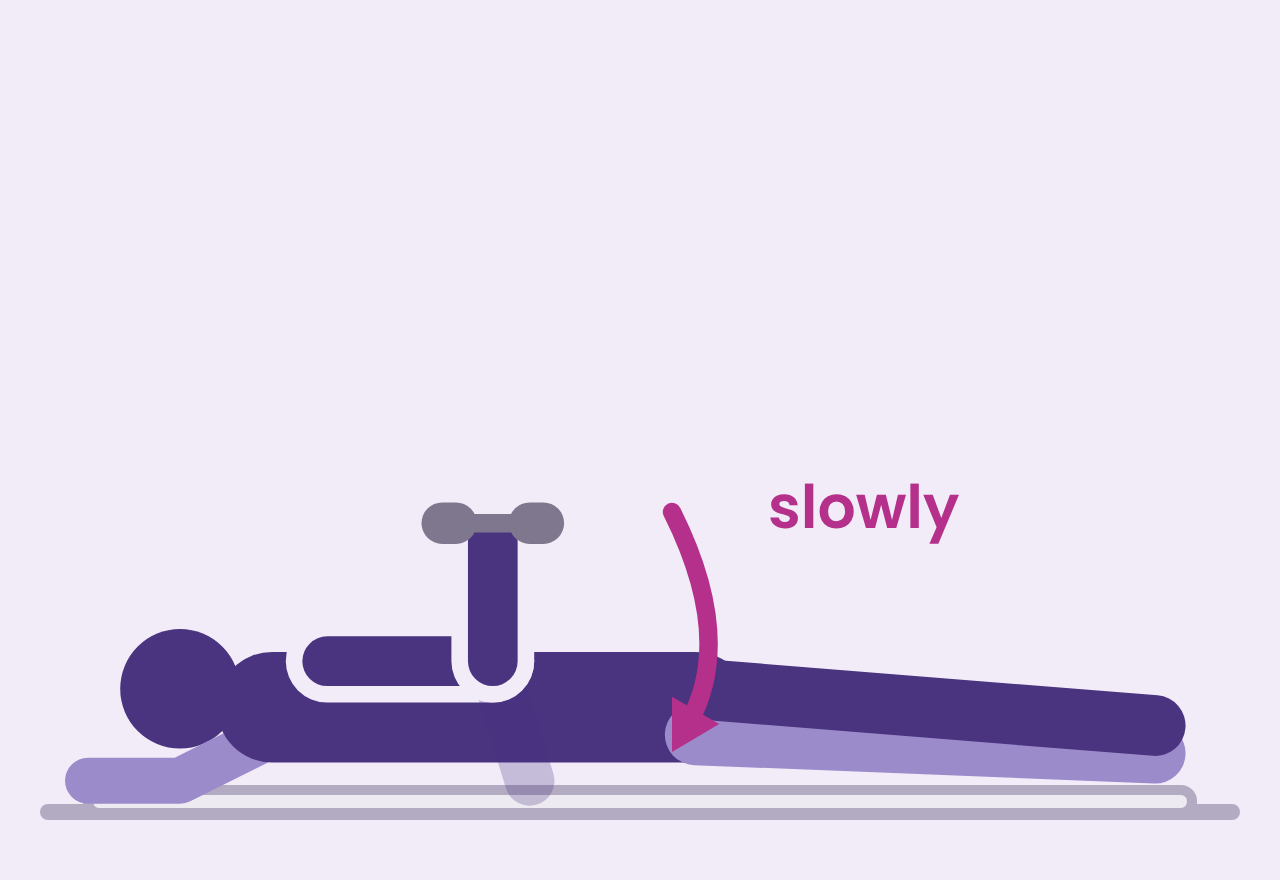
Slow lowering: outward rotationLie on your good side with the sore elbow bent to 90° and tucked against your ribs, holding a light weight. Use your other hand to help rotate the forearm up towards the ceiling, then lower it slowly on its own.3 sets of 15, twice a day
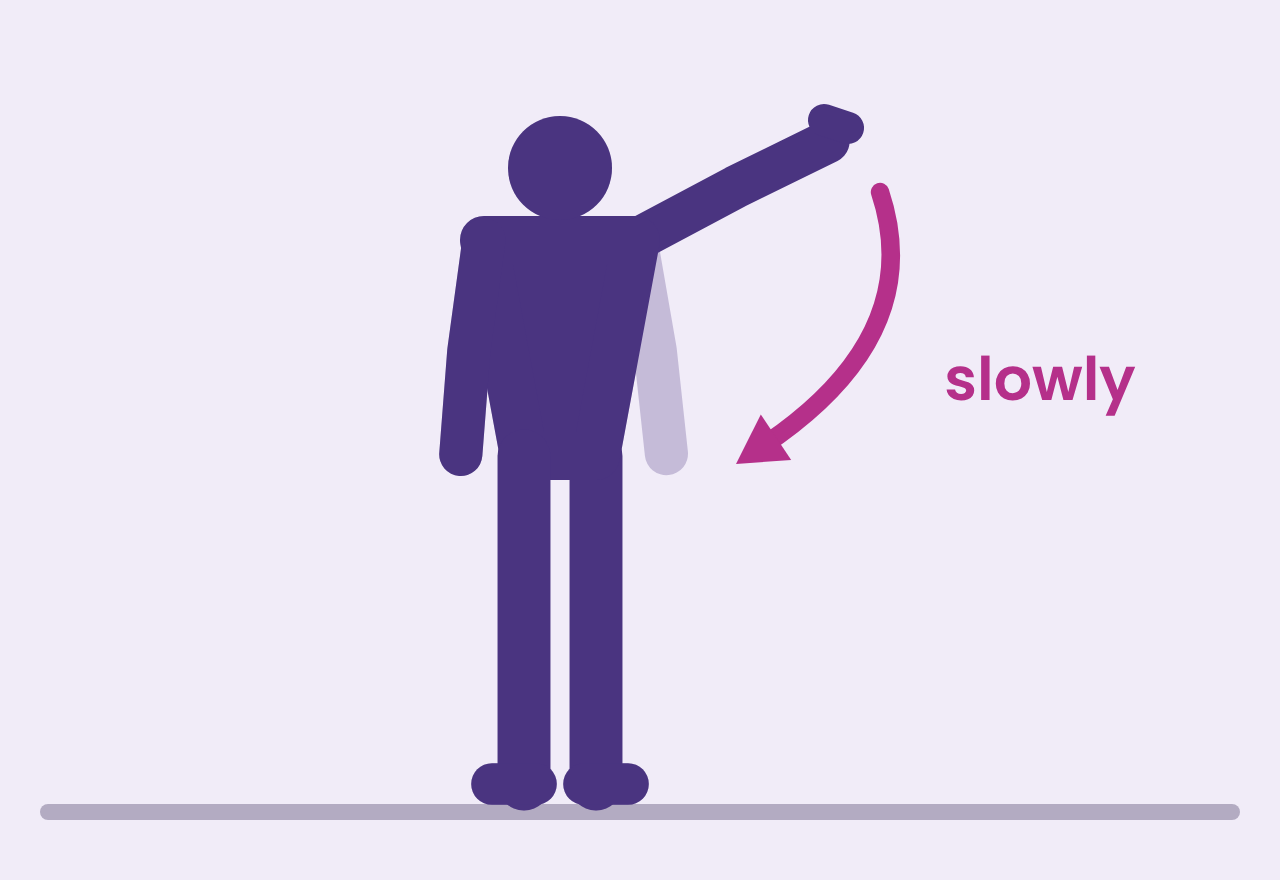
Slow lowering: arm raiseStanding, thumb up, raise your arm halfway between straight ahead and out to the side, up to shoulder height. Help with your other hand if needed, then lower slowly on its own. Start with no weight, then add a light one.3 sets of 15, twice a day
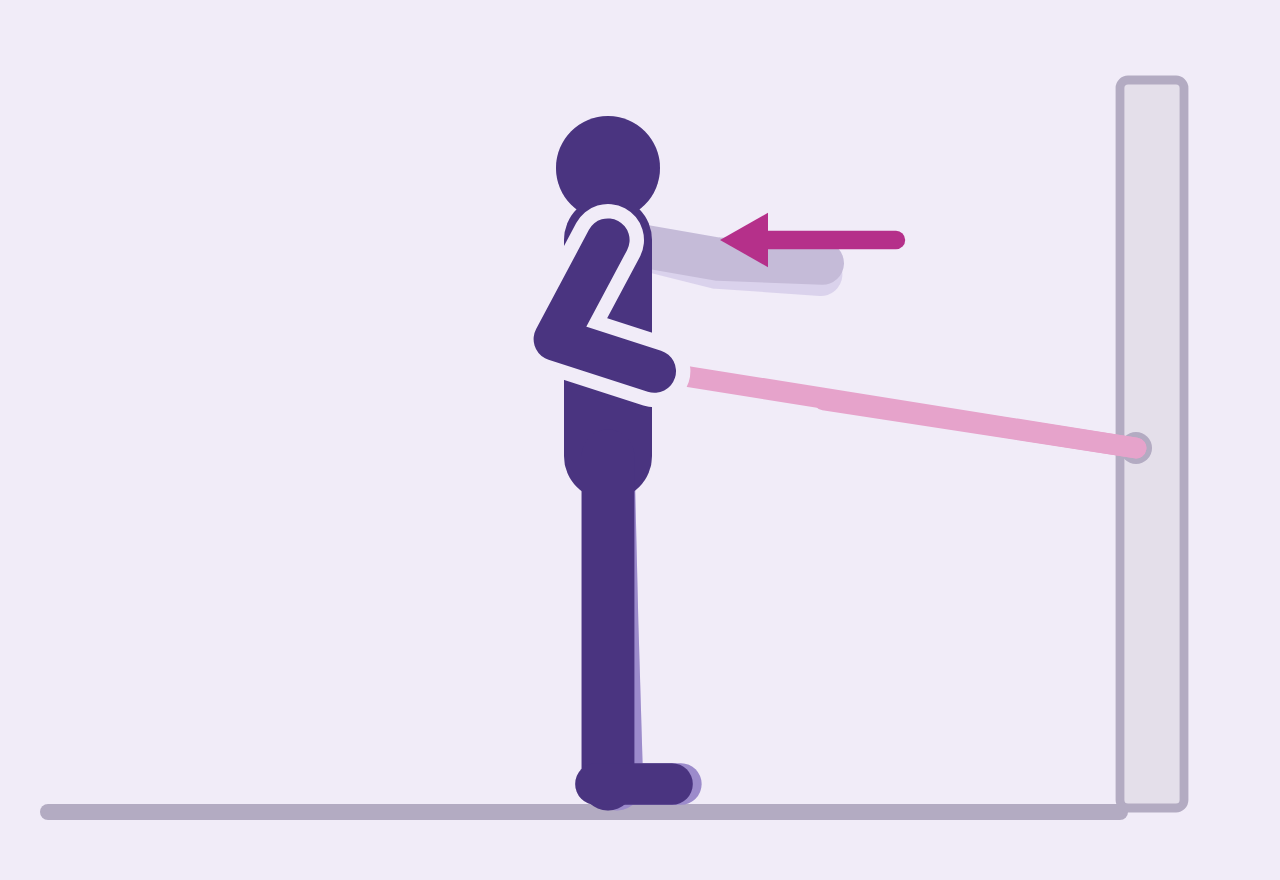
Band rowLoop a resistance band around a door handle. Pull your elbows back past your ribs, squeezing your shoulder blades together and down, then return slowly. Progress with a stronger band.3 sets of 15, twice a day
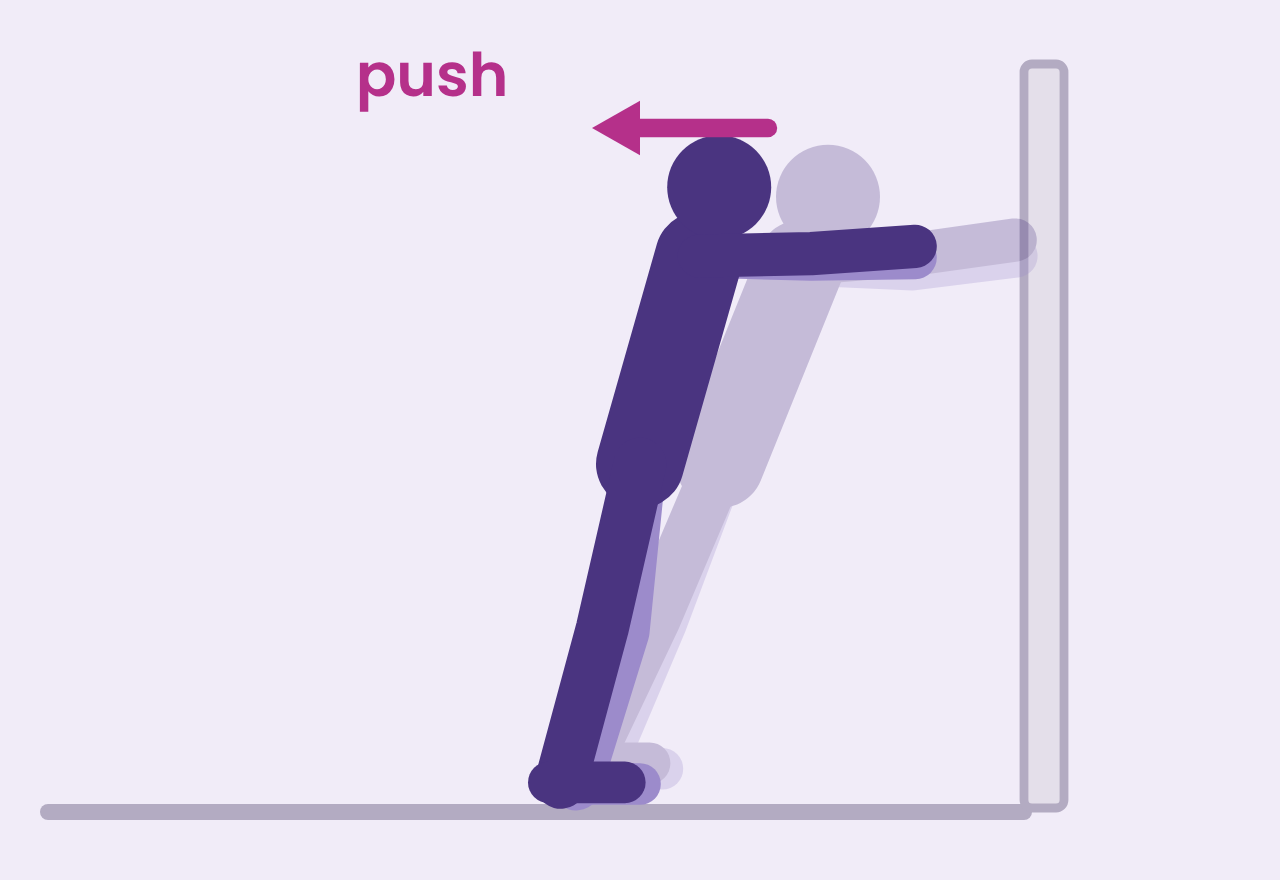
Wall push-up plusHands on a wall at shoulder height. Do a slow push-up, and at the top push a little further so your shoulder blades spread around your ribs. Progress to a kitchen bench, then a lower surface.3 sets of 15, twice a day
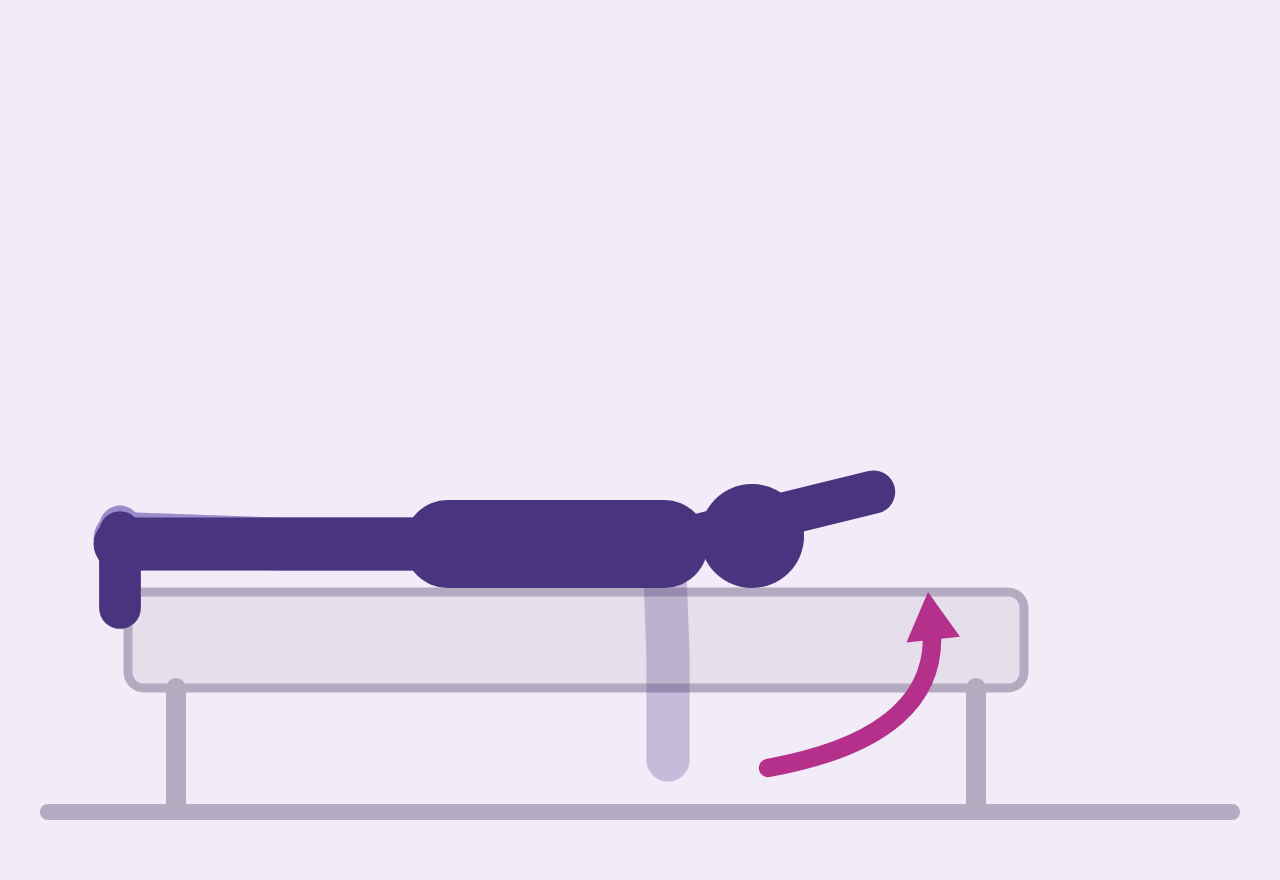
Face-down arm liftLie face down on the bed with the sore arm hanging over the edge. Keeping the shoulder blade drawn down, lift the arm forwards and up in a ‘Y’ shape, thumb up. Start with no weight.3 sets of 15, twice a day
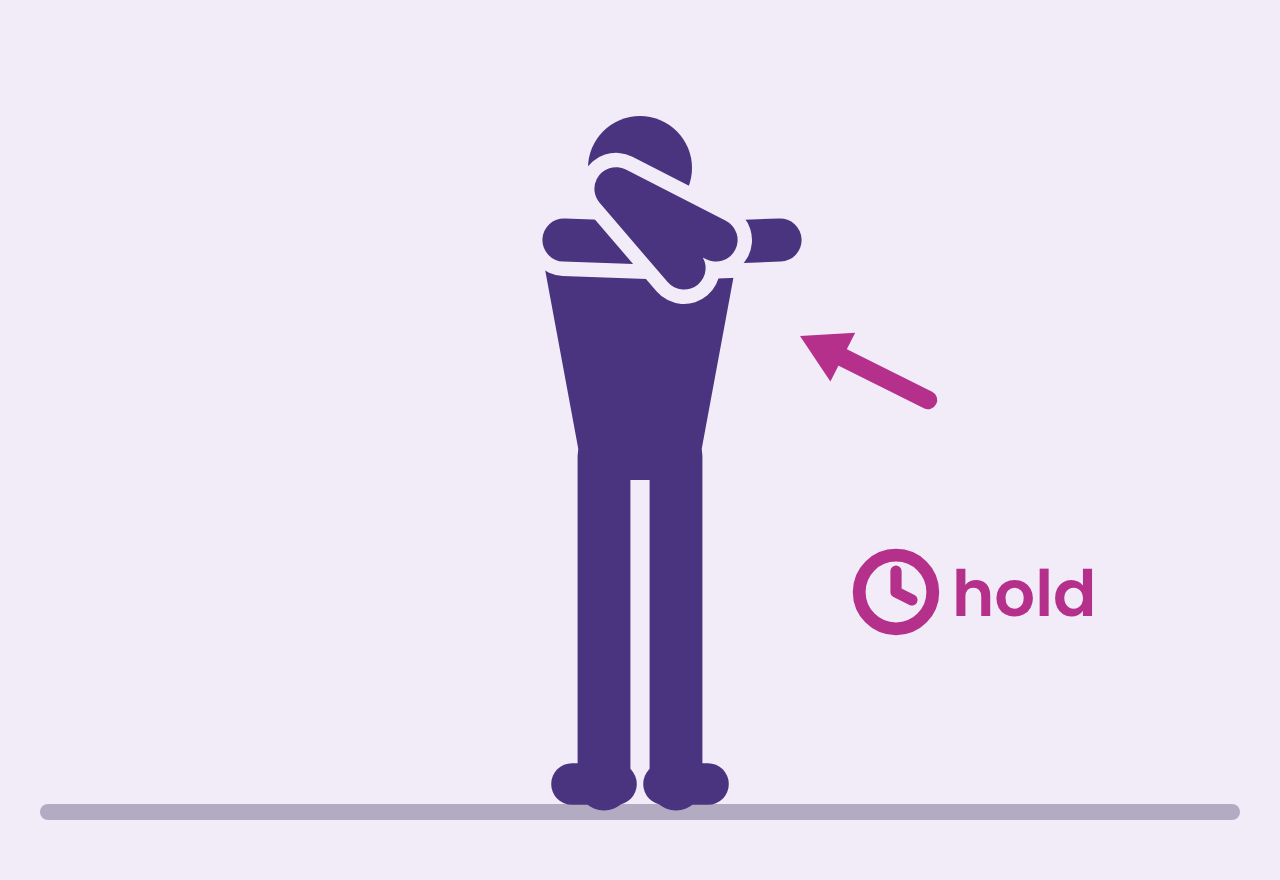
Back-of-shoulder stretchBring the sore arm across your chest and gently pull at the elbow with your other hand until you feel a stretch at the back of the shoulder.Hold 30–60 seconds, 3 times, twice a day
Form tips: keep your upper back tall and shoulders gently back during every exercise. Slow and controlled beats fast and heavy. Weights can be dumbbells, water bottles or a tin of beans to start.
Stop and see your GP or physio if
You suddenly can’t lift your arm after an injury or fall (see your GP within a few days)
A hot, red, swollen shoulder, or fever (same day)
Shoulder pain with chest pain, shortness of breath or sweating (call 000)
Numbness or tingling in your arm, or neck pain spreading down the arm
Your shoulder is getting stiffer in every direction, not just painful
No real improvement after 12 weeks of regular exercise
Want a supervised program?
A physio can check your technique, set the right weights and adjust the plan at regular reviews (the original program had a physio check-in every 2 weeks). An exercise physiologist can help with gym and work loading. If you have a chronic condition, ask your GP about a GP Chronic Condition Management Plan (GPCCMP): it gives a Medicare rebate for up to 5 allied health visits a year (physio, exercise physiologist or podiatrist).
Common questions
What are the best exercises for shoulder impingement?
Slow-lowering rotator cuff work (turning the arm out and raising it), shoulder-blade strengthening such as rows and wall push-ups, and a stretch for the back of the shoulder. In the Swedish trial this plan is based on, 20% of people doing it went on to choose surgery, versus 63% doing general exercises.
Do I need surgery for shoulder impingement?
Usually not. In a large UK trial (CSAW, 313 people), decompression surgery worked no better than a placebo operation (a keyhole look with nothing removed). Exercise is the first treatment.
How long does shoulder impingement take to heal?
Most people improve within 6–12 weeks of regular exercise. Give this plan at least 12 weeks, the length of the trial program, then keep the exercises going for another 2 months to hold on to the gains.
What should I avoid with shoulder impingement?
For now, ease off what flares it: heavy or repeated overhead lifting, reaching behind your back and lying on that side. Don’t stop moving altogether, as long rest tends to leave the shoulder weaker.
Is shoulder impingement the same as a rotator cuff tear?
Not quite. Impingement means painful, irritated rotator cuff tendons; a tear is an actual split in a tendon. They overlap and both usually start with exercise. See our rotator cuff exercises for tears.
Should shoulder impingement exercises hurt?
A little is OK: up to 5/10 during exercise, as long as it settles back to your usual level afterwards. If it doesn’t, go lighter next time.
Updated 8 November 2026. General education, not personal medical advice. Everyone is different, so check with your GP or physio if you’re unsure an exercise suits you.