Rotator Cuff Exercises: 7 Moves for a Sore Shoulder
Rotator cuff tendons get stronger with gradual load, not with months in a sling. Start with holds that don’t move the joint, then build up to real strength work.
Quick answer: Rotator cuff pain, including many tears, usually improves with exercise over 6–12 weeks. Start with holds (pressing the hand out and in against a wall), then add band and side-lying rotation, rows and wall slides. Mild pain up to 3–4/10 is OK if it settles by the next day. Sudden weakness after an injury needs a GP visit within days.
How to use this
Who it’s for: rotator cuff tendon pain, partial tears and wear-and-tear tears diagnosed by your GP or physio. After surgery, follow your surgeon’s plan instead. For impingement, see our shoulder impingement exercises.
Stage 1 (exercises 1–3): if lifting the arm hurts, start with the holds, 2–3 times a day, for about 1–2 weeks.
Stage 2 (exercises 4–7): once the holds are comfortable, add the moving exercises once a day. Keep the shoulder-blade setting going.
Pain rules: mild pain up to 3–4 out of 10 during exercise is OK if it settles soon after and isn’t worse the next morning. If it is, do fewer reps or a lighter band next time.
Progress when: 3 sets of 15 feel easy within the pain rules. Use a firmer band or add 0.5 kg.
How long: most people feel better within 6–12 weeks. Keep going for at least 12 weeks.
Based on: NHS physiotherapy guidance, the UK shoulder surgeons’ care pathway (BESS) and trials of exercise for rotator cuff problems.
Your exercises
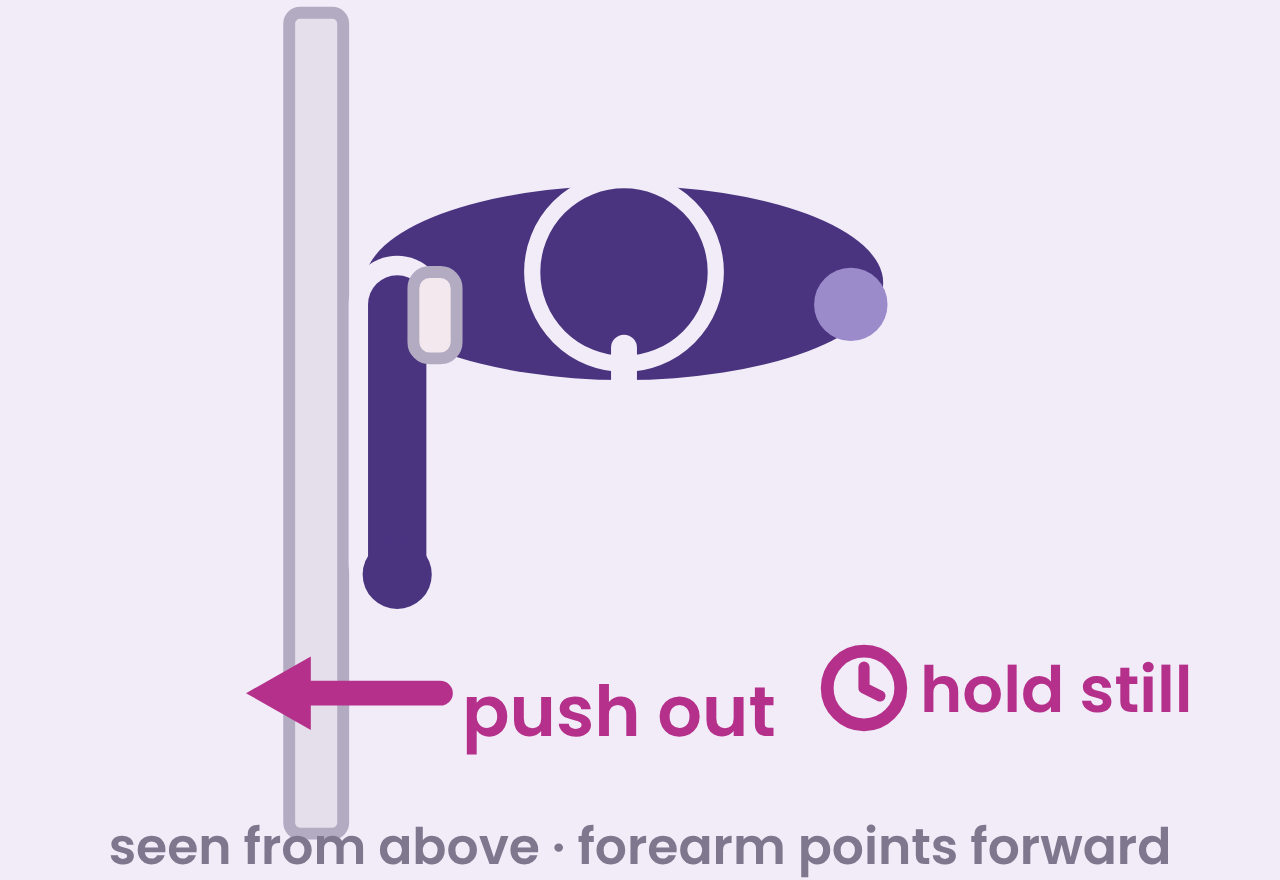
Outward press (hold)Stand side-on to a wall, sore elbow bent to 90° and tucked into your side (a rolled towel helps). Press the back of your hand into the wall at about half effort. Nothing should move.Hold 20–30 seconds, 5 times; 2–3 times a day
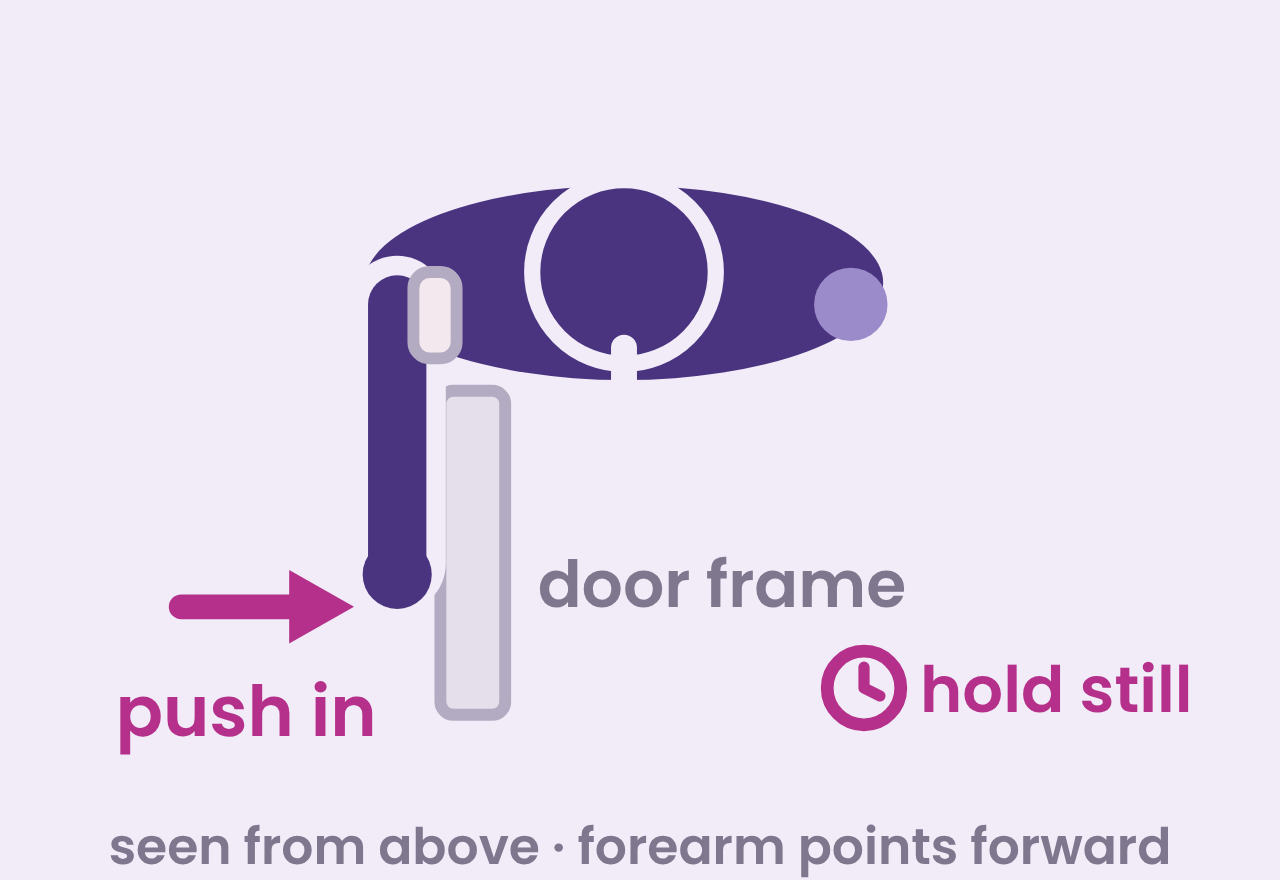
Inward press (hold)Stand in a doorway with the same arm position. Press your palm inwards against the door frame at about half effort, without moving.Hold 20–30 seconds, 5 times; 2–3 times a day
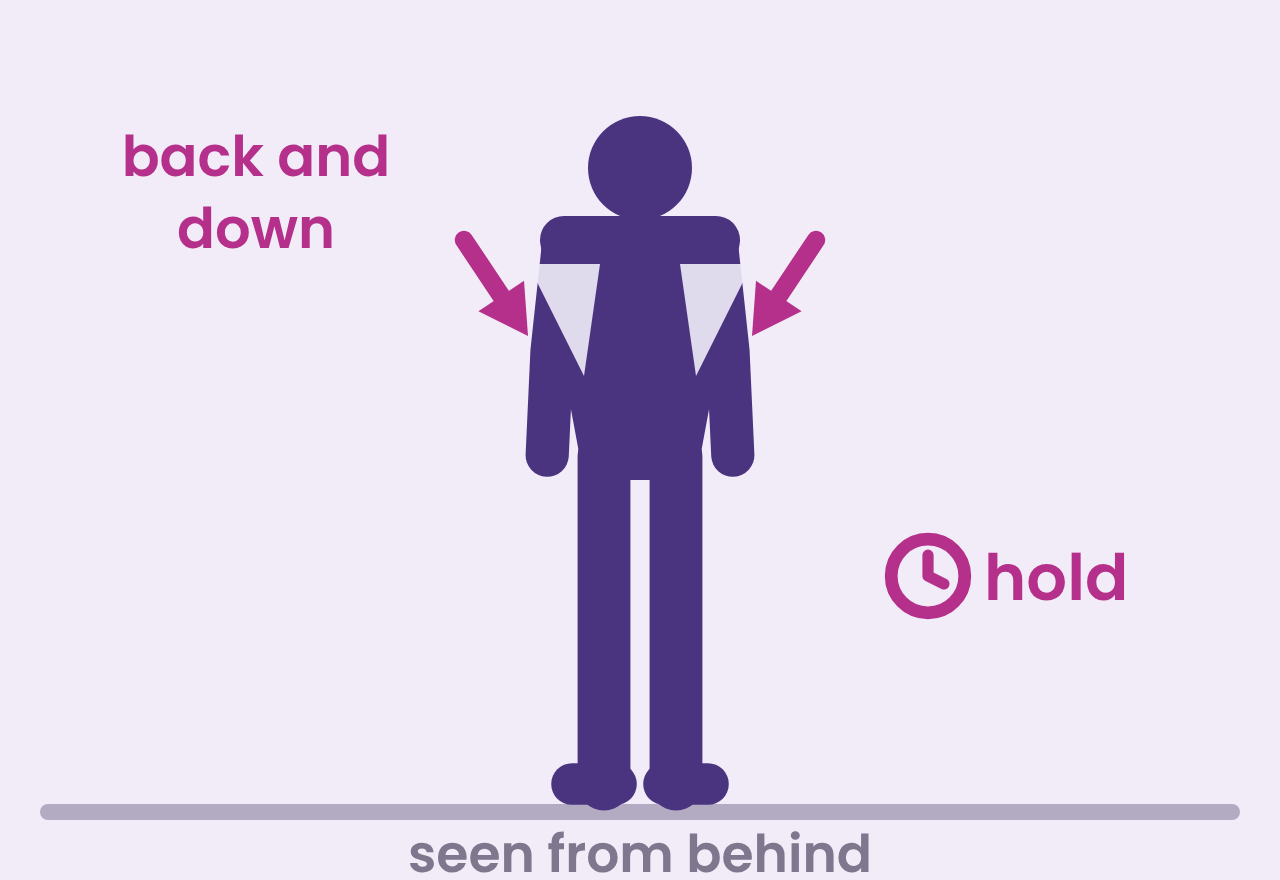
Shoulder-blade settingStand or sit tall. Gently draw your shoulder blades back and down, as if tucking them into your back pockets, without arching your back. Use this position in every exercise.Hold 10 seconds, 10 times; 2–3 times a day
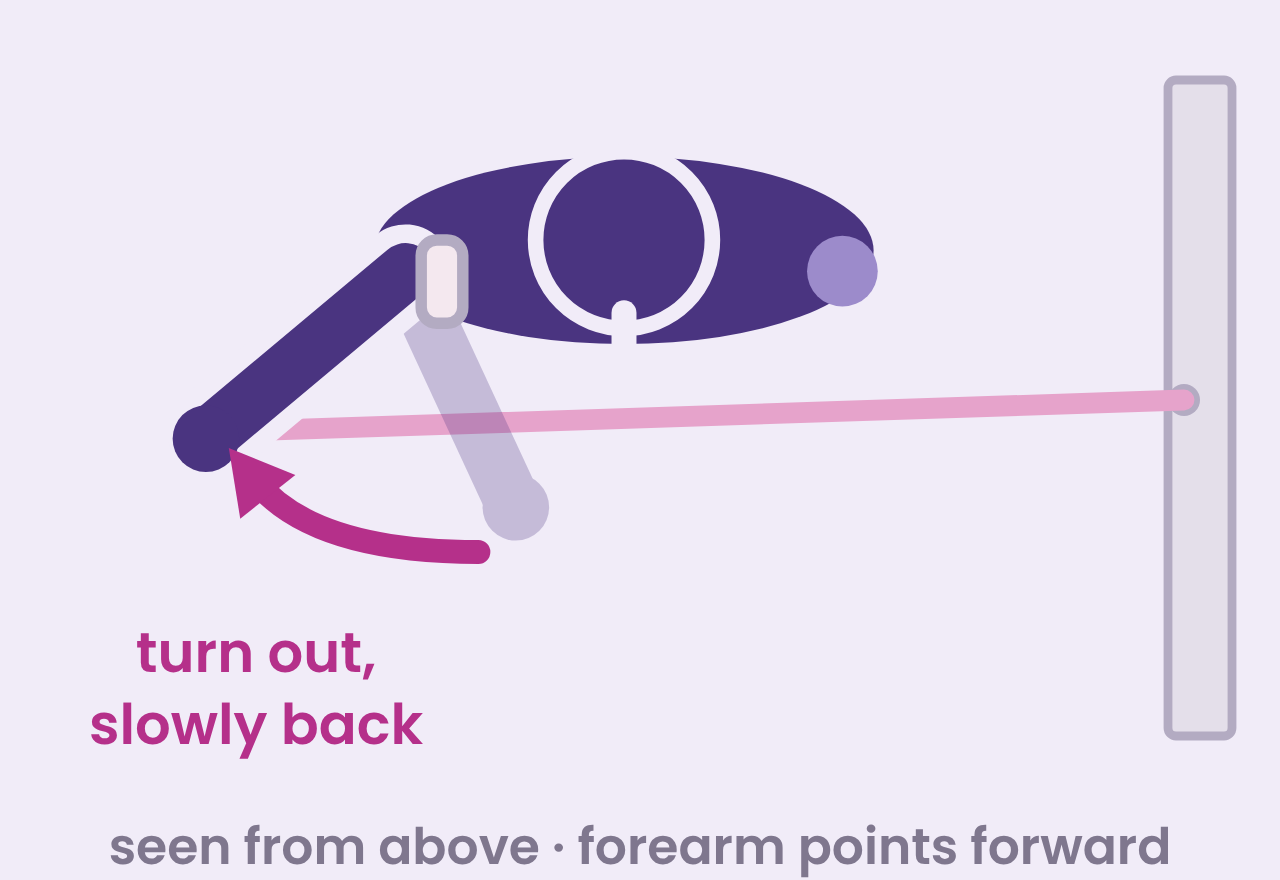
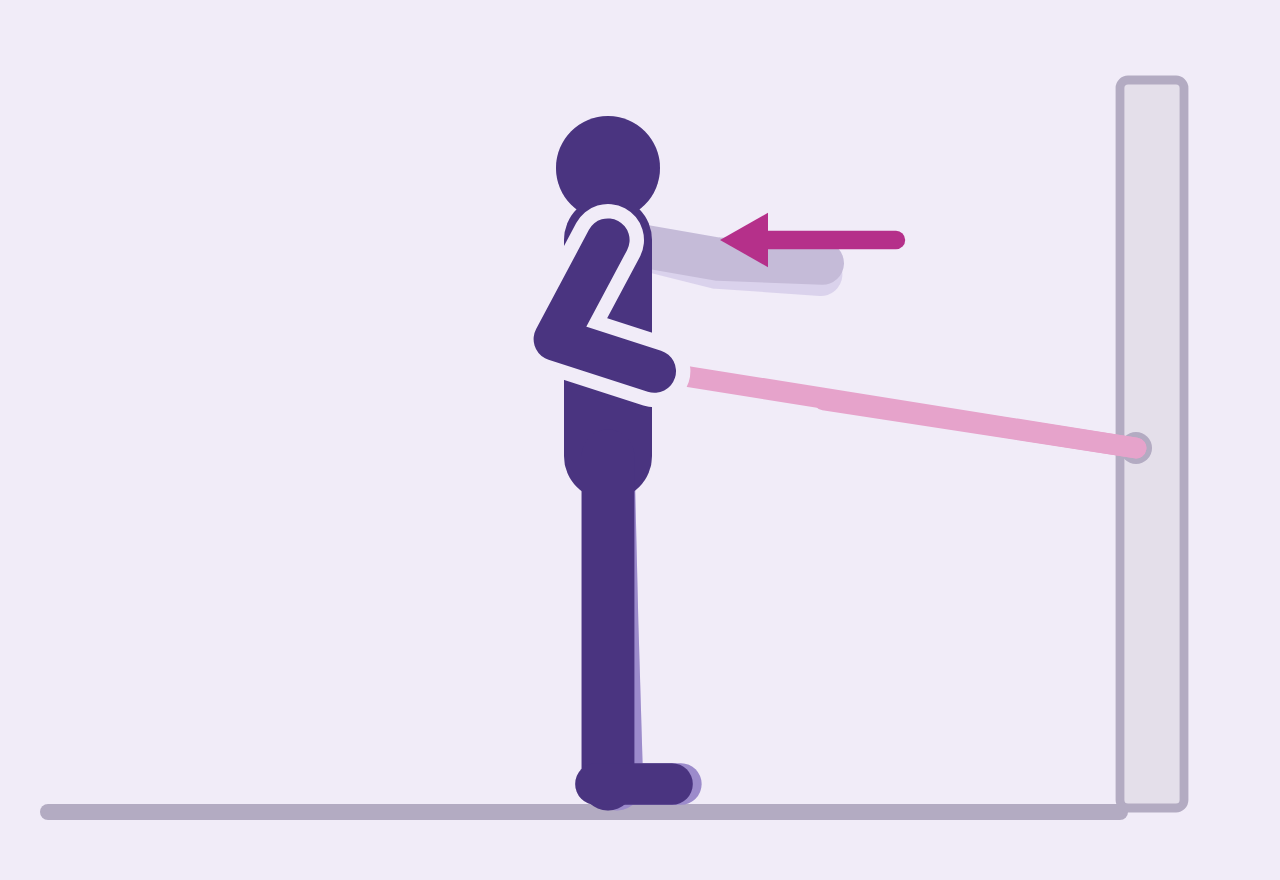
Band turn-outTie a band to a door handle at elbow height on your good side. With the elbow bent and tucked at your side, turn the forearm out away from your tummy, then back slowly over 3 seconds.3 sets of 10–15, once a day
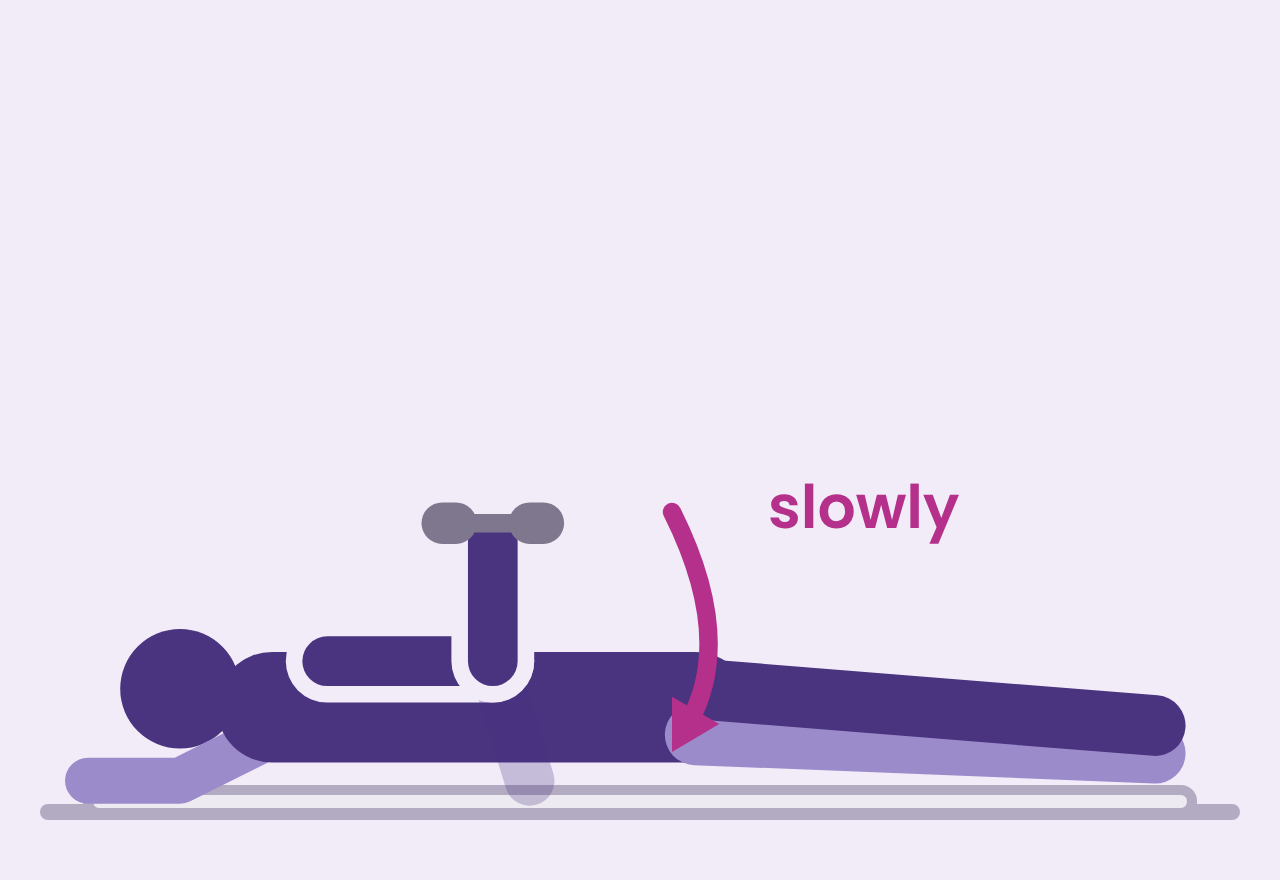
Side-lying turn-outLie on your good side, sore elbow bent to 90° and resting on your side, holding a light weight (start with 0.5 kg or a small water bottle). Turn the forearm up towards the ceiling, then lower over 3 seconds.3 sets of 10–15, once a day
Band rowLoop a band around a door handle. Pull your elbows back past your ribs, squeezing your shoulder blades together and down, then return slowly. Progress with a stronger band.3 sets of 10–15, once a day
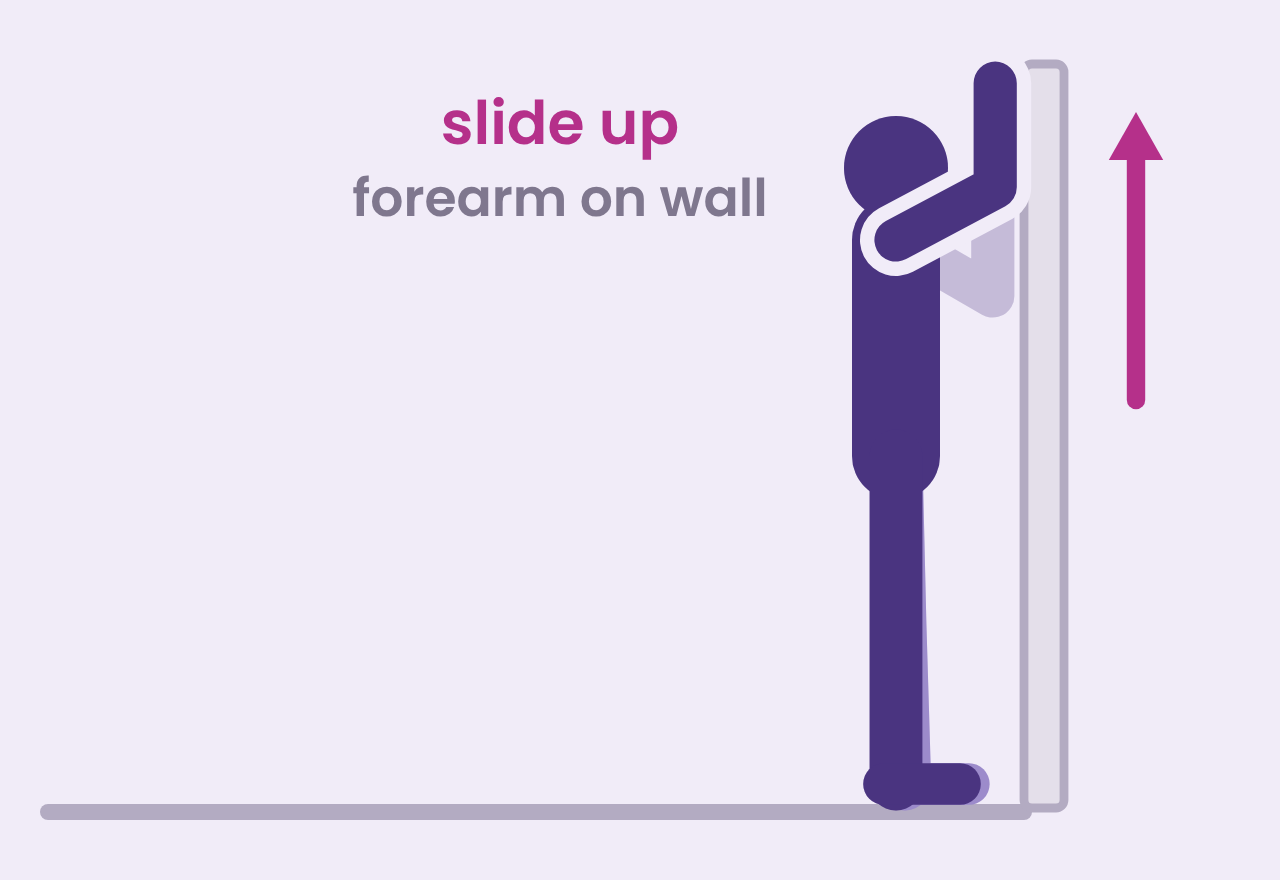
Wall slideFace a wall with the little-finger side of your forearm on it. Slide the arm up as far as is comfortable, keeping your shoulder down away from your ear, then slide down slowly. Progress by lifting the arm off the wall at the top.3 sets of 8–10, once a day
Form tips: slow and controlled beats fast and heavy. Weights can be a water bottle or a tin of beans to start. Keep using the arm for everyday tasks below shoulder height, and ease off heavy or repeated overhead lifting for now.
Stop and see your GP or physio if
You suddenly can’t lift your arm, or it became very weak after a fall or injury (see your GP within a few days: some tears do best repaired early)
Night pain with weight loss you can’t explain, a lump, feeling unwell, or a past cancer
A hot, red, swollen shoulder, or fever (same day)
Numbness, pins and needles or weakness in the arm or hand, or neck pain spreading down the arm
Shoulder pain with chest pain, breathlessness or sweating (call 000 or your local emergency number)
No real improvement after 12 weeks, or the shoulder getting stiff in every direction
Want a supervised program?
A physio can check your technique, set the right band and weights and adjust the plan. Home exercise is a solid start: in a UK trial of 708 people (GRASP), one physio advice session did as well over a year as up to six sessions of progressive exercise. If you have a chronic condition, ask your GP about a GP Chronic Condition Management Plan (GPCCMP): it gives a Medicare rebate for up to 5 allied health visits a year (physio, exercise physiologist or podiatrist).
Common questions
How long does a rotator cuff injury take to heal?
Tendon pain and small tears usually start to improve within 6–12 weeks of regular exercise, though some take 3–6 months. After surgical repair, expect a sling for about 4–6 weeks and around 6–9 months for full recovery.
Can a rotator cuff tear heal without surgery?
A full-thickness tear doesn’t knit back together, but the shoulder often works well without surgery. In a Finnish trial of people over 55 with small wear-and-tear tears, physio did as well as repair surgery at 6 years. Many tears never cause pain: in a Japanese village study, about 1 in 5 adults had one on ultrasound, and two-thirds of those had no symptoms.
What is the best exercise for the rotator cuff?
There’s no single best one. Turning the arm outwards against resistance (a band or a light weight lying on your side) is the core move, alongside shoulder-blade and rowing work. If moving hurts, start with holds against a wall.
Should I rest a torn rotator cuff?
Rest from what flares it, not from everything. Ease off heavy lifting and repeated overhead reaching for a while, but keep the arm moving. Slings and long rest leave the shoulder weaker and stiffer.
Should rotator cuff exercises hurt?
A little is fine: mild pain up to 3–4 out of 10 during exercise is OK if it settles soon afterwards and isn’t worse the next morning. If it is, do fewer reps or use a lighter band next time.
Do I need a scan for a rotator cuff injury?
Not usually at first, because tears show up on scans in plenty of people without pain. An ultrasound is worth it after an injury with sudden weakness, or if you’re not improving after about 3 months of exercise.
Updated 8 November 2026. General education, not personal medical advice. Everyone is different, so check with your GP or physio if you’re unsure an exercise suits you.